
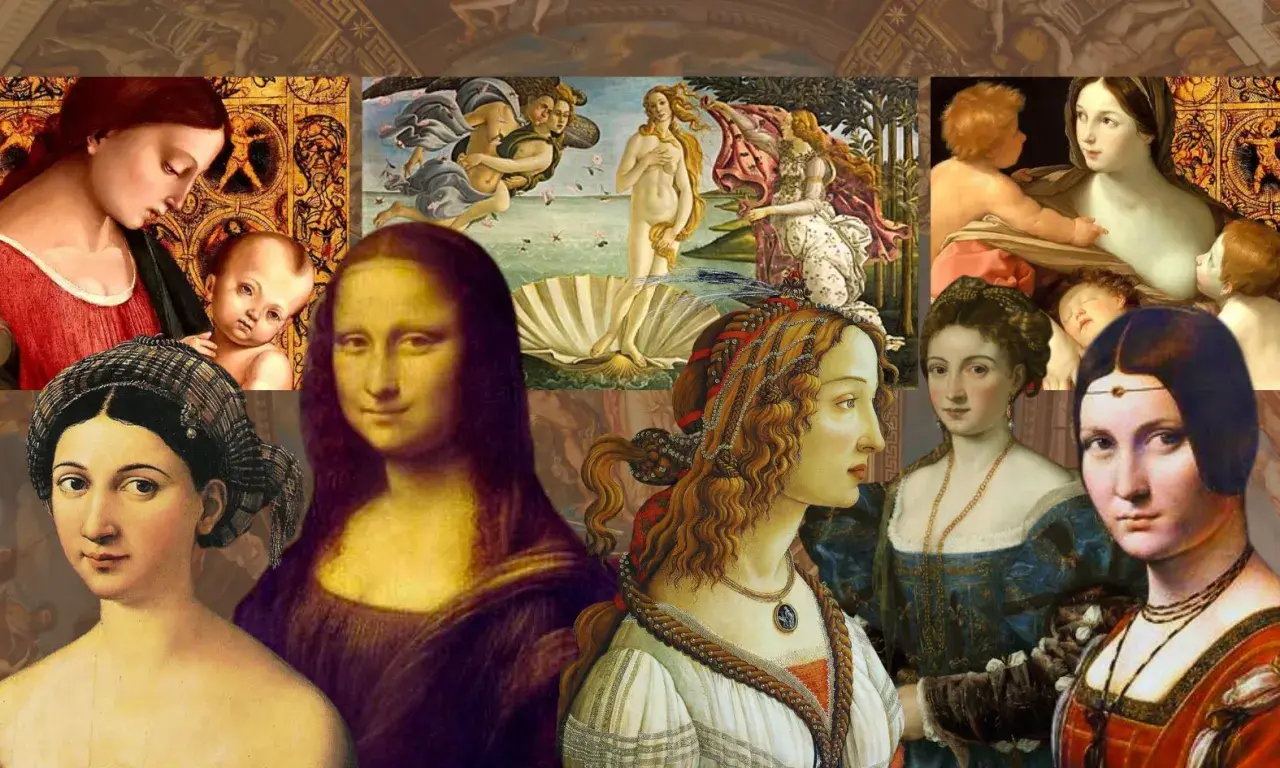
Renaissance beauty standards were never just about appearance. They carried social meaning, shaped marriage portraits, and influenced the way painters balanced likeness with idealization. In the pages below, I break down the most common visual traits, explain why they mattered, and show how to read them inside portraits, allegories, and courtly art.
The Renaissance ideal linked beauty, status, and virtue
- Fair skin, blonde or lightened hair, and a high forehead were among the most repeated feminine ideals.
- Beauty was tied to class: pale skin suggested leisure, while careful grooming signaled access and refinement.
- Artists often idealized real sitters, so portraits can be both accurate records and constructed images.
- Florence, Venice, and Northern Europe shared some values but did not reward exactly the same look.
- Men were idealized too, though usually through composure, learning, and controlled strength rather than overt musculature.
What the Renaissance ideal usually looked like
When I look across fifteenth- and sixteenth-century painting, the recurring feminine model is fairly consistent: pale skin, blonde or golden hair, a high forehead, rosy lips, a long neck, and a soft, composed silhouette. Those features were not random preferences; they were visual signals that helped viewers read beauty as refinement, youth, and moral worth.
Men were idealized differently. The preferred male image usually stressed calm self-command, tidy grooming, an intelligent gaze, and a body that looked disciplined rather than heavily muscular. In portraits of rulers, scholars, and courtiers, strength was often implied through posture, clothing, and authority, not through exposed physical power.
| Trait | How it was shown | What it suggested |
|---|---|---|
| High forehead | Hairline plucked back or hidden under veils | Fashion, refinement, and aristocratic polish |
| Blonde or light hair | Emphasized in paint or artificially lightened in life | Youth, desirability, and elevated status |
| Pale complexion | Smooth highlights, restrained shadows, little sun-wear | Leisure, wealth, and distance from outdoor labor |
| Long neck | Proportions slightly elongated in portraiture | Elegance and controlled grace |
| Soft, rounded body | Gentle curves rather than severe angularity | Health, fertility, and abundance in many Italian contexts |
I find this comparison useful because it shows how beauty was built as a code, not just a look. The next question is why those traits carried so much authority in the first place.
Why those ideals became so powerful
The short answer is that Renaissance taste grew out of several forces at once: classical learning, court culture, Christian ideas about virtue, and literary models such as Petrarchan poetry. In many regions, beauty was expected to reflect inner character, which means that a pretty face was never only decorative. It was meant to imply self-control, chastity, and social fitness.
Pale skin also had a practical social meaning. If someone did not need to work outdoors, their complexion could remain lighter, so skin tone became a visible marker of class. Blonde hair, meanwhile, was repeatedly praised in poetry and visual culture, and women sometimes plucked the hairline to create a higher forehead. That sounds extreme now, but in the period it was a recognizable route to refinement.
This is also why I do not treat the era's beauty language as purely cosmetic. It sits at the intersection of appearance, moral judgment, and status display. Once you see that, the paintings start to make more sense.
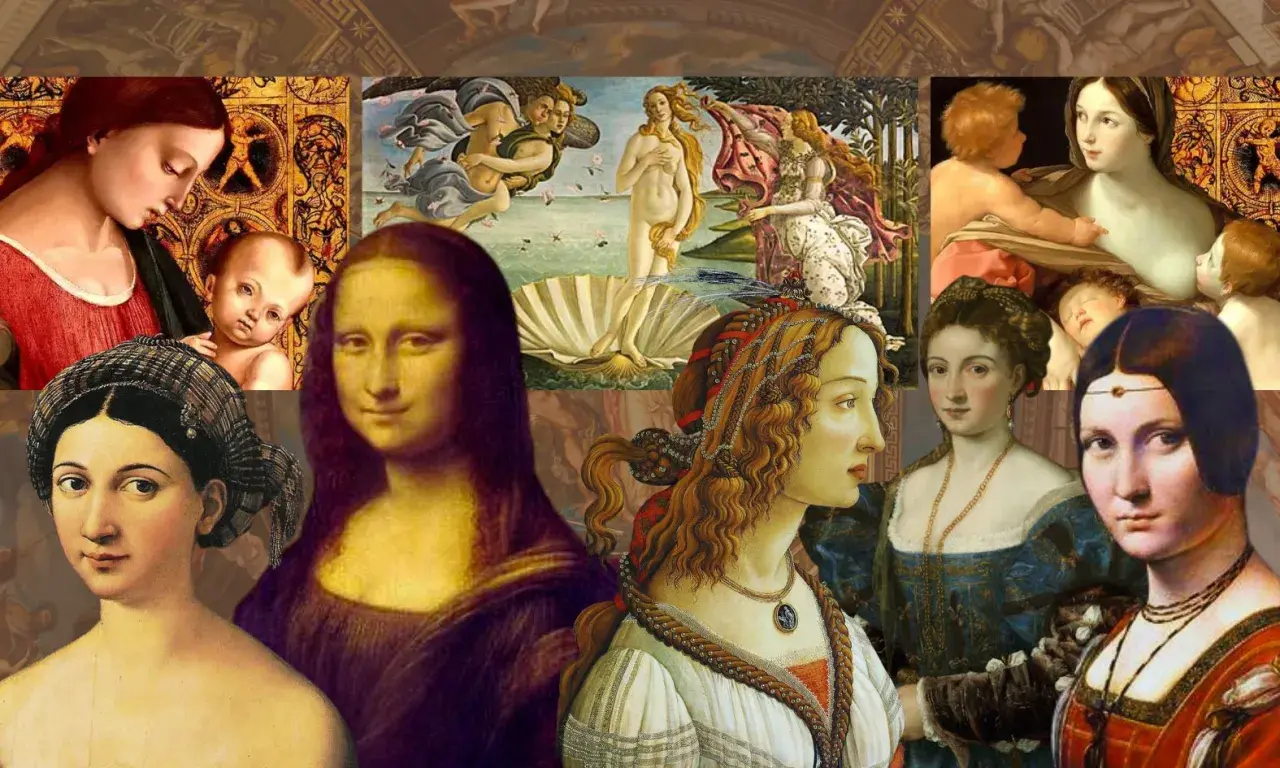
How Renaissance beauty standards were painted into portraits
Portraiture is where the period’s ideals become easiest to see. Painters regularly softened blemishes, adjusted proportions, and gave sitters the polished look expected of a bride, a noblewoman, or a courtly figure. Even when an artist preserved individual likeness, the surrounding features could still be lifted into an ideal.
That tension between realism and idealization is one of the defining qualities of Renaissance portraiture. Florentine artists often leaned toward careful line and structure, while Venetian painters used color and light to make flesh feel more luminous and sensual. The same subject could therefore look disciplined in one workshop and warmer or more atmospheric in another.
| Visual device | Typical effect | What it did for the image |
|---|---|---|
| Plucked hairline or veil placement | Raised the forehead | Matched fashionable female ideals and signaled refinement |
| Bright hair color | Created a glow around the face | Made the sitter look youthful and visually distinguished |
| Reduced shadow on skin | Kept the complexion pale | Separated elite beauty from outdoor labor and sun exposure |
| Elongated neck and profile | Added elegance | Turned the sitter into an image of composure, not just a person |
| Luxurious fabric and jewelry | Raised the status of the portrait | Made beauty inseparable from wealth, marriage, and family politics |
Two things matter here. First, portraits were often commissioned for social reasons, especially marriage and lineage. Second, the ideal could appear in religious or mythological painting as easily as in a private likeness, which is why the same face might read as virtuous bride, saintly figure, or allegorical beauty depending on the context. That leads directly to the regional differences that shaped the period.
How the ideal changed across Florence, Venice, and the North
One mistake I see often is treating the Renaissance as if it had a single beauty template. It did not. Florence, Venice, and Northern Europe shared ideas, but each region emphasized different qualities, and style changed what beauty seemed to mean.
| Region | Typical beauty emphasis | Artistic tendency | What to notice in paintings |
|---|---|---|---|
| Florence | Fair skin, blonde hair, high forehead, moral polish | Clear drawing and carefully structured form | Elegant profiles, restrained gesture, idealized marriage imagery |
| Venice | Luminous flesh, rich hair, sensual softness | Color, atmosphere, and tactile surfaces | Warm skin tones, lush drapery, and figures that feel more physically present |
| Northern Europe | Individual likeness with ideal markers like veils, jewels, and pale skin | Sharper detail and close observation | Precise costume, textured surfaces, and beauty filtered through piety or status |
Florentine works often look more disciplined, while Venetian painting can make beauty feel almost touchable. Northern portraits, by contrast, tend to preserve more of the sitter’s particular features, even when they still borrow the same high forehead or pale complexion. Those differences matter because they reveal how style and beauty were intertwined, not separate subjects.
What the ideal left out and why that matters now
Any honest reading of the period has to admit that the ideal excluded a lot of real people. Older women, working women, darker complexions, and bodies shaped by labor rarely fit the preferred visual script. Even within elite circles, the ideal was aspirational rather than universal, which is why artists could stretch, soften, or sometimes deliberately exaggerate features to fit the expected code.
Satire makes this especially obvious. Works such as caricatured old women show that the Renaissance knew exactly how unstable beauty could be as a category. The same visual vocabulary that praised a young wife could also be turned into mockery, commentary, or moral warning. In other words, beauty was never innocent.
That ambiguity is important for modern viewers. A blonde-haired woman in a Renaissance painting is not automatically a simple celebration of attractiveness, and a plain-looking sitter is not automatically “unideal.” Context decides whether the image is about virtue, courtship, fertility, power, or satire. When I interpret these works, I pay as much attention to meaning as to appearance.
How I read a Renaissance painting for beauty clues today
When I examine a Renaissance portrait or figure painting, I ask three quick questions: what is idealized, what is individualized, and what does the surrounding imagery tell me about the sitter’s role? That habit keeps me from reading these works like photographs, because they were never meant to function that way.
- Check the hairline, hairstyle, and whether the hair looks natural or deliberately modified.
- Look at complexion, neck length, posture, and body shape before deciding what the artist was emphasizing.
- Ask whether the work is a private portrait, a bridal image, a devotional panel, or an allegory.
- Read costume, jewels, flowers, and hand gestures as status markers, not decorative extras.
- Compare the face with the style of the workshop, because different regions softened or sharpened beauty in different ways.
