
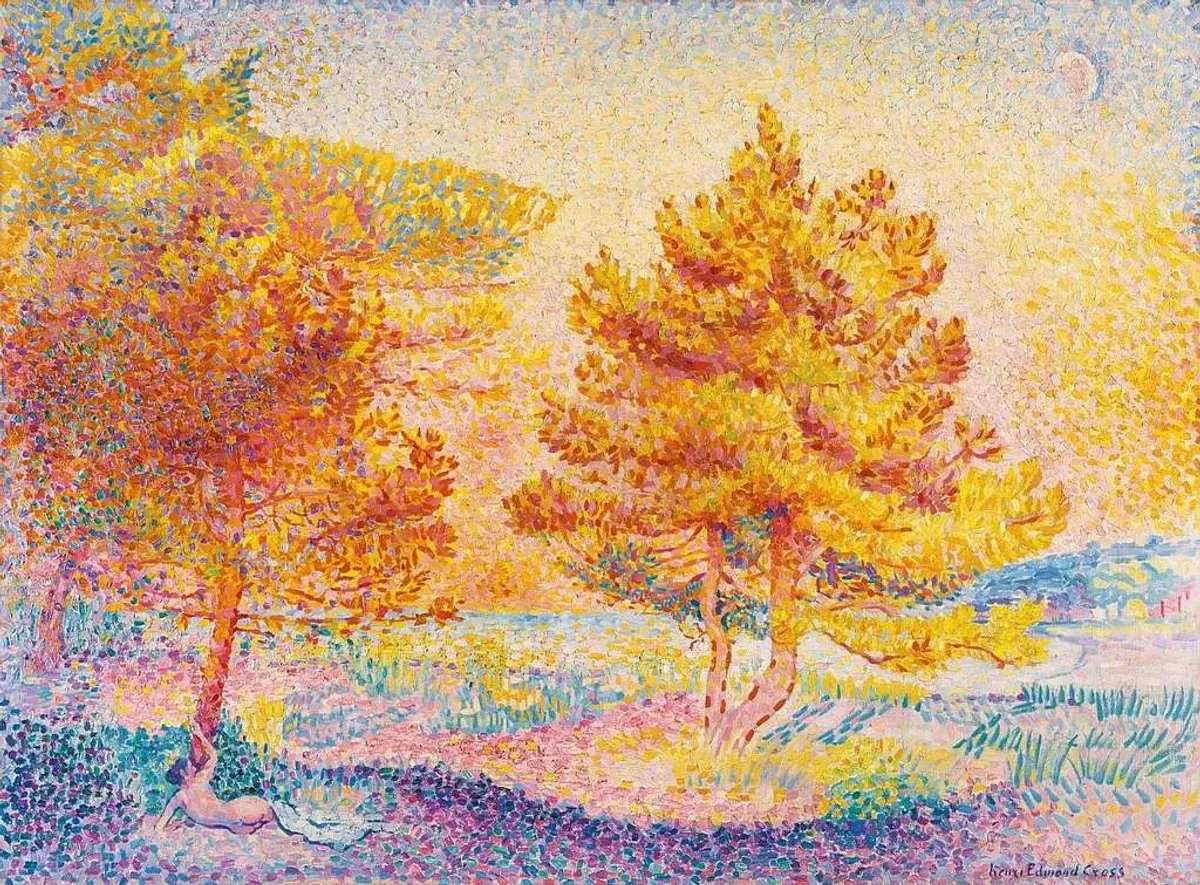
Pointillism is one of those painting methods that looks easy from a distance and highly structured up close. The best-known pointillism artists, especially Georges Seurat and Paul Signac, built images from small touches of unmixed color so the viewer’s eye could blend them into light, form, and atmosphere. What follows is a practical guide to the technique, the key names behind it, how to recognize it in the wild, and what matters when you are judging a work for history, preservation, or authenticity.
Key facts that matter most
- Pointillism uses small dots or short dabs of color to create optical mixing in the viewer’s eye.
- In strict art-history terms, the broader movement is Neo-Impressionism; pointillism names the technique.
- Seurat and Signac are the central figures, with Pissarro, Cross, van Rysselberghe, Luce, Petitjean, and Angrand among the most important names.
- The effect depends on viewing distance, color relationships, and disciplined mark placement.
- For attribution and conservation, surface structure and period logic matter more than the mere presence of dots.
What pointillism actually means
At its core, pointillism is a way of painting that avoids pre-mixing color on the palette and instead places separate touches of paint directly on the surface. From a few feet away, those touches fuse visually and create a brighter, more vibrating effect than a flat, blended passage often can. That is the key idea: the painting is engineered for the eye, not just the hand.
I would separate the term from the movement. The historical umbrella is Neo-Impressionism, while pointillism describes the dot-based technique most readers have in mind. The distinction matters because not every Neo-Impressionist work is made of perfect dots, and not every dotted painting belongs to the movement. Some works use small strokes, dashes, or mosaic-like marks that serve the same optical purpose.
That optical purpose also explains why these paintings reward patience. They do not fully resolve at arm’s length. You have to let the surface reorganize itself at the right distance, and that is exactly what makes the style so useful for studying color, perception, and technique. Once that is clear, the next step is to identify the artists who made the method historically important.

The artists most closely associated with the technique
When people ask about pointillism artists, they usually want the small circle that defined the method and gave it historical weight. I would start with the artists below, not because they are the only ones who used separated color, but because they show how flexible the technique could be across subjects, countries, and temperaments.
| Artist | Why they matter | What to notice |
|---|---|---|
| Georges Seurat | The foundational figure of the movement and the most rigorous thinker behind its color system. | Highly controlled composition, tiny marks, and a strong sense of structure in large urban scenes. |
| Paul Signac | Seurat’s closest ally and the main advocate who carried the method forward after Seurat’s early death. | Brighter palettes, harbor and coastal views, and a looser but still deliberate handling of color. |
| Camille Pissarro | A bridge between Impressionism and Neo-Impressionism, especially in his later career. | Rural roads, city views, and experimental passages that show how the technique could adapt to an older master. |
| Henri-Edmond Cross | One of the most lyrical followers, important for the style’s move toward saturated, decorative color. | Mediterranean light, freer dotting, and landscapes that feel more atmospheric than analytical. |
| Théo van Rysselberghe | A major Belgian adopter who helped spread the movement beyond France. | Portraits and coastal scenes with disciplined color separation and a more international Neo-Impressionist profile. |
| Maximilien Luce | Important for showing that the technique was not limited to leisure scenes or pure landscape. | Urban life, industry, and labor subjects handled with careful, structurally aware mark-making. |
| Hippolyte Petitjean | Useful for seeing how the method moved into watercolors and more decorative compositions. | Soft but controlled color separation, especially in intimate and lyrical subjects. |
| Charles Angrand | A quieter but valuable name when you want to understand the restrained side of the style. | Subtle tonal effects and a less spectacular, more inward version of the technique. |
The important caveat is that these artists were not locked into one formula. A Seurat drawing does not look like a Signac harbor scene, and a Pissarro painting from this phase is not the same kind of object as a Cross landscape. That variation is part of the movement’s history, and it is also why attribution requires more than simply spotting dots. The next question, then, is how to read those marks correctly when you stand in front of the work.
How to recognize a pointillist painting in person
When I look at a pointillist painting, I do not start by counting dots. I start by checking whether the surface is built for optical mixing. If the work is genuine and well preserved, the separate touches should be visible close up but begin to merge at a normal viewing distance. That shift is the whole trick, and it is easy to miss if you only look at reproductions.
- Check the distance effect. A true pointillist surface should gain coherence a few feet away, not collapse into mud.
- Look for color separation. Greens may be built from blue and yellow touches, shadows from layered chromatic decisions rather than dead black.
- Expect variation in the marks. The touches may be dots, short dashes, or tiny strokes; perfect circles are not required.
- Watch the edges. Strong works use the same logic across the whole surface, not just in one decorative passage.
- Check the drawing underneath. The structure should still feel intentional. Technique never replaces composition.
A common mistake is to treat any dotted image as pointillism. That flattens the history and hides the fact that the style is as much about color theory and control as it is about surface texture. Another mistake is to assume the method must look mechanically uniform. In practice, the best works feel alive because the marks are varied, but never random. That difference leads directly to the movement’s larger influence on modern art.
Why the technique changed modern art
Pointillism mattered because it changed the role of color. Instead of treating color as something simply applied, the Neo-Impressionists treated it as a system with measurable effects. That sounds dry, but the results were anything but. The paintings became brighter, more structured, and more dependent on the viewer’s active participation.
- Color became structural. It was no longer only a finishing layer; it carried the image.
- The viewer completed the work. The painting only fully resolves when the eye blends the separate marks.
- Modernists learned from the discipline. Even artists who abandoned the strict method absorbed its lessons about light, rhythm, and separation of color.
This is why the style is more than a historical curiosity. Seurat and Signac pushed painting toward a more analytical understanding of perception, and later artists took that seriousness in different directions. Some moved toward freer color, others toward abstraction, but the underlying lesson remained useful: the surface of a painting can be built as a system, not just a skin. From that point, it makes sense to ask what the technique means for preservation and authentication.
What collectors, conservators, and authenticators should check
For anyone handling a possible Neo-Impressionist work, the presence of dots is only the starting point. The more reliable questions are about structure, medium, condition, and period logic. I would be cautious of any attribution that leans too heavily on a visual gimmick without checking how the work is actually built.
| Check | What to examine | Why it matters |
|---|---|---|
| Mark rhythm | Spacing, direction, pressure, and consistency of the touches under normal viewing and magnification. | Authentic works usually show a controlled but human rhythm; mechanical repetition can be a warning sign. |
| Color logic | Whether the separated colors make sense for the artist’s period, palette, and subject matter. | Random speckling is not the same as a deliberate optical strategy. |
| Surface condition | Varnish, abrasion, retouching, overcleaning, and any flattening of the original paint texture. | These issues can blur the separation between touches and distort the intended optical effect. |
| Support and medium | Canvas, paper, board, watercolor, or mixed media, and whether that choice matches the artist’s practice. | Pointillist methods adapt differently across materials, so the support should fit the work’s logic. |
| Documentation | Provenance, exhibition history, conservation notes, and any period references to the work. | Surface appearance alone is never enough for a strong attribution. |
In practice, I treat these works as cumulative evidence problems. The paint handling, the support, the palette, the period context, and the paper trail all have to point in the same direction. A signature can be added later. A convincing dot field can be copied. But the total logic of a real object is much harder to fake. That is why a short reference set of strong examples is so useful when you want to calibrate your eye.
A small reference set that keeps the style clear
If I had to build a compact mental map of the style, I would start with five artists: Seurat, Signac, Pissarro, Cross, and van Rysselberghe. Together they show the method at its most disciplined, most luminous, most transitional, most decorative, and most international. That range is enough to keep the movement from collapsing into one generic look.
- Seurat teaches the structural side of the method and the discipline behind it.
- Signac shows how separated color can become brighter, more open, and more maritime.
- Pissarro proves that the technique was not limited to its founding generation.
- Cross shows the style moving toward more lyrical and decorative color.
- van Rysselberghe shows how far the movement traveled beyond France.
Once those names are clear, the rest of the field becomes easier to place and easier to judge. The style stops looking like a simple dot-making exercise and starts reading as a serious experiment in how painting can organize light, perception, and structure at the same time.
