
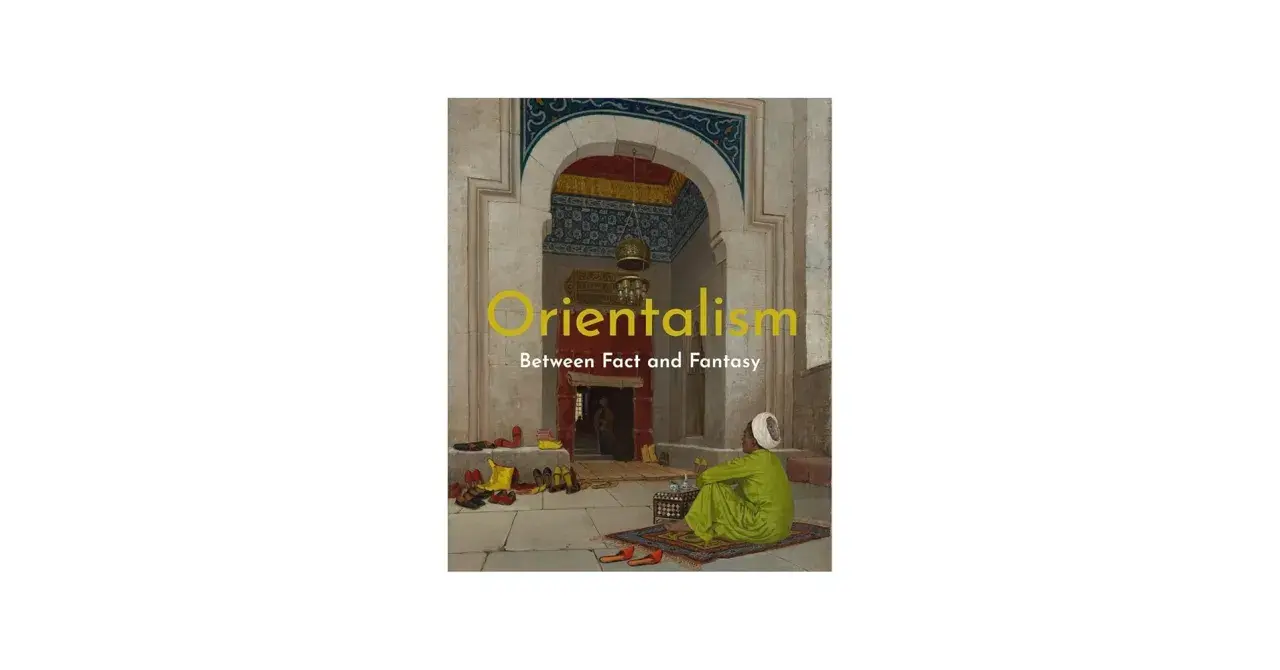
Orientalist painting sits at the meeting point of beauty, travel, and power. Western artists used scenes from North Africa, the Middle East, and parts of Asia to create some of the most polished images in 19th-century art, but those images were also shaped by fantasy, empire, and commercial taste. Here I break down what the style is, how it developed, which motifs recur most often, and how I read it critically today.
The movement mixes fascination, invention, and colonial power
- Orientalist art is not a single technique; it is a broad Western visual tradition centered on Eastern subjects.
- The British Museum describes it as Western representation of the East that often blurs fantasy and reality.
- The style grew in the 19th century alongside empire, travel, photography, and public demand for scenes of the “Orient.”
- Its most common subjects are bazaars, mosques, harems, baths, processions, military scenes, and architectural views.
- For interpretation and authentication, provenance, travel evidence, and period context matter more than the exotic subject alone.
- In 2026, the most useful reading is neither celebration nor dismissal, but a historically grounded, critical one.
What Orientalist art actually is
The cleanest way to define this field is as a Western artistic mode that depicts the East as an aesthetic subject, a narrative stage, or a symbol of difference. That “East” was never stable: in practice it usually meant the Middle East and North Africa, but it could also stretch to Turkey, India, Central Asia, or East Asia depending on the artist, market, and period. The British Museum’s framing is useful here because it keeps the emphasis on representation, not on geography alone.
I think the label matters because it covers more than pretty scenery. It includes oil paintings, drawings, prints, costume studies, decorative interiors, and book illustrations that often mix observation with invention. It is also a contested term. After Edward Said, “Orientalism” became more than a style label; it became shorthand for a Western habit of turning Eastern societies into a legible, consumable image for Western viewers.
| Term | What it usually means | Why it matters |
|---|---|---|
| Orientalism | Western depictions of Eastern cultures, often entangled with empire and fantasy | Explains the larger visual and political problem |
| Chinoiserie | European decorative imitation of Chinese-inspired forms | Mostly a decorative style, not the same as Orientalist painting |
| Japonisme | Western fascination with Japanese art and design in the late 19th century | Related in spirit, but narrower and historically distinct |
That distinction is important when you catalogue or describe a work. Not every work with an Eastern motif belongs in the same category, and not every “Oriental” image is equally political. From here, the next question is historical: why did the style expand so quickly in the 19th century?
How the style grew in the 19th century
The Met traces the rise of this visual language to a very specific set of conditions: Napoleon’s invasion of Egypt in 1798, the publication of Description de l’Égypte beginning in 1809, and the expanding European appetite for images of places newly made accessible through trade, war, and travel. Once steamships, rail lines, illustrated travel books, and photography entered the picture, the East became easier to visit, easier to reproduce, and easier to sell back to Western audiences.
This is where style and movement overlap. Orientalist painting borrowed the finish of academic art, the drama of Romanticism, and the descriptive habits of genre painting. It could look precise and documentary, but that precision often served a theatrical script. A painted street scene might be based on a sketchbook, a costume prop, and a studio interior all at once. In other words, the visual authority is real, even when the scene itself is partly built.
Artists also came to the subject in different ways. Eugène Delacroix drew on his North African travels but used them to heighten emotion and violence. Jean-Léon Gérôme polished scenes into almost forensic clarity. John Frederick Lewis worked with unusually careful interior detail after long residence in Cairo. The Met notes that the movement was not driven by one method but by a range of Western encounters with the region, from direct travel to secondhand imagery. That mix of access and imagination is what gives the work its tension.
The recurring images that made the genre recognizable

The genre became instantly recognizable because it kept returning to the same visual structures. Artists repeated them because they sold, but also because they helped Western viewers “read” distant cultures quickly. When I look at a painting from this tradition, I usually start by asking which motif the artist chose, because the subject often reveals more than the brushwork.
Markets and street life
Bazaars, camel trains, port cities, and narrow streets offer the most straightforward version of the style. These scenes can feel observational, especially when the artist clearly studied architecture, textiles, or light. Yet they still tend to organize daily life into a spectacle for the viewer. People become picturesque figures first and individuals second.
Interiors, harems, and baths
These are the most loaded images in the whole tradition. Male Western painters often had limited access to private domestic spaces, so they filled the gap with hearsay, props, and imagination. The result is a genre that often looks intimate while being deeply constructed. The reclining woman, the tiled room, the tray of fruits, and the patterned screen recur so often because they create a controlled fantasy of privacy and abundance.
Religious and ceremonial scenes
Prayer, pilgrimage, processions, and scholarly interiors appear throughout the period. Sometimes these works are more careful than the harem fantasy, because the artist is trying to render ritual and clothing with some specificity. Even so, the figures are frequently arranged to emphasize difference for Western eyes. The subject can be sincere and still be framed through exoticism.
Read Also: Modern Art Nouveau: What Defines It Today?
Military power and political drama
War scenes, mercenaries, rulers, and imperial encounters add another layer. Delacroix’s North African and Greek subjects, for example, turn violence into emotional theater. Here Orientalism is not just decorative; it becomes a way to stage the East as dangerous, unstable, or dramatic enough to justify Western fascination and, at times, Western intervention.
American collectors and artists were part of this too. Louis Comfort Tiffany’s Snake Charmer at Tangier, Africa shows how quickly the motif traveled across the Atlantic. Once you see the recurring image bank, the next issue becomes harder to avoid: what exactly do these pictures get wrong?
Where admiration ends and stereotyping begins
This is the section where I slow down. The strongest Orientalist works can be technically brilliant, and I do not think that skill should be denied. But technical skill is not the same as cultural accuracy, and it is not a moral defense. The central problem is that many of these images compress entire societies into a single mood: exotic, timeless, sensual, or backward.
The most common distortions are easy to name. Women are eroticized as if domestic space were a stage for male fantasy. Religious practice is treated as a visual marker rather than a lived tradition. Architecture becomes a prop. Clothing becomes shorthand. Political realities disappear behind atmosphere. Once that happens, the work stops describing a culture and starts manufacturing one.
Not every artist is equally guilty, and I would not flatten them all into one accusation. John Frederick Lewis, for instance, often worked with more patience and specificity than the more theatrical salon painters. Osman Hamdi Bey offers an even more important counterpoint because he complicates the West-versus-East divide from within the Ottoman world. Still, even the best examples exist inside a market that rewarded difference, legibility, and spectacle. That is the real pressure behind the genre.
| Reading mode | What I look for | What it usually suggests |
|---|---|---|
| Observation | Specific architecture, credible dress, restrained storytelling | The artist probably used direct travel or close study |
| Studio fantasy | Generic interiors, repeated props, idealized figures | The scene is built more from Western desire than from lived reality |
| Propaganda | Heroic Europeans, submissive locals, moral contrast | The image supports imperial power or cultural superiority |
| Cross-cultural dialogue | Local authorship, layered symbolism, less exoticizing framing | The work complicates the simple East-versus-West script |
That framework is useful not only for interpretation but also for collection work, which is where I turn next.
How I read and authenticate an Orientalist work
When I assess a painting in this field, I do not start with the subject matter. A scene of a mosque, market, or harem tells me nothing by itself about authorship, date, or originality. I start with the normal evidence: support, paint handling, inscriptions, exhibition history, and provenance. The subject may be Orientalist, but the object still has to prove what it is.
Here is the checklist I trust most:
- Provenance — I look for a continuous ownership history, especially around the 19th and early 20th centuries.
- Travel evidence — Sketchbooks, letters, dated studies, and itinerary records help confirm whether the artist actually visited the region.
- Comparative images — I compare the composition with known works, engravings, studio photographs, and exhibition records.
- Materials and technique — Ground layers, pigments, and canvas or paper type should match the supposed period.
- Title changes — Older titles can reveal how the work was marketed, reframed, or exoticized over time.
- Conservation history — Heavy overpainting or aggressive restoration can obscure the very details that matter most.
One practical rule matters more than people think: an Eastern subject is not a shortcut to authenticity. Forgeries can exploit visual stereotypes because those images are easy to imitate. The better approach is to read the picture as both an artwork and a historical document, then test every claim against the material record. That becomes even more important now, when museums and collectors are asking harder questions about context.
What these paintings still ask us to notice
In 2026, the most productive way to approach this subject is not to rescue it or cancel it, but to read it carefully. Museum interpretation has become more candid about colonial context, and I think that shift is healthy. These works remain valuable for their technique, composition, and historical reach, but they are also evidence of how the West imagined difference.
That means the best interpretation is layered. I want to know what the artist saw, what the artist invented, what the market rewarded, and what later viewers projected onto the image. If I am cataloguing or conserving the work, I also want to know how the title was used, whether the provenance is clean, and whether later restorations changed the emotional tone. Those are not separate tasks; they are all part of understanding the object honestly.
The broader lesson is simple. Orientalist imagery is never only about “the East.” It is also about the West’s appetite for beauty, control, and projection. Once you see that, the paintings do not become less interesting. They become more complicated, and therefore more worth preserving with full context.
