
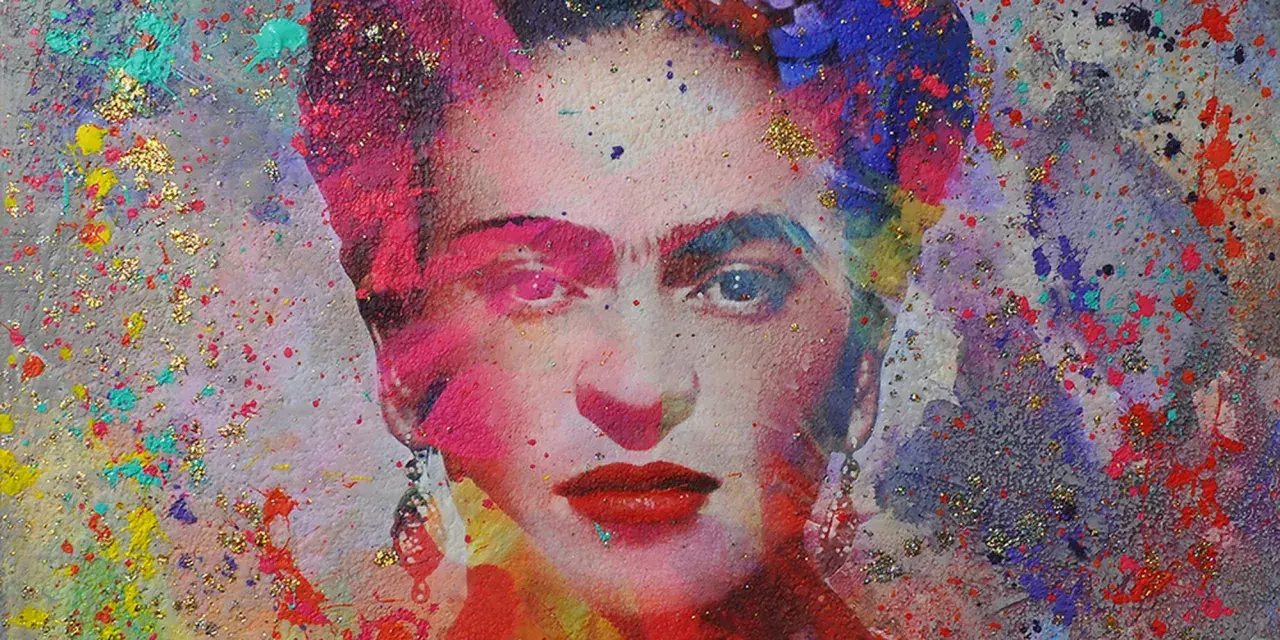
A self-portrait by Diego Rivera is rarely just a likeness. It is a statement about status, modernity, and how the artist wanted to be seen. This article separates the best-known versions, explains what each medium adds, and shows what to check when a print or painting is being cataloged, conserved, or authenticated.
What matters most about Rivera’s self-portraits
- The phrase usually points to more than one work, with the 1930 lithograph and the January 1941 oil on canvas being the most useful reference points.
- Rivera’s self-image is composed and authoritative; I read it as public self-fashioning, not private confession.
- The print and the painting differ in reproducibility, surface, and market behavior, which changes how they should be handled and interpreted.
- For authentication, medium, support, publisher data, provenance, and condition matter more than the face alone.
- These works help place Rivera within modern Mexican art, where identity and artistic authority were often inseparable.
What the phrase usually refers to
The phrase usually leads to one of two works: a 1930 lithograph and a January 1941 oil on canvas. MoMA catalogs the lithograph as a print edition of 100 published by Weyhe Gallery in New York, while Smith College Museum of Art records the 1941 oil on canvas in its collection. That matters because the medium changes the meaning: one work is portable and editioned, the other is singular and materially heavier. When people say they want a Rivera self-portrait, they are often asking two different questions at once: which image is it, and what kind of object is it?
I start there because collectors, students, and general readers often blur prints and paintings. Rivera’s self-portraiture makes more sense when you separate the image from the object, and the next step is to look at what Rivera is doing with his own face rather than just which record is attached to it.
How Rivera presents himself
Rivera does not use self-portraiture the way some artists use confession. He tends to present himself with a steady gaze, a broad face, and a formal, almost monumental calm. The effect is not vanity in the shallow sense; it is control. He appears as an artist who expects to be taken seriously in public, not as a sitter inviting intimacy.
That public stance fits his career. Rivera was already a major figure in mural painting, where scale, politics, and visibility mattered. In his self-portraits, the same instincts survive in compressed form: strong contours, solid features, and a refusal to look unfinished. Even when the image is small, it behaves like a declaration.
This is why readers often feel that Rivera’s self-portraits say less about mood than about position. The face is the subject, but the deeper message is authorship. From here, the technical differences between his best-known versions become much easier to read.
The two most important versions and how they differ
The 1930 lithograph and the 1941 oil on canvas are the versions I would compare first. They share a direct, self-possessed image of Rivera, but they behave very differently as objects, and that difference changes how viewers, curators, and collectors should approach them.
| Work | Medium and date | Visual character | Why it matters | What to check |
|---|---|---|---|---|
| 1930 self-portrait | Lithograph; edition of 100; published by Weyhe Gallery, New York | Harder edges, dense hatching, graphic clarity, and a strong forward-facing presence | Shows Rivera at full strength in print, where repetition and distribution amplify his public image | Impression quality, paper age, publisher information, and whether the record matches the edition data |
| January 1941 self-portrait | Oil on canvas | More singular and painterly; the surface carries a different weight and physical presence | Feels less like a circulating image and more like a finalized statement of selfhood | Provenance, canvas structure, surface condition, and any conservation or restoration history |
The print is easier to reproduce and encounter, which makes it useful for teaching and collecting, but it also makes documentation essential. The oil carries more singularity, which raises the stakes on provenance and conservation. If I had to reduce the difference to one line, I would say the lithograph is Rivera’s public face and the oil is his physical presence.
Why these works matter in Rivera’s career
Rivera’s self-portraits are not side notes to the murals; they are part of the same project of artistic authority. By placing himself before the viewer in a disciplined way, he turns his own likeness into a modern icon of authorship. That was especially effective in the 1930s and early 1940s, when Rivera was already internationally visible and his image could function almost like a signature.
The 1930 print also shows something practical and easy to miss: Rivera was not confined to fresco and oil. He understood the persuasive power of graphic reproduction. A self-portrait in lithograph form travels differently from a mural fragment or a canvas, and that mobility helped shape how audiences outside Mexico encountered him. The work becomes not just an image of Rivera, but a model of how Rivera wanted his art to circulate.
That is the larger reason these portraits matter. They sit at the intersection of identity, distribution, and modern art’s public life, which is exactly where Rivera was most effective. Once you see that, preservation questions stop being technical footnotes and become part of the interpretation.
What collectors and researchers should check
In authentication, I would start with the object, not the image. A Rivera self-portrait can look convincing in a reproduction and still fail on paper, canvas, or provenance. The safest checks are the boring ones: medium, dimensions, support, inscriptions, edition data, and ownership history. For the 1930 lithograph, edition information and publisher details are especially useful; for the 1941 oil, provenance and conservation history carry more weight.
- Medium - lithograph, oil on canvas, or later reproduction.
- Support - paper type for prints, canvas structure for paintings.
- Edition or inscription data - essential for prints; less relevant for unique oils.
- Provenance - museum, gallery, family, or exhibition records that can be traced.
- Condition - foxing, abrasion, retouching, craquelure, varnish issues, or paper toning.
I would be cautious with any listing that leans on the face alone and skips the paperwork. Rivera is famous enough that reproductions and decorative prints are common, so the burden of proof shifts back to documentation. That is not a limitation of the art; it is the normal reality of a highly circulated image.
What I would look for first in a Rivera portrait listing
When a catalog, exhibition label, or dealer listing mentions a Rivera portrait, I look for three things immediately: whether it is a print or a unique painting, whether the date matches the known records, and whether the provenance feels continuous rather than assembled after the fact. Those three checks eliminate most confusion fast.
- If it is a print, ask who published it and whether an edition is documented.
- If it is a painting, ask what collection history supports the attribution.
- If the description is vague, treat it as incomplete rather than authoritative.
Rivera’s self-portraits reward that kind of discipline. The image is strong, but the object tells the real story, and that is the difference between a decorative likeness and a work that belongs in serious art-historical or conservation-minded discussion.
