
What this style means in practice
- It keeps the original movement’s organic line, asymmetry, and devotion to craft.
- The strongest modern versions use contemporary materials without losing visual continuity.
- In the U.S., it shows up most often in lighting, furniture, jewelry, graphics, and custom interiors.
- It is easy to confuse with Art Deco, but the geometry, mood, and structure are different.
- For collectors, construction, finish, and aging matter as much as appearance.
What this style keeps from the original movement
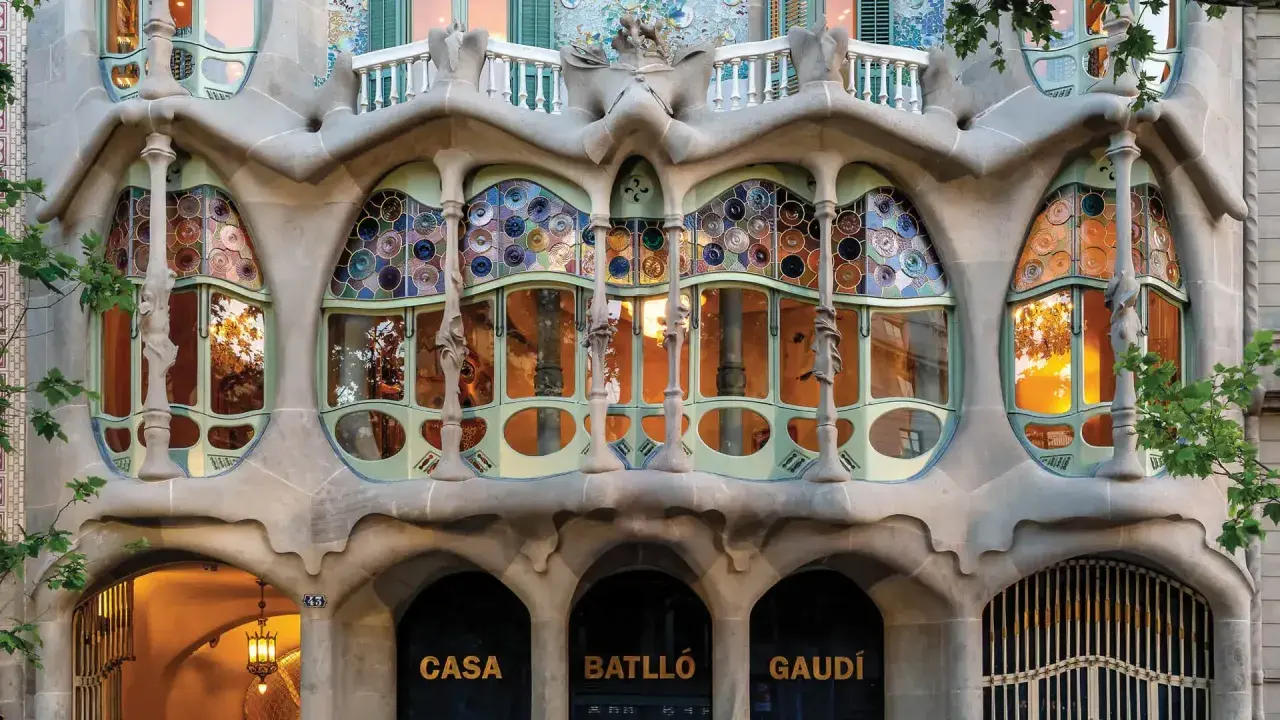
The historical movement was never just about flowers on a surface. It tried to unite architecture, furniture, glass, print, and interior space into one visual language, and that ambition is still the part modern designers return to most often. When a chair, lamp, room, or poster feels like one coherent composition instead of a set of decorative gestures, I read it as a true continuation of Art Nouveau thinking.
The most convincing revivals keep three ideas intact: nature as structure, ornament as something embedded rather than pasted on, and craftsmanship as a visible part of the experience. That is why the best contemporary work rarely looks like a costume copy of 1900. It feels edited. The line is still supple, but it has to survive modern fabrication, modern use, and modern expectations about durability.
I also think the revival keeps returning because it offers something minimalism often withholds: warmth, narrative, and a little theatricality without losing sophistication. That becomes clearer once you break the style into specific visual cues.

The visual cues that still make it read as Art Nouveau
The easiest way to recognize the style is to look for a few recurring signals rather than one fixed motif. The famous whiplash curve is the most obvious one, but it works only when it carries motion through the whole object. A good contemporary piece uses line, surface, and proportion together, not as separate effects.
| Design cue | What it does | How it appears today | Common mistake |
|---|---|---|---|
| Whiplash line | Creates movement and visual rhythm | Lamp stems, chair backs, metalwork, borders | Adding random curves without a clear direction |
| Botanical motif | Turns nature into ornament | Stylized stems, lilies, vines, seed pods, feathers | Using literal floral graphics with no structural purpose |
| Asymmetry | Keeps the composition alive | Offset layouts, uneven borders, off-center focal points | Forcing symmetry and then decorating over it |
| Luminous material | Adds depth and sensory richness | Glass, enamel, brass, bronze, lacquer, resin, velvet | Flat finishes that make the work feel generic |
In strong work, the motif is always serving the object’s form. A floral stem should feel like a support, not a sticker; a curving rail should look inevitable, not ornamental for its own sake. Once you start looking for that discipline, it becomes much easier to see where the style shows up across objects and spaces.
Where the revival shows up in American design today
In the U.S., the style is most convincing in places where custom work is allowed to breathe. Mass-market decor usually flattens the language, but gallery objects, boutique interiors, and limited-run furniture can still carry its richness without becoming overly nostalgic. That is why the revival tends to live in the higher end of the decorative arts rather than in fast retail.
Lighting and sculptural objects
Lamps are the most natural entry point because they can carry stained-glass color, botanical silhouette, and sculptural presence all at once. Autumn Casey’s lamp-like works are a useful example: they keep the Tiffany-era emotional charge of filtered light, but they update it through playful forms and contemporary materials. The point is not to imitate an antique lamp exactly; the point is to preserve the feeling that light itself is ornamental.
Marcin Rusak offers a different but related direction. His botanical resin works feel closer to preservation and metamorphosis than to literal revival, which is exactly why they matter. They show how a contemporary designer can use plant matter, transparency, and enclosure to echo Art Nouveau’s fascination with nature while still speaking a current material language.
Furniture, interiors, and hospitality
In interiors, the style usually appears more quietly. Think arched mirrors, vine-like railings, carved chair backs, glazed tile, long stem motifs in wallpaper, and custom joinery that bends instead of breaking into hard angles. In American hospitality spaces, that kind of detail can create a room that feels intimate without becoming fussy, especially when the palette is restrained and the ornament is concentrated in a few high-impact places.
Read Also: Feminist Art - Beyond the Canvas: What You're Missing
Jewelry, prints, and branding
The smaller the object, the more efficient the style becomes. Jewelry, poster design, packaging, and identity systems can all borrow the same logic: flowing line, stylized botany, and a slightly theatrical sense of balance. I find this scale especially effective because it forces the designer to edit. If the idea survives on a brooch or a printed label, it is probably strong enough to survive in a larger room.
From there, the next test is practical: how this language differs from nearby styles that people often confuse with it.
How it differs from Art Deco and other organic revivals
This is where many people get sloppy with the label. Anything curvy is not automatically Art Nouveau, and anything decorative is not automatically related to it. The style has a very specific visual logic, and once you can separate that from Art Deco or from generic “organic” design, your eye gets much sharper.
| Feature | Art Nouveau | Art Deco | Other organic revival |
|---|---|---|---|
| Line | Flowing, elastic, directional | Geometric, stepped, streamlined | Soft, rounded, often abstract |
| Symmetry | Often asymmetrical or lightly balanced | Usually strongly symmetrical | Mixed, depending on the designer |
| Material feel | Luminous, crafted, tactile | Glossy, polished, machine-age | Natural, calm, sometimes minimalist |
| Mood | Lyrical, sensual, slightly theatrical | Glamorous, precise, assertive | Quiet, wellness-driven, informal |
| Best use | Objects or spaces that can support ornament with structure | Spaces that benefit from order and sheen | Interiors that want softness without historical reference |
My simplest rule is this: if the design depends on stylized nature and flowing line, it is moving toward Art Nouveau. If it depends on geometry and polish, it is closer to Art Deco. If it is just rounded and pleasant, it may be contemporary organic design with no real historical claim. That distinction matters, because it keeps the conversation honest and makes collecting, designing, and restoration decisions much cleaner.
How I would evaluate a piece before buying or restoring it
When I look at a revival piece for purchase or restoration, I check three things first: intent, construction, and aging. A beautiful surface is not enough. The object has to be coherent at the level of structure, materials, and maintenance.
| What to check | What good looks like | Warning sign |
|---|---|---|
| Ornament | Integrated into the form, not added after the fact | Surface decoration that feels pasted on or repetitive |
| Construction | Clean joinery, balanced weight, stable supports, safe wiring if applicable | Fragile seams, awkward balance, hidden structural shortcuts |
| Materials | Chosen for both appearance and durability | Materials that look right but age badly in use |
| Documentation | Clear maker information, edition details, and care guidance | Vague labeling or no explanation of fabrication method |
| Conservation needs | Known sensitivity to light, heat, dust, and handling | No plan for how the piece will be maintained |
That last point matters more than people think. Resin can yellow, textiles can fade, plated metals can wear, and delicate glass construction can suffer if it is handled like a mass-produced object. For lamps, I prefer low-heat bulbs and careful placement away from direct sun; for mixed-media pieces, I want a maker’s note that explains cleaning and storage. If you are buying something contemporary, the question is not whether it mimics an antique perfectly. The question is whether it is honest about what it is and whether it can age well.
Once those basics are clear, the style becomes much easier to appreciate on its own terms instead of as a vague nostalgic reference.
Why the revival still feels relevant in 2026
The best reason the style keeps returning is that it solves a problem many current interiors and objects still have: they feel too dry. Art Nouveau brings back line, movement, and emotional texture, but the modern version works only when it is disciplined. In 2026, I see the strongest pieces using a narrow material palette, a clear silhouette, and one memorable gesture rather than a flood of motifs.
If you are designing with the style, start with one anchor element and let it carry the atmosphere. A lamp, mirror, chair, or graphic border can do more than a room full of borrowed flowers and curls. If you are collecting, look for authorship, stable construction, and a maker who understands how the object will age. That is usually where the difference lies between a convincing revival and a decorative imitation.
The reason Art Nouveau still matters is simple: it treats ornament as intelligence, not excess. When that idea is handled well, the result feels alive rather than historical, and that is exactly why the style still speaks to contemporary design, especially when the goal is to make objects and rooms feel human again.
