
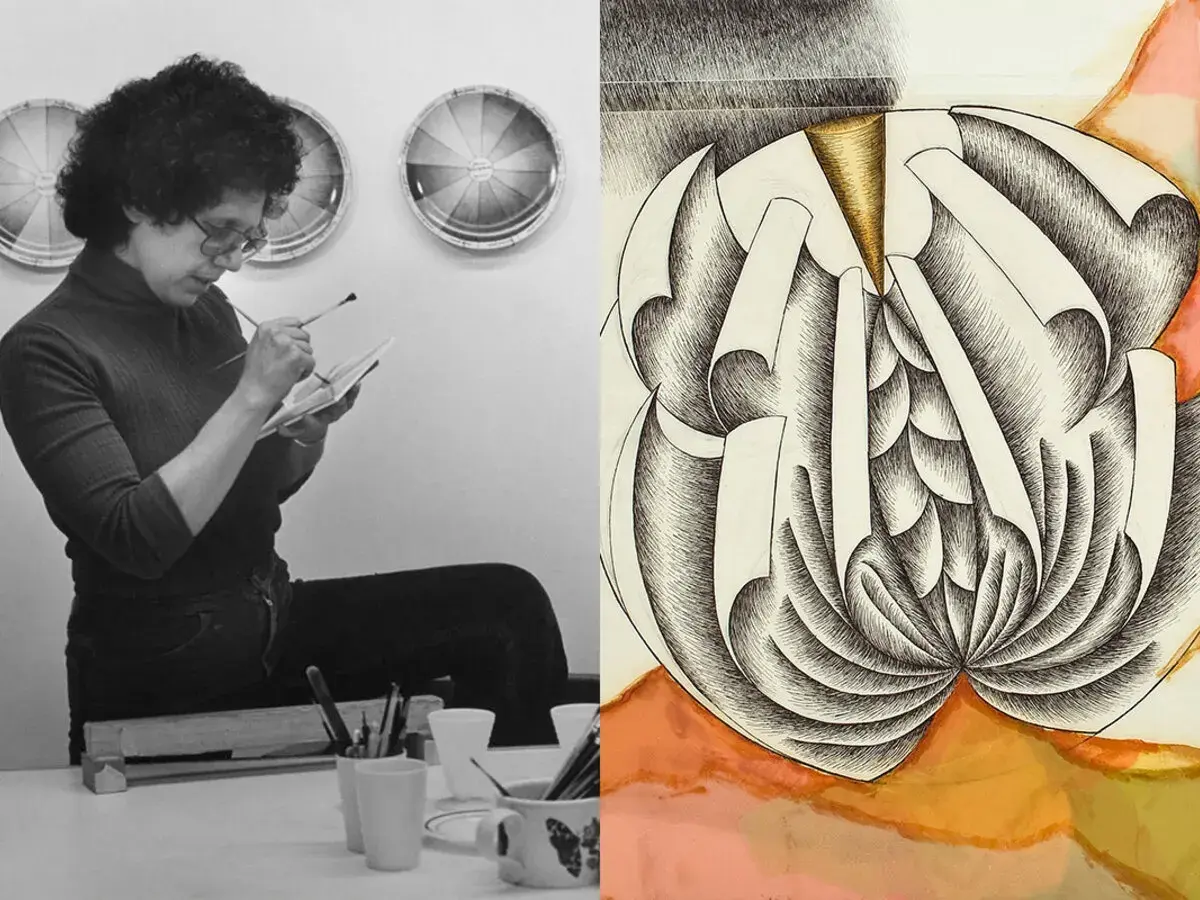
The feminist art movement is best understood as a challenge to who gets to define art, whose bodies are represented, and which materials deserve museum space. It is not a single look or a neat period style; it is a set of artistic strategies built around equality, visibility, and critique. In this article I break down where it came from, which artists and collectives shaped it, how it changed medium choices, and how to read the work with a curator’s eye.
This movement is a framework for changing who art is for and how it is preserved
- It grew out of late-1960s and 1970s U.S. activism, especially second-wave feminism and institutional criticism.
- It is better understood as a framework than as a style; performance, textiles, installation, photography, posters, and video all matter.
- Key figures include Judy Chicago, Miriam Schapiro, Ana Mendieta, Adrian Piper, and the Guerrilla Girls.
- Many important works are collaborative or ephemeral, so documentation is part of the artwork’s survival.
- Its strongest pieces connect gender with race, class, sexuality, labor, and the politics of the museum.
What the movement is really about
MoMA’s definition is useful because it points to the real target: challenging the dominance of men in art and society, gaining recognition for women artists, and questioning the assumptions built into institutions. That is why I resist treating this as a visual style. A style can often be recognized at a glance; a movement like this is recognized by its intent, its methods, and the systems it pushes against.
In practice, that means the work may look radically different from one artist to another. One piece may be a huge installation, another a performance, another a poster campaign or a photograph of the body in a specific place. What ties them together is not surface similarity but a shared refusal to accept the old hierarchy that treated male experience as universal and women’s experience as secondary.
The movement also sits close to conceptual art, performance art, and institutional critique. That overlap matters because feminist artists were not only making objects; they were testing the rules of the art world itself. From here, the more interesting question becomes why that challenge gained momentum in the United States when it did.
Why it took root in the United States
In the United States, the late 1960s and early 1970s created a convergence: civil rights organizing, student protest, and second-wave feminism gave artists a language for demanding representation. Museums, galleries, and art schools still reflected a narrow canon, so artists began building their own exhibitions, workshops, journals, and collectives. That shift matters because the movement was never only about hanging more pictures of women; it was about changing the pipeline into the art world itself.
I think that is the point many casual discussions miss. Women were not simply asking to be included in an existing system on someone else’s terms. They were questioning who set the standards in the first place, who did the unpaid labor behind exhibitions, and why certain media were labeled serious while others were dismissed as decorative or domestic.
This is also why the movement cannot be separated from broader political struggle. Its artists were responding to exclusion, but they were also widening the definition of authorship, value, and public memory. Once that happened, the work itself changed too.

Artists and collectives that defined the conversation
The clearest way to understand the movement is through the artists who made it impossible to ignore. Their work shows that feminist art was never one formula; it was a set of tactics, each shaped by different materials and different political pressures.
| Artist or collective | What to notice | Why it matters |
|---|---|---|
| Judy Chicago | Monumental installation, textile, collaboration, and ceremonial scale | The Dinner Party turns women’s history into a major artwork, not a footnote. It shows how scale itself can be political, especially when the subject is female achievement. |
| Miriam Schapiro | Pattern, quilting, collage, and the revaluation of craft | Her work helped argue that domestic and decorative forms could carry intellectual force. That move opened the door for materials once treated as “minor.” |
| Ana Mendieta | Earth-body works, performance, and photography | She linked body, exile, ritual, and landscape in ways that made identity feel lived rather than abstract. Her work is especially strong when you pay attention to absence and trace. |
| Adrian Piper | Conceptual art, performance, and direct confrontation with the viewer | Her practice shows that feminist art can also be blunt about race, social discomfort, and the assumptions viewers bring into a gallery. |
| Guerrilla Girls | Anonymous posters, statistics, humor, and institutional critique | They made bias visible by using evidence. Their posters prove that activism can be sharp, memorable, and fact-driven at the same time. |
Judy Chicago’s The Dinner Party now anchors the Brooklyn Museum’s Elizabeth A. Sackler Center for Feminist Art, and that placement tells its own story: a work once treated as confrontational is now part of the canon it challenged. What links all these artists is not a shared palette but a shared refusal to accept the old hierarchy between “fine art” and so-called women’s work. That refusal leads directly to the question of form, because the movement changed not just what artists said, but how they chose to say it.
Why performance, textiles, and video became central
One reason this movement remains so important is that it expanded what could count as serious art. Performance, textiles, photography, installation, and video were not chosen as a novelty; they were useful for dealing with the body, labor, memory, and social inequality in ways that oil painting alone often could not.
There were also practical and political reasons for the shift:
- Performance put the body at the center, which made identity and vulnerability impossible to ignore.
- Textiles and quilting reclaimed craft traditions that museums had long treated as lesser than painting or sculpture.
- Video and photography let artists reach beyond the gallery object and document actions, protests, and temporary interventions.
- Installation made room for environment, scale, and audience movement, which helped artists stage history instead of merely depicting it.
From a preservation standpoint, this is where things get complicated. Many works from the movement are ephemeral, meaning they were never meant to survive as a single stable object. Their “original” may be a score, a set of instructions, a photo sequence, a script, a garment, or a re-creatable action. Conservators and registrars therefore have to preserve context, not just materials. That includes installation notes, rights for re-performance, and records of collaboration. Once you see that, the archive becomes part of the artwork’s meaning, not just its storage.
That leads naturally to the viewer’s task: how do you actually read one of these works when you encounter it in a museum or archive?
How to read these works in a museum or archive
When I look at work from this tradition, I start with three questions: What is the work trying to change? What material choices carry the argument? What does the institution have to say in order to display it? Those questions tend to reveal more than any broad label on the wall.
Here is the practical lens I use:
- Check whether the work is trying to restore visibility, expose bias, or reframe history.
- Look for signs of collaboration, because many important pieces were made with assistants, communities, or anonymous contributors.
- Notice whether the work depends on an original object, a repeated performance, or a document trail.
- Read the wall text carefully; a weak label can flatten the politics of the piece.
- Ask whether the museum is treating the work as activism, craft, performance, or canonical fine art, because that framing changes the meaning.
This is also where provenance and documentation matter. A work that looks simple may have a complex history of display, repair, reconstruction, or re-performance. In other words, the object you see in front of you is only part of the story. The rest lives in the archive, and often in the artist’s own insistence on how the work should be understood.
That frame helps avoid the most common misunderstandings, which are still surprisingly persistent.
What people still get wrong about it
The biggest mistake is to treat the movement as a single aesthetic, as if all feminist art had to look alike. It does not. Some works are intimate and poetic, others are confrontational and statistical, and others are deeply rooted in ritual, material culture, or autobiography. The shared politics do not erase formal difference; they make it more interesting.
Another common error is to assume that any work by a woman automatically belongs to the movement. That is too loose to be useful. Feminist art is usually defined by a visible relation to power: whose story is centered, what norms are being challenged, and whether the work exposes the structures that shape looking itself. A woman artist may work outside that framework, just as a male artist may engage feminist ideas with genuine rigor.
It also helps to understand the word intersectional. In this context, it means the work does not isolate gender from race, class, sexuality, disability, or nationality. That matters because the most enduring work from this tradition rarely stops at “women are underrepresented.” It goes further and asks which women, under what conditions, and at what cost.
The strongest pieces are honest about tension. They are not neat, and they are not supposed to be. They often make the viewer uneasy because they show that inclusion is not just about adding names to a list; it is about changing the rules that made the list incomplete in the first place.
What its legacy asks of us now
Even in 2026, the legacy of this movement is still being negotiated in museums, archives, classrooms, and private collections. The hard part is often not recognizing the work, but preserving the intention behind it when the original materials are fragile, collaborative, or deliberately temporary. That is why documentation, conservation planning, and careful contextual labeling matter so much for this body of art.
If I had to leave you with one practical rule, it would be this: do not ask only whether a work looks feminist. Ask what system it challenges, what evidence it leaves behind, and how the institution displaying it has chosen to frame that challenge. That is the quickest way to see why the movement still matters, and why its influence reaches far beyond any single style or decade.
