
Iranian art is best understood as a long conversation between court culture, manuscript painting, religious symbolism, and modern experimentation. In practical terms, that means a single label can hide very different visual languages, from the precision of a miniature page to the bold symbolism of modern abstraction. In this article I map the major styles and movements, explain how they differ, and show what matters when you are reading, collecting, or preserving a work.
The main movements are easier to read when you separate period, medium, and visual language
- Persian miniature painting established the logic of scale, line, text-image relationships, and narrative compression.
- Qajar art brought portraiture, theatrical realism, and court display into a more public visual culture.
- The Saqqakhaneh movement fused modernist form with local symbols, calligraphy, and ritual imagery.
- Contemporary practice adds photography, installation, video, and diaspora perspectives, often shaped by migration and politics.
- For collectors and museums, provenance, condition, and support material matter as much as style.
What the tradition actually includes
I use Persian for the older manuscript and court traditions, and Iranian for the broader modern national frame, because that distinction keeps the conversation precise. The field is larger than painting alone. It includes the arts of the book, architecture, ceramics, tilework, metalwork, textiles, lacquer, sculpture, photography, and installation.
When I compare works across periods, this simple map is often the most useful starting point.
| Movement or period | Visual signature | What it usually asks the viewer to notice | Why it matters now |
|---|---|---|---|
| Persian miniature tradition | Small scale, dense line, flat or layered space, jewel-like color, close relation to text | Poetry, epic narrative, court life, and the rhythm between image and manuscript | It still shapes how many people understand refinement, composition, and narrative clarity |
| Qajar art | Large portraits, frontal poses, decorative surfaces, oil paint, selective naturalism | Royal image-making, identity, status, and the tension between ornament and realism | It marks the shift toward modern visual culture without breaking from older taste |
| Saqqakhaneh movement | Calligraphic abstraction, talismanic forms, shrine references, symbolic repetition | How local ritual and popular imagery can become modern art | It remains the clearest bridge between tradition and modernism |
| Contemporary practice | Painting, photography, video, installation, conceptual work, mixed media | Memory, gender, migration, politics, language, and everyday life | It shows how the field has moved beyond a single medium or center |
That table is not exhaustive, but it captures the movements I see readers asking about most often. Once you separate them, the history becomes easier to follow, and the visual clues become much sharper.

The classical foundations that still shape later work
The older traditions matter because they set the grammar that later artists kept revisiting. I think of them as the visual vocabulary underneath the more famous modern movements. If you miss that foundation, the later work can look like a sudden break when it is really a transformation of inherited forms.
Miniature painting works in layers, not scale
Persian miniature painting is usually the entry point, but it is only one part of the larger manuscript culture. These works were often made for books or albums, and they depend on close looking. The page is small, the brushwork is controlled, and the image often sits inside a conversation with poetry, history, or epic narrative.
I pay attention to the relationship between figures, architecture, and text. That relationship tells me whether the artist is prioritizing story, mood, court prestige, or pure decorative balance. In the manuscript world, even the empty space matters. Gold, lapis, deep red, and crisp black line can carry as much force as the subject itself.
The term arts of the book covers illustration, calligraphy, illumination, binding, and album making. That matters because the image was rarely meant to stand alone in the modern museum sense. A page could be read, held, and compared against other pages, which is a very different viewing experience.
Calligraphy turns language into structure
Calligraphy is not decoration added at the end. In many works it is the composition. Scripts such as nasta'liq, a flowing Persian script prized for its slanted rhythm, can become the main visual event on the page. The line of writing sets pace, balance, and hierarchy.
This is one reason I treat inscriptions carefully when I examine works. Sometimes they identify the text or the patron. Sometimes they are part of the artistic structure. And sometimes, especially in later reproductions, they are added to create authority. The difference matters.
Decorative arts often preserve the strongest visual memory
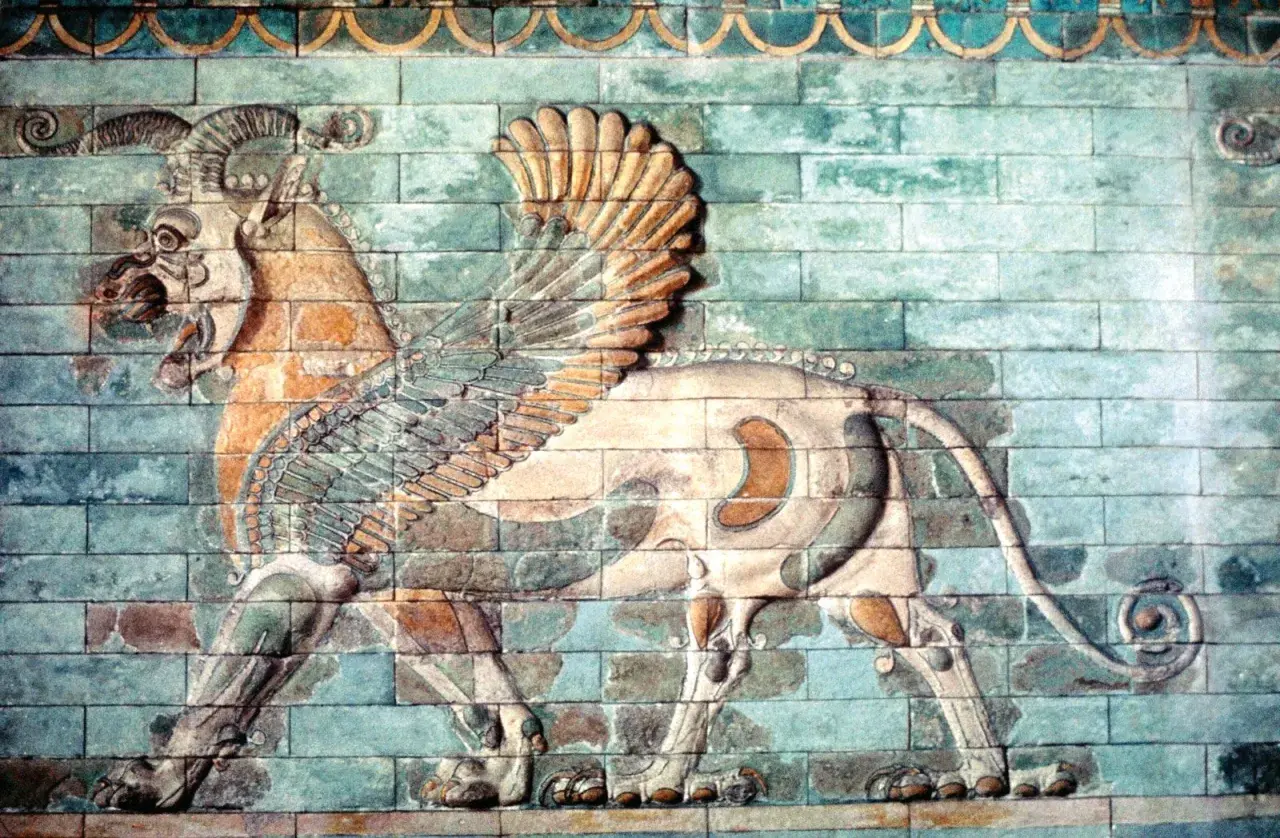
Ceramics, tiles, metalwork, textiles, and lacquer survived in different conditions, but they often preserve motifs that paintings only hint at. Repeated floral bands, architectural geometry, and stylized animals move across media. That continuity is one reason the visual culture feels so coherent across centuries.
From a preservation standpoint, these objects also remind me that survival is selective. Paper can be fragile under light, textile can fade, glaze can chip, and metal can corrode. The fact that a motif survives does not mean it survived in its original condition. It means the visual idea was strong enough to keep traveling.
With that background in place, the move into court portraiture and modern naturalism makes much more sense.
Qajar art and the shift toward modern portraiture
Qajar art is where the visual culture of Iran becomes more openly hybrid. It still loves ornament, symmetry, and court presence, but it also absorbs European naturalism, new ideas about portraiture, and a greater appetite for public display. I read this period as a negotiation, not a surrender.
The best-known Qajar works often show rulers, princes, and idealized beauties posed with a formal stillness that feels theatrical rather than casual. Faces can look more dimensional than miniature figures, yet the surface remains highly decorative. That tension is the point. The image wants to appear modern without losing its courtly authority.
What changed most was not simply realism. It was the social function of images. Portraiture became a way to project status, taste, and political legitimacy. At the same time, genre scenes and everyday subjects began to appear more often, which widened the visual field beyond pure dynastic display.
I also watch for the influence of photography. Once photographic seeing enters the culture, painted likenesses start to shift. The body becomes more frontal, the pose more fixed, and the presentation more self-conscious. Qajar art does not imitate photography wholesale, but it certainly learns from it.
If you want one practical takeaway here, it is this: Qajar painting is not a crude prelude to modernism. It is a sophisticated period in its own right, and it gives later artists a model for mixing local identity with imported technique.
How the Saqqakhaneh movement changed the conversation
The Saqqakhaneh movement is one of the most important bridges between older Iranian visual forms and modern abstraction. It emerged in the late 1950s and 1960s, and it drew on shrine forms, amulets, ritual objects, popular signs, and calligraphy to create a distinctly modern language. The movement takes its name from the public water shrine, or saqqakhaneh, a site associated with devotion and offering.
What interests me most is that the artists did not treat heritage as something to freeze. They transformed it. A talisman could become a design system. A handwritten phrase could become abstraction. A symbol could lose literal readability and still carry emotional force.
Neo-traditional is the right term here, if it is used carefully. In this context it means modern art that retools older signs instead of merely copying them. It is not nostalgia. It is an argument about continuity.
Three artists make that logic especially clear:
- Hossein Zenderoudi used dense sign systems and calligraphic repetition to turn script into structure, not just content.
- Parviz Tanavoli turned the word Heech, meaning "nothing," into sculpture, which makes absence feel physical and surprisingly direct.
- Massoud Arabshahi fused mythic references, relief-like surfaces, and ancient visual cues to make modern work feel rooted without becoming academic.
I would add Monir Shahroudy Farmanfarmaian here as well, even when she sits a little beside the core Saqqakhaneh group. Her mirror mosaics show how geometry can feel devotional, architectural, and contemporary all at once. That is one of the most enduring lessons of the period.
The movement matters because it proves that modern Iranian art did not have to choose between global modernism and local meaning. It could build a third path, and that path still influences artists today.
Contemporary practice in Iran and the diaspora
After 1979, the field became even more varied. Painting remained central, but photography, video, installation, and conceptual work grew in importance. Themes also broadened. Migration, censorship, body politics, memory, and language became recurring concerns, and the visual language often became more fragmentary or archival.
In the United States, many viewers first encounter the field through museum exhibitions, university galleries, and diaspora artists rather than through a single national narrative. I think that matters, because geography and influence are not the same thing. A work made in Tehran, Berlin, London, Los Angeles, or New York can still speak in a recognizably Iranian visual register, while a work made in Iran can be deeply international in form.
When I evaluate contemporary work, I usually ask three questions:
- Is the artist using text as meaning, or as image, or as both at once?
- Does the piece rely on biography and displacement, or is it building a more abstract language?
- Does the medium support the idea, or does the idea collapse if the format changes?
That last question is especially important for photography, installation, and video. For new media, authentication is not just about what I can see on the surface. It also depends on edition records, installation notes, file integrity, and whether the work has a stable exhibition history.
In the contemporary market, I am also careful not to confuse visibility with coherence. A well-known theme can become repetitive very quickly. The stronger works usually have more discipline: fewer gestures, better structure, and a sharper relationship between material and meaning.
With that in mind, the next question is practical rather than historical: how do you judge whether a work is genuine, important, or simply well presented?
How I evaluate a work before calling it significant or authentic
I never start with the signature. I start with provenance and material logic. If the paper, pigment, support, or surface treatment does not make sense for the claimed period, I slow down immediately. The same rule applies to paintings, works on paper, lacquer, tile, sculpture, and contemporary editions.
Provenance comes first
Provenance is the ownership history of a work. It tells me where the object has been, who handled it, and whether the paper trail is coherent. A solid exhibition history, old collection labels, invoices, archival photos, and publication records can all strengthen attribution. Weak or missing provenance does not automatically make a work false, but it raises the burden of proof.
Condition can change value faster than style
For paper-based works, light exposure, staining, trimming, and retouching matter a great deal. A page can look attractive and still have lost important evidence in the margins or at the corners. For paintings, overcleaning and relining can alter the original surface. For sculpture, later repairs may be structurally necessary but still change how the work should be interpreted.
Read Also: Abstract Art Explained - How to Read Masterpieces
Attribution is not the same as importance
Some of the most interesting historical works are workshop pieces or unattributed objects. That does not make them less useful. In fact, it often makes them better evidence for how a period actually worked. I care about this distinction because the market often overvalues a famous name and undervalues the object’s real historical role.
For a serious reader, collector, or curator, the safest approach is simple: examine the medium, compare the style, verify the chain of custody, and then ask what the work is doing inside its own historical moment. That sequence prevents most bad calls.
What I would keep in view when reading the field today
If I had to leave you with one practical method, it would be this: start with medium, then date, then visual language, and only after that move to attribution. That order is much more reliable than trying to identify a work by surface similarity alone.
- Classical page arts reward close looking and attention to text-image structure.
- Qajar works are best read as a negotiation between local court taste and modern portrait conventions.
- Saqqakhaneh art is the key example of modern form built from inherited symbols.
- Contemporary works often need stronger documentation because medium, editioning, and install history can be part of the piece.
That is the lens I trust most. It keeps the field legible without flattening it, and it makes it easier to distinguish heritage, revival, innovation, and market noise from one another.
