
The main things to know before you read the examples
- The Bayeux work is an embroidery, not a woven tapestry, and that distinction changes how it is studied.
- The Apocalypse Tapestry is one of the largest surviving medieval textile cycles, at 103 meters long and 4.5 meters high.
- Late medieval hangings were status objects, insulation, and portable political messaging all at once.
- Good interpretation depends on borders, sequence, patronage, and iconography, not just the central image.
- Preservation decisions matter because light, tension, and previous repairs can change both appearance and meaning.
- Authentication depends on materials, weave structure, repairs, and provenance, not on a dramatic story alone.
Why some medieval hangings became famous
When I look at the field, the works that become famous usually share four traits: scale, survival, patronage, and a story people can summarize quickly. They are often tied to major historical events, elite commissions, or unusually rich iconography, and they survived in better shape than most textile art from the Middle Ages. That combination is rare, which is why these pieces dominate books, museum displays, and scholarly debates.
There is also a practical reason for their fame. Textiles were used constantly, moved often, folded, repaired, and replaced more readily than stone or panel painting. The objects that reached us are therefore survivors of a very fragile medium, and their rarity gives them disproportionate weight in art history. In other words, these works are not famous only because they are beautiful; they are famous because they are exceptional evidence.
That is the key frame for reading the examples below: each one is a work of art, but each one is also a record of power, devotion, and workshop practice. Once you see that, the individual masterpieces make much more sense.The best-known examples and what to notice first
The Bayeux Museum points out that the Bayeux work is a narrative embroidery rather than a true tapestry, and that correction matters because it changes how we think about technique, labor, and terminology. If you keep that in mind, the rest of the medieval textile field becomes easier to read.
| Work | Core date | Why it stands out | What to look at first |
|---|---|---|---|
| Bayeux embroidery | c. 1070s | About 68.3 meters long and roughly 70 cm wide, with a continuous narrative of the Norman Conquest | The borders, inscriptions, and repeated scenes that give the story its rhythm |
| Apocalypse Tapestry | Late 14th century | Monumental at 103 meters by 4.5 meters, with 74 scenes that turn Revelation into a vast visual sequence | The dramatic pacing, large figures, and the way scale amplifies the apocalyptic message |
| Lady and the Unicorn | Late 15th century | Six refined hangings built around the senses and courtly allegory | The red grounds, isolated figures, and controlled stillness that create an almost dreamlike atmosphere |
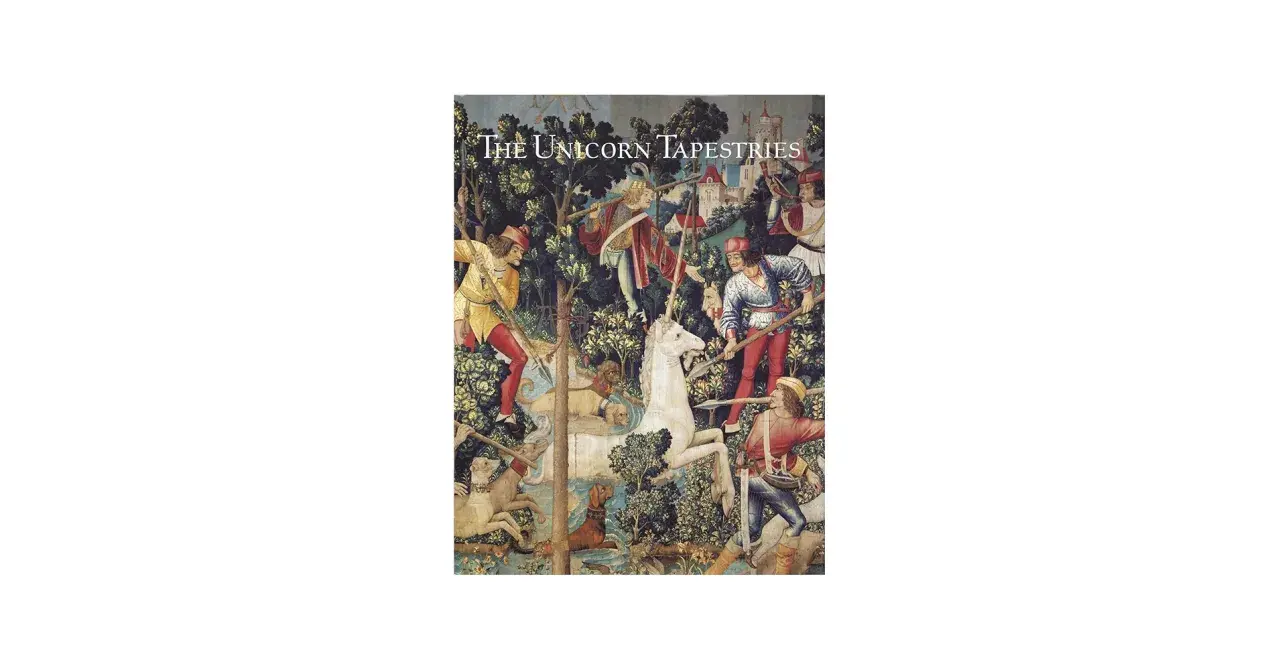
| Unicorn Tapestries | 1495–1505 | Seven late Gothic hangings with a dense symbolic hunt and a luxurious material palette | The flora, fauna, and layered symbolism around the unicorn itself |
| Nine Heroes Tapestries | c. 1400 | Among the oldest surviving tapestry cycles in The Met’s collection, with strong chivalric identity | The heroic posture, armor detail, and the way aristocratic values are staged visually |
The Met dates the Unicorn Tapestries to 1495–1505 and notes the fine wool, silk, silver, and gilt threads, which is exactly the kind of material richness that made late medieval hangings so prestigious. That mix of elegance and technical difficulty is why the Unicorn cycle still feels so alive: it is ornate, but it never looks empty.
What ties these works together is not just age. They are legible images built for rooms, rituals, and rank, which is why they still communicate so clearly even when they are fragmentary, repaired, or detached from their original setting. That visual logic becomes easier to decode once you understand how the imagery is organized.
How to read the imagery without flattening it
Borders are part of the argument
In many medieval hangings, borders hold secondary meaning: beasts, plants, heraldic repeats, and little narrative echoes that comment on the center. I would not dismiss them as filler. Medieval designers rarely wasted that space, and the edge often works like a second layer of interpretation.
In the Bayeux embroidery, for example, the margins are not just decorative trim. They help frame the main narrative while also carrying their own visual wit, which is one reason the work feels so alive across its full length. The same habit shows up in later courtly textiles, where the border can shift a piece from simple storytelling into symbolic display.
Sequence matters more than a single scene
These works were designed to be read in motion. When you follow them panel by panel, you notice pacing, repetition, and the way one image can prepare the viewer for the next. That is why a surviving fragment can be misleading: a single section may look devotional, romantic, or purely decorative until the missing panels are mentally restored.
The best viewers do not rush. They read the textile the way medieval audiences would have encountered it in a hall, chapel, or ceremonial setting, where movement and duration shaped meaning. Once you do that, the image stops being static and starts behaving like a narrative environment.
Symbolism works best when it stays layered
The unicorn is the cleanest example of this complexity. It can carry courtly, marital, Christian, and even erotic meanings at once, depending on the setting and the patron. The point is not to force one meaning onto every image, but to see how medieval viewers could hold several at the same time.
That flexibility is one of the reasons the medium remains so rewarding for art-historical study. It rewards careful looking, and it punishes quick, flattened readings. The next question, then, is how such complex objects were even made.
How they were made and why the labor was so expensive
Medieval tapestry is a labor story as much as an aesthetic one. The process relied on skilled weavers working from a cartoon, which is a full-scale preparatory design, while threading wool, silk, and sometimes metal-wrapped yarns through the warp to build the image from the back of the loom. That sounds simple until you realize how slow it was and how much coordination it required.
The Met estimates that a weaver could produce up to one square yard of coarse tapestry per month, and many medieval pieces measured as much as 5 x 10 yards, with sets that could include ten or more works. Those numbers explain the economics immediately: a textile cycle was a major investment, not a casual decorative purchase.
What the workshop needed
- Warp means the vertical support threads stretched on the loom.
- Weft means the colored threads woven across the warp to form the image.
- Cartoon means the full-size design that guides the weaver.
- Selvedge means the finished edge of the woven fabric, which can help experts study original structure and later alterations.
Materials mattered just as much as labor. Wool gave structure, silk added sheen, and silver or gilt thread signaled wealth in a way a painted wall could not. These hangings were portable architecture: they insulated stone rooms, transformed interiors, and traveled with their owners when the court moved. That portability also helps explain why they became so important to elite display.
Once you know how much skill and money sits inside the surface, preservation stops looking like a side issue and becomes central to the object’s meaning.
What preservation and authentication teams check first
In textile conservation, the biggest risks are predictable, which is useful because predictable problems can be managed. Light fades dye, tension distorts shape, dust abrades fibers, and old repairs can do more harm than the age of the object itself. A medieval hanging may look calm on the wall while quietly carrying decades of structural stress.
| Risk | Why it matters | Good practice |
|---|---|---|
| Light exposure | Weakens fibers and fades color, especially in silk and some dyes | Low light levels, filtered display, limited exhibition time |
| Tension and sagging | Stretches the weave, opens seams, and distorts the image | Custom supports, careful mounting, periodic review |
| Dust and pollution | Abrasive particles and grime can stain and weaken the surface | Controlled environments and gentle, documented cleaning |
| Old repairs | Historic interventions may be unstable, acidic, or visually misleading | Map repairs before treatment and preserve evidence of past work |
| Humidity swings | Promote deformation, biological activity, and stress at seams | Stable climate and restrained handling |
Read Also: Traditional Chinese Painting - Styles, Formats & Care
How authentication is actually tested
I would be skeptical of any object sold as medieval if the claim depends only on style and atmosphere. Authenticity needs textile evidence. Experts usually combine fiber identification, dye analysis, weave counting, seam study, iconographic comparison, and provenance research before they trust a date or attribution.
- Microscopy helps identify fiber type and signs of later repair.
- Dye analysis can show whether pigments and colorants fit the claimed period.
- Weave structure reveals workshop habits and technical consistency.
- Provenance can confirm whether the object has a plausible documented history.
The biggest red flag is a dramatic origin story with no technical support. A medieval-looking image can be imitated surprisingly well, but the joins, the stitching, the fiber behavior, and the back of the object are much harder to fake convincingly. That is why preservation and authentication are inseparable in this field.
Those checks explain why some hangings become museum masterpieces while others remain attractive but uncertain objects. They also show why the medium still matters so much in the broader history of art.
What these textiles add to the history of art styles and movements
These works sit at the intersection of late Gothic naturalism, courtly magnificence, and narrative art. They are not paintings translated into fabric; they are a separate visual language with their own rules, one that favors pattern, ceremony, and the slow reveal of meaning. For that reason, they are essential to understanding how medieval style moved across media and across regions.
They also remind us that the Middle Ages were never visually simple. A textile cycle could be densely symbolic and deeply practical at the same time. It could proclaim dynastic identity, frame a religious story, or create an atmosphere of aristocratic refinement inside a cold stone hall. That mix of function and image is exactly what makes the medium so important to art history.
- They show that medieval narrative art was not confined to manuscripts and altarpieces.
- They reveal cross-border workshop networks between France, the Low Countries, and England.
- They demonstrate how elites used textiles as portable architecture and political theater.
If I had to give one practical rule to a museum visitor or researcher, it would be this: begin with the seams, the borders, and the provenance record before you trust the central scene. Those three things usually tell you more than the image alone, and they are the fastest way to separate a true medieval textile from a later revival or a heavily altered object. In this field, that habit saves time and prevents a lot of confident mistakes.
