
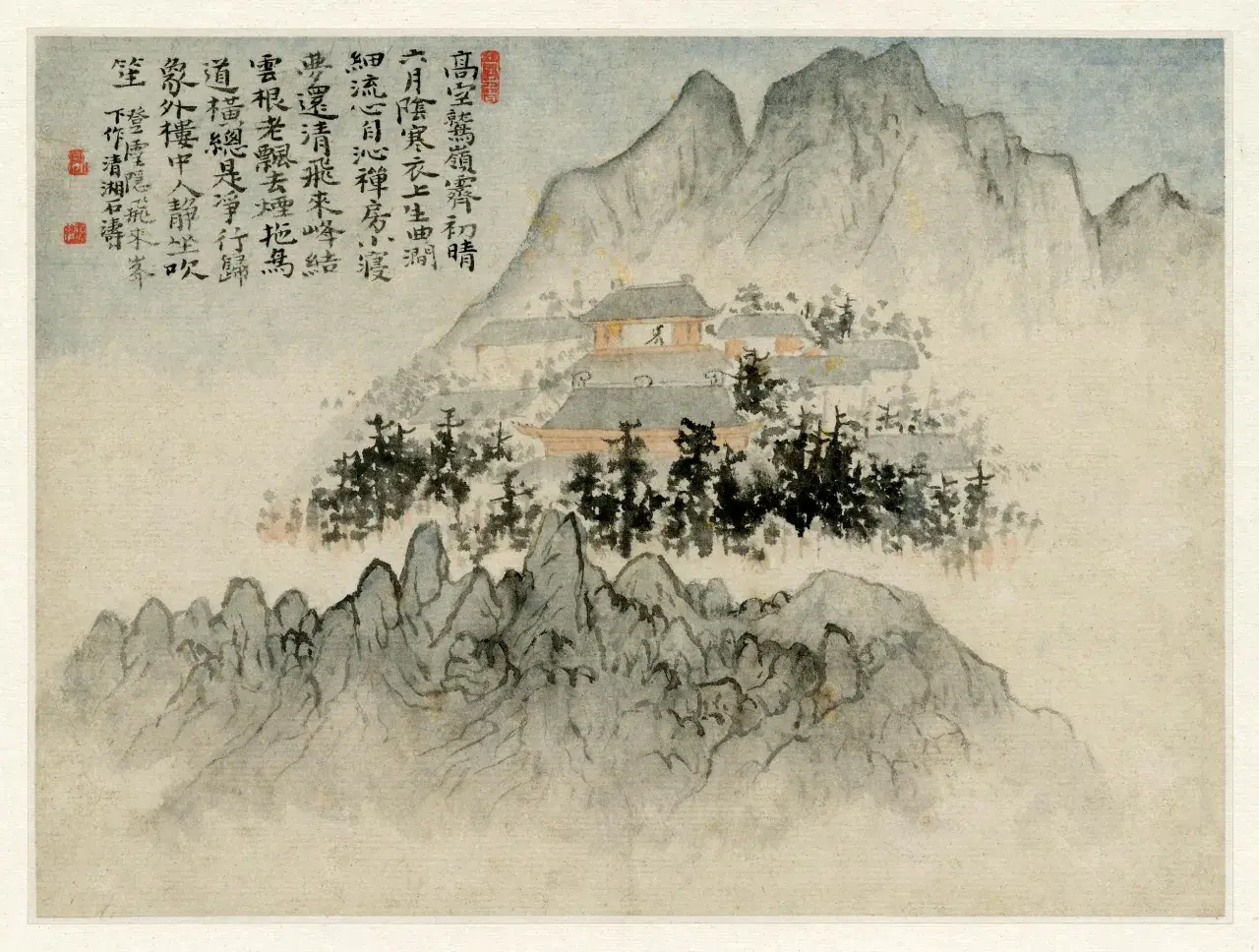
Traditional Chinese painting is less about copying appearances than about controlling brush, ink, paper, and empty space so the image carries mood as well as form. For readers interested in art styles and movements, it is also a useful case study in how technique, philosophy, and format shape meaning. Here I focus on the major styles, the viewing formats that change how the work is read, and the practical signs I use when thinking about quality, preservation, and authenticity.
The tradition is defined by brush control, format, and visual restraint
- Brushwork is not decoration; it is the main evidence of skill and intent.
- Gongbi and xieyi are the most useful style categories, but real works often sit between them.
- Handscrolls, hanging scrolls, and album leaves change the viewing rhythm and the conservation risk.
- Calligraphy, seals, and mounting are part of the work, not optional extras.
- In U.S. homes and collections, light, humidity, and handling drive most damage.
What makes the style distinct
The easiest mistake is to treat Chinese brush-and-ink painting as a thinner version of Western easel painting. It works by a different logic. The line itself matters, the speed of the hand matters, and the paper or silk responds in a way that cannot be fully corrected after the fact. A stroke that is alive on the first pass can look dead if it is hesitated over or overworked.
I usually tell people to look at the first few strokes before they look at the subject. If those strokes have no pressure change, no rhythm, and no confidence, the rest of the image rarely recovers. In the best works, negative space is not leftover space; it is an active part of the composition, holding breath, distance, and silence.The Museum of Fine Arts, Boston notes that brush choice is not generic: softer brushes suit flowers, plants, and birds, while stiffer brushes better serve landscapes and portraits. That distinction sounds technical, but it changes the visual result immediately. A soft brush can keep a plum blossom light and responsive; a firmer one can carry the edge of a mountain ridge or the structure of a face.
Calligraphy, seals, and inscriptions also belong to the image. A poem, a signature, or a red seal is not just documentary material. It can redirect the reading of the whole work, especially in pieces that were collected, appreciated, and re-mounted over time. Once you see that, the next question is how the main styles split from one another.
The styles and movements that shaped it
The field is broader than the usual split between “realistic” and “expressive.” Those labels help at first, but they flatten the real range of historical practice. I find it more useful to think in terms of how each style treats line, wash, detail, and the artist’s personal voice.
| Style or movement | What it emphasizes | Typical subjects | Why it matters |
|---|---|---|---|
| Gongbi | Meticulous outlines, layered color, and exacting control | Figures, birds and flowers, narrative scenes | Shows discipline, polish, and technical precision |
| Xieyi | Expressive brushwork, economy, and suggestion | Landscapes, bamboo, orchids, rocks, spontaneous studies | Values spirit and movement over surface detail |
| Literati painting | Poetry, brush rhythm, and a scholar’s sensibility | Quiet landscapes, bamboo, sparse albums, intimate gifts | Connects painting with cultivation, writing, and private exchange |
| Court and academy painting | Refined finish, decorative clarity, and narrative order | Ceremonial subjects, auspicious scenes, portraits | Reflects patronage, status, and institutional taste |
| Modern continuations | Hybrid materials and updated subjects | Urban scenes, revised landscapes, contemporary reinterpretations | Shows that the tradition is still evolving rather than frozen |
Historically, the broad movement runs from court refinement toward scholar self-expression, but I would not force a straight line through it. Artists borrow back and forth. A modern painter may use an old composition with a new palette. A seemingly conservative work may still contain a very personal brush rhythm. The labels are useful; they are not cages.
That overlap becomes easier to see once you understand the formats these works were made for.

How format changes the experience of the work
The support is part of the composition. The Metropolitan Museum of Art describes the handscroll as a sequence that unfolds through time and space, and that is exactly why it feels closer to reading than to hanging a painting on a wall. A hanging scroll is more immediate and ceremonial; an album leaf is intimate and often paired with poetry or companion images. The format changes how fast the eye moves and how much of the work you can understand at once.
| Format | How it is viewed | What to watch for | Conservation note |
|---|---|---|---|
| Handscroll | Opened section by section on a table, with a slow narrative pace | Continuity of brushwork, inscriptions, and collector marks | Best shown only briefly because repeated handling adds risk |
| Hanging scroll | Displayed vertically and seen from a distance first | Balance, mounting quality, and color stability | Highly sensitive to light, humidity, and long display periods |
| Album leaf | Viewed up close, often as part of a group of leaves | Margins, inscriptions, and the relationship between text and image | Usually safer in storage, but fragile at the bindings and edges |
| Folding screen or fan | Encountered as a room object or a small portable surface | How the image adapts to a divided or curved surface | Stress points often appear at joints, folds, or frame edges |
Once you think in terms of format, you start to notice a work’s social life as well. Who handled it, who wrote on it, who re-mounted it, and why it was shown at all can matter as much as the original brushwork. That is where appreciation starts to overlap with authentication.
How to read a work like a conservator
This is the point where I slow down. A strong attribution depends on a cluster of evidence, not one dramatic detail. Brush quality, paper or silk, seals, inscriptions, mounting, and provenance should support one another. If one element feels far too neat or far too modern for the rest, I treat that as a warning sign rather than a verdict.
- Look for brush rhythm and pressure changes. Mechanical lines often feel uniform in a way that real handwork does not.
- Check whether the ink or pigment sits naturally in the support. Odd gloss, flat repetition, or compressed texture can suggest later intervention.
- Read the inscriptions and seals as part of the composition. They should make historical and visual sense, not just fill space.
- Study the mounting. Fresh-looking borders, awkward repairs, or mismatched silk can hide later treatment.
- Ask whether the provenance is coherent. A believable ownership trail is stronger than a dramatic story with no documentation.
Modern examination often adds ultraviolet, infrared, and raking light to the picture, and those tools are useful because they expose underdrawing, later additions, and surface disruptions that the eye alone can miss. Still, I would never let imaging replace judgment. It should sharpen connoisseurship, not substitute for it.
When a piece feels wrong, it is often because the whole object does not agree with itself. The painting may look old, but the mounting may look recent. The seal may feel generic. The paper may age one way while the ink behaves another. That kind of mismatch is exactly what a careful viewer should learn to notice.
Preserving it in a U.S. home or collection
Scrolls and mounted paintings are more fragile than many owners expect. For storage, many conservators aim for roughly 50 to 60 percent relative humidity and about 65 to 70°F, with stable conditions mattering more than perfection. In U.S. homes, the bigger problem is often not the average condition but the swing: winter dryness, summer humidity, HVAC blasts, and sunlight that changes hour by hour.
| Risk | What it does | What I recommend |
|---|---|---|
| Direct sunlight or bright window light | Fades pigment and weakens paper and silk | Display away from windows and rotate works instead of leaving them up continuously |
| Humidity swings | Causes cockling, mold, cracking, and planar distortion | Keep storage and display conditions stable rather than chasing exact numbers |
| Poor handling | Leads to tears, edge wear, and surface abrasion | Support the full work when moving it and avoid touching the painted surface |
| Bad framing or mounting | Can trap moisture or introduce irreversible damage | Use reversible, archival materials and avoid pressure-sensitive shortcuts |
| Unsafe storage | Creates pressure marks, pests, and accidental bending | Store flat or properly rolled in archival housing, depending on the object’s format |
If you cannot keep a piece under low light and away from vents, kitchens, or bathrooms, I would store it and bring it out only for short viewing periods. These works were not designed to be treated like wall decor. They are closer to objects of occasion, and that rhythm of use is part of why so many have survived.
The final question is how to judge one well when you are standing in front of it.
What I check first when I evaluate a piece
When I am looking at a work for appreciation, acquisition, or documentation, I go in the same order every time. It keeps me from getting distracted by a famous name, a bright composition, or a dramatic story that is not supported by the object itself.
- I start with the brushwork, because that tells me whether the hand is confident, hesitant, or overly mechanical.
- I then check the relationship between image and empty space, because bad spacing is hard to hide.
- Next I read the seals and inscriptions, not as decoration but as historical evidence.
- I inspect the mounting and borders for repairs, replacements, and signs of over-restoration.
- Finally, I ask whether the provenance, condition, and visual language all point in the same direction.
When those parts agree, the work usually feels resolved. When one element fights the others, I slow down and ask whether I am seeing an original, a later recreation, or a heavily restored piece. That is the practical value of this tradition today: it trains the eye to separate surface charm from real painterly intelligence, which is exactly the kind of judgment that matters in preservation, history, and authentication.
