
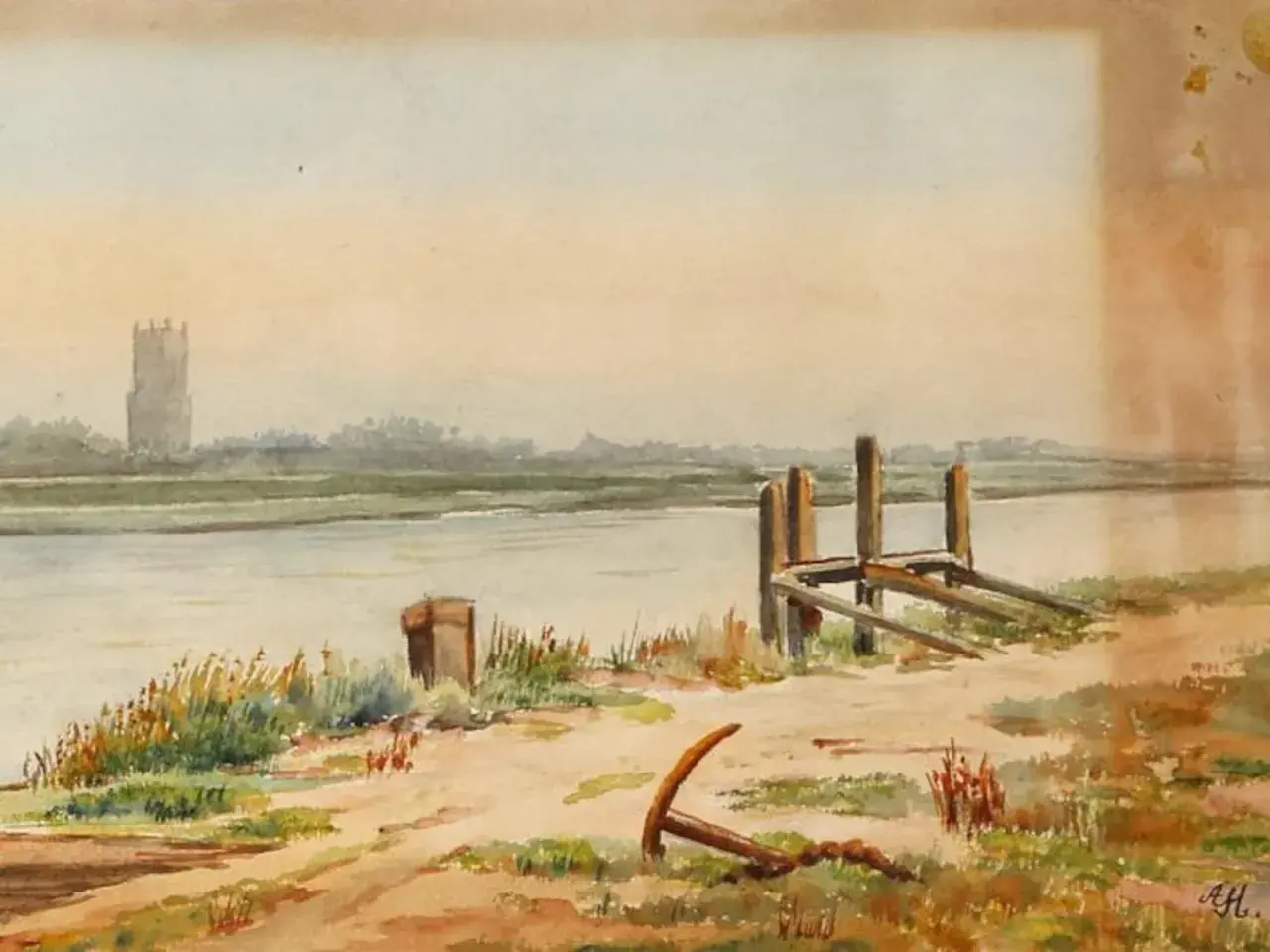
Adolf Hitler’s early watercolors and sketches are less important as art than as historical evidence: they show a failed, conventional painter before politics consumed him, and they raise difficult questions about attribution, market value, and ethics. The topic sits at the intersection of art history and provenance work, which is why Hitler's artwork is still discussed in museums, auction rooms, and research files rather than treated as a curiosity. I find the most useful way to approach it is to separate what survives, what it looks like, how experts authenticate it, and why it remains so controversial.
Key facts to keep in view
- Most surviving examples are watercolors, sketches, and small city views from the Vienna and Munich years.
- He was rejected by the Vienna Academy of Fine Arts in 1907 and again in 1908, then supported himself by painting.
- The work is usually conservative and architectural, with much weaker figure drawing than building renderings.
- Authentication depends on provenance, paper, signatures, and material analysis, not on the seller’s story.
- Forgery risk is high, especially when a piece appears without a clear ownership chain before the postwar period.
- Collector interest exists, but it is driven as much by notoriety and history as by artistic merit.

What survives from his early painting years
The surviving body of work is small enough that every attribution matters. What is generally discussed are modest watercolors, architectural views, street scenes, and a few sketch-like studies, most of them linked to the years when he was living in Vienna and later in Munich. These are not grand canvases or experimental modernist works; they are compact, careful images that usually aim for legibility rather than expression.
That matters because the work should be read as a historical artifact first. The real story is not “lost genius,” but a narrow range of conventional images that were apparently made for sale, survival, or personal routine. Once you accept that, the next question becomes more interesting: how did those Vienna years shape the subject matter so strongly?
Why the Vienna years matter
The most useful factual anchor here comes from the US Holocaust Memorial Museum: Hitler lived in Vienna from 1908 to 1913, and during that period he supported himself by painting watercolors and sketches. He had already been rejected by the Vienna Academy of Fine Arts in 1907, and his later failure to gain acceptance again in 1908-09 deepened the gap between ambition and reality. I do not think that rejection should be turned into a neat one-cause explanation for everything that followed, but it did close off the path he wanted.
That context explains the subject matter. Buildings, courtyards, landmarks, and tidy urban scenes were easier to handle than complex human figures, and they were also easier to sell. If I had to summarize the Vienna period in one line, I would call it the moment when a frustrated applicant became a part-time maker of marketable views. That leads directly to the question of style, because the pictures themselves are revealing even when they are not original.
How to read the style without mythologizing it
His work is usually described as academically conservative, and that is accurate enough. The compositions lean toward symmetry, the architecture is rendered with the most care, and the overall effect is closer to postcard realism than to any serious artistic experiment. I would not overstate originality here; the images often feel derivative of nineteenth-century taste, with a preference for neat façades, familiar landmarks, and calm, controlled surfaces.
| Feature | What you usually see | Why it matters |
|---|---|---|
| Architecture | Buildings, courtyards, churches, streets, and landmarks | Shows where his technical attention was strongest |
| Figures | Small, stiff, or secondary human forms | Suggests weaker figure drawing and less interest in people |
| Color | Restrained watercolor palettes | Keeps the work safe and descriptive rather than expressive |
| Composition | Centered, orderly, often symmetrical layouts | Gives the images a controlled, almost schematic feel |
| Medium | Mostly watercolors and drawings | Makes claims of dramatic oil painting especially suspect |
The practical takeaway is simple: these works are valuable as evidence of taste, training, and failure, not because they expand the history of modern art. The next issue, then, is not style alone but whether a given example is even genuine.
How experts authenticate attributed works
Authentication is where the subject becomes genuinely technical. A claimed Hitler piece should be tested like any other contentious attribution, but with even more caution because the market is full of speculation. I would start with provenance, which is the documented ownership history of the object; if that chain has a large gap, the claim is already weak.
Major museums use provenance research to trace how works moved through time, especially when a period includes war, seizure, or forced sales. That approach is the right one here too: check the paper, inscriptions, signatures, stamps, materials, and stylistic consistency against securely attributed examples. A convincing story from a dealer is not enough.| Check | Why it matters | Common red flag |
|---|---|---|
| Ownership trail | Shows whether the work can be placed in time | A sudden appearance with no prewar or wartime record |
| Paper and pigments | Can confirm period materials | Modern material on a supposedly early-20th-century sheet |
| Signature and inscriptions | May match known handwriting patterns | Inconsistent spelling, style, or placement |
| Stylistic comparison | Tests whether the hand and handling make sense | Overly dramatic scenes that do not fit the known corpus |
| Publication history | Earlier documentation can support legitimacy | First publication only after a sensational auction listing |
One practical point I keep coming back to: claims of oil paintings deserve extra skepticism. The safest documented examples are generally watercolors and drawings, so a rare-looking oil often becomes more of a provenance problem than a treasure hunt. That tension helps explain why the market keeps circling back to the subject anyway.
Why the market keeps circling back to them
The market interest is real, but it is not healthy in any straightforward sense. In one well-known 2015 auction in Nuremberg, 14 attributed works sold for a combined total of about €391,000, with a Neuschwanstein watercolor reportedly reaching €100,000. A few years later, more than 60 works suspected of being forgeries were seized from a German auction house, which is a useful reminder that notoriety attracts both buyers and counterfeiters.
That is why these works live in a strange middle ground. They are historically charged objects, but they are also easy to sensationalize, and sensational objects invite bad attribution habits. I think the most responsible way to discuss them is neither to romanticize the artist nor to flatten the objects into tabloid trivia. Their value lies in what they reveal about a young man’s visual limits, the market that now surrounds his name, and the ethical weight attached to any surviving sheet of paper.
How to handle a claimed Hitler work without getting pulled into the hype
If a attributed piece crosses your desk, the right sequence is boring but effective: verify the provenance, inspect the materials, compare the hand against confirmed examples, and then ask whether the story survives expert scrutiny. Do not start with the price, because price is the least reliable clue in a field this contaminated by forgery and attention-seeking.
- Ask for ownership records that bridge the prewar, wartime, and postwar periods.
- Check whether the medium matches the documented body of work.
- Compare handwriting, paper aging, and handling against known examples.
- Look for publication or exhibition history before the current seller appeared.
- Separate historical significance from artistic quality, because they are not the same thing.
That is the cleanest way to read the subject: as a narrow, technically modest art practice wrapped in a much larger historical catastrophe. If you keep that distinction intact, the work becomes easier to evaluate, harder to exploit, and far more useful as history than as spectacle.
