
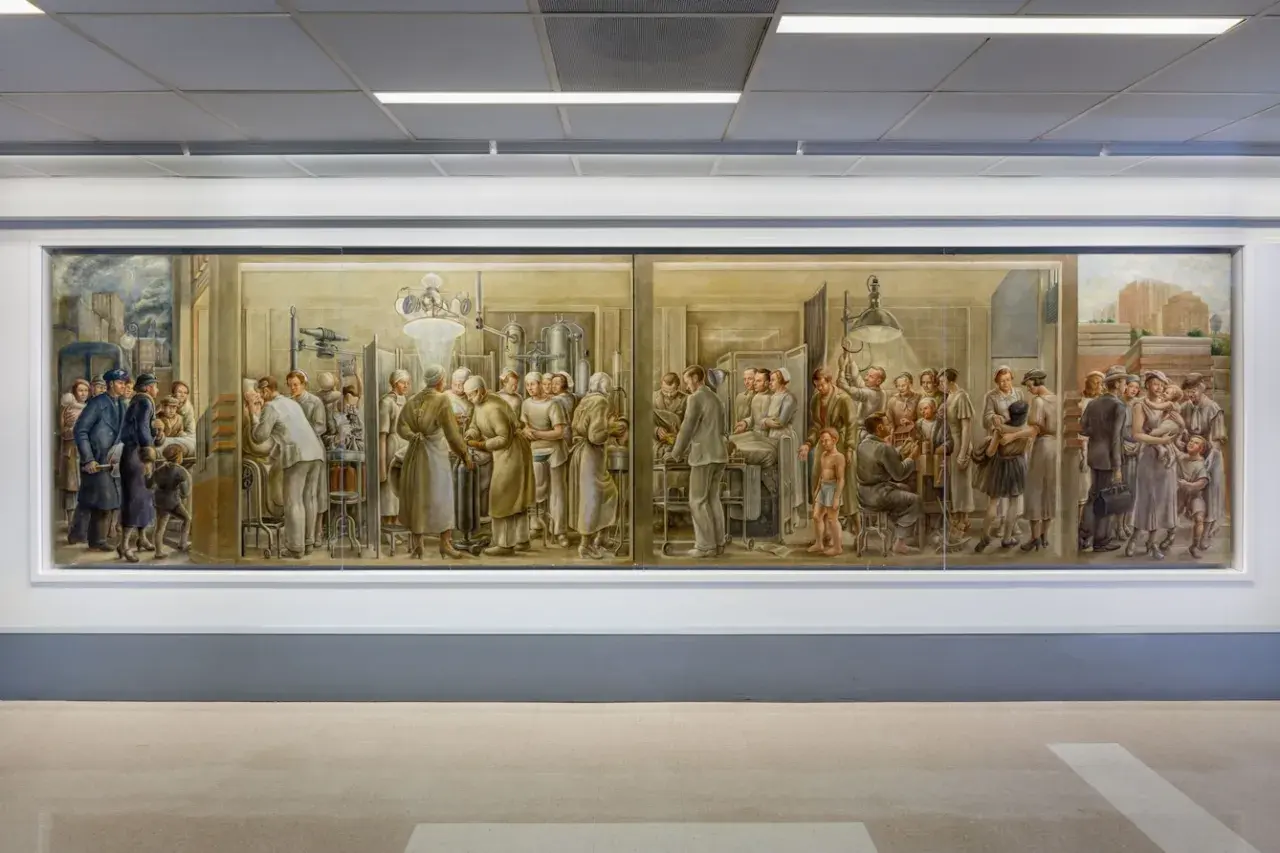
Medical art is at its best when it does more than illustrate illness. It shows who gets to diagnose, who is vulnerable, and how a culture imagines healing. This guide to famous medical paintings focuses on the artists, scenes, and visual details that make the subject worth studying, whether you are approaching it as an art lover, a collector, or simply someone who wants to understand why these works still feel so vivid.
The essential takeaway before you look at individual works
- The genre includes anatomy lessons, surgical scenes, bedside visits, quack doctors, and allegories of care.
- The strongest works usually combine medical subject matter with social commentary, not just technical detail.
- Rembrandt, Thomas Eakins, Luke Fildes, Jan Steen, David Teniers II, and Frederick Cayley Robinson are the names I would start with.
- Hands, light, posture, and instruments carry most of the meaning in this kind of painting.
- For preservation or attribution, later varnish, restoration, and copied imagery can change how a work is read.
What makes a painting medical rather than merely a sickroom scene
I do not treat every canvas with a doctor in it as medical art. For a painting to belong in this category, the act of diagnosis, treatment, anatomy, or healing needs to be central to the image, not just a background detail. That is why the field is broader than many readers expect: it includes public dissections, surgery, bedside care, folk remedies, satire, and even allegory.
In practical terms, I would group medical-themed paintings into five families:
- Anatomy and surgery, where the body itself is the focus and the painter often stages the scene almost like theater.
- Bedside care, where the emotional relationship between doctor, patient, and family matters as much as the diagnosis.
- Quackery and satire, which mock false healers or expose how uncertain medical practice could be.
- Allegory and charity, where healing becomes a symbol of mercy, faith, or civic responsibility.
- Portraits of physicians, which often present medicine as a profession with status, learning, and authority.
That range matters because it changes what the viewer should look for. A surgical canvas asks one set of questions; a lovesick patient or a satirical quack asks another. Once you know the type of scene, the rest of the image becomes much easier to read.

The landmark works worth knowing
If I had to build a compact starter list, I would choose works that show the subject from different angles: science, empathy, satire, and institutional care. The paintings below are useful because they are not just famous, they are structurally important to the way medical imagery developed.
| Artwork | Artist | Date | What it shows | Why it matters |
|---|---|---|---|---|
| The Anatomy Lesson of Dr Nicolaes Tulp | Rembrandt van Rijn | 1632 | A public anatomy demonstration led by a physician and observed by a group of colleagues | It turns medical instruction into a civic spectacle and established Rembrandt’s reputation early in his career. |
| The Sick Woman | Jan Steen | c. 1663-1666 | A woman in bed while a charlatan tries to diagnose her condition | It captures the uncertainty of early diagnosis and satirizes folk medicine without losing human sympathy. |
| The Foot Doctor | David Teniers II | c. 1650-1659 | A rustic healer working on a foot complaint | It reveals how artists used medical scenes to comment on class, expertise, and the line between treatment and quackery. |
| The Gross Clinic | Thomas Eakins | 1875 | A surgical operation performed before students and observers | It is one of the great realist paintings of the 19th century and a landmark image of modern medicine in action. |
| The Doctor | Sir Luke Fildes | 1891 | A doctor quietly keeping vigil over a sick child | It shifted the focus from procedure to bedside presence and became an enduring image of medical compassion. |
| Acts of Mercy | Frederick Cayley Robinson | 1916-1920 | An allegorical hospital cycle built around care, loss, and human dignity | It expands the genre beyond diagnosis and makes healing feel institutional, symbolic, and deeply human at once. |
What I find most useful about this group is the contrast between them. Rembrandt and Eakins are about knowledge made visible. Fildes is about care as moral attention. Steen and Teniers use illness to expose the shaky authority of healers. Cayley Robinson pushes the subject toward compassion and collective responsibility. Together, they show that medical imagery is never just about medicine.
How artists turned medicine into a visual language
Once you start comparing these works side by side, certain visual habits appear again and again. Artists learned to make medicine legible through staging, and they did it with tools that are still recognizable today: light, gesture, instruments, and the arrangement of bodies in space.
Light and staging
Medical scenes are often lit like performances because medicine itself was often performed in front of others. In The Anatomy Lesson of Dr Nicolaes Tulp, the body on the table and the faces around it are balanced with such precision that the lesson feels ceremonial. In The Gross Clinic, the bright surgical focus at the center pulls your eye toward the incision while the surrounding darkness amplifies the tension. That contrast is not decorative. It is the picture’s argument.
Hands and instruments
Hands carry authority in these paintings. A raised finger can explain, a steady palm can reassure, and a tool held too casually can feel ominous. Instruments matter for the same reason. A scalpel, syringe, pulse check, or bandage tells you what kind of medicine the artist wants to show. In satirical scenes, the tools may look awkward or outdated on purpose, which is one reason quacks are so easy to identify in Dutch genre painting.Read Also: Fernand Léger Paintings - Why His Art Still Feels Modern
The patient and the crowd
The patient is not always the center of the story. In some works, the audience around the body is almost more important than the body itself. That is especially true in anatomy lessons and surgical demonstrations, where the crowd stands in for the public understanding of science. In bedside scenes, by contrast, the family, parent, or child often carries the emotional weight. The most successful paintings know who is supposed to feel powerful and who is supposed to feel exposed.
That visual grammar is what turns a medical setting into a memorable painting. Once you can see it, the next step is judging whether the artist is being sympathetic, critical, or simply theatrical.
How I read these works for detail, meaning, and accuracy
When I study this kind of painting, I ask five questions before I worry about style. They are simple, but they prevent a lot of shallow reading.
- Who has control of the scene? If the doctor dominates the composition, the work may be about authority. If the patient does, the picture may be about vulnerability or suffering.
- Is the artist praising medicine or questioning it? A scene of surgery can be heroic, but a scene of quackery can be comic, moralistic, or quietly cruel.
- Do the details look historically grounded? Costumes, instruments, and interiors can help date a work, but they can also be deliberately outdated to sharpen the message.
- Is the title descriptive or interpretive? Some medical paintings were later titled in ways that simplified the original meaning, especially when illness, love, and diagnosis overlap.
- What does the body language tell me? Averted eyes, clenched hands, and a mother’s posture can reveal more about the scene than the physician’s face does.
This is where works like Jan Steen’s sick-room images become especially interesting. They do not present diagnosis as a clean, rational act. They show uncertainty, misdirection, and social performance. That is a more accurate picture of historical medicine than many people expect, and it is one reason the genre is still worth taking seriously.
Why conservation and attribution matter here
Medical scenes are often painted with deep shadows, dense interior spaces, and tightly packed figures, which makes them vulnerable to misreading when the surface changes. Old varnish can warm or darken flesh tones, flatten the room, and make a carefully staged scene look heavier than the artist intended. A later cleaning can do the opposite and strip away some of the atmosphere that made the work convincing in the first place.
For attribution, the small details matter more than usual. A misdrawn hand, a revised instrument, or a costume element added in restoration can change the interpretation of the entire picture. That is why technical study is so useful in this field:
- X-radiography can reveal structural changes beneath the visible paint layer.
- Infrared reflectography can expose underdrawing and compositional shifts.
- Pigment analysis can help confirm whether materials belong to the claimed period.
- Provenance research is essential because medical scenes were often copied, adapted, or reinterpreted over time.
I would be especially cautious with works that survive in multiple versions or that were popular enough to be engraved and widely circulated. In those cases, the title may be familiar, but the actual hand behind the surface needs careful checking. For a site focused on preservation and authentication, this is exactly where medical imagery becomes a rewarding category to study.
Why these scenes still feel current in 2026
The reason this subject still works is that medicine has never been only technical. It has always been social. It depends on trust, interpretation, patience, and the ability to hold uncertainty long enough to act. That is why the strongest paintings in this field still feel modern: they show the room around the procedure, not just the procedure itself.
If I strip the subject down to its essentials, the best medical paintings do three things exceptionally well:
- They make expertise visible without making it cold.
- They show vulnerability without turning the patient into a symbol only.
- They keep the emotional stakes human, even when the subject is clinical.
That is also the best way to remember the genre if you are building a reading list or looking at museum collections. Start with Rembrandt for anatomy, Eakins for surgery, Fildes for bedside care, Steen for satire, Teniers for quackery, and Cayley Robinson for mercy as a visual idea. Those works are famous for a reason: they do not simply depict medicine, they explain what people have wanted medicine to mean.
