
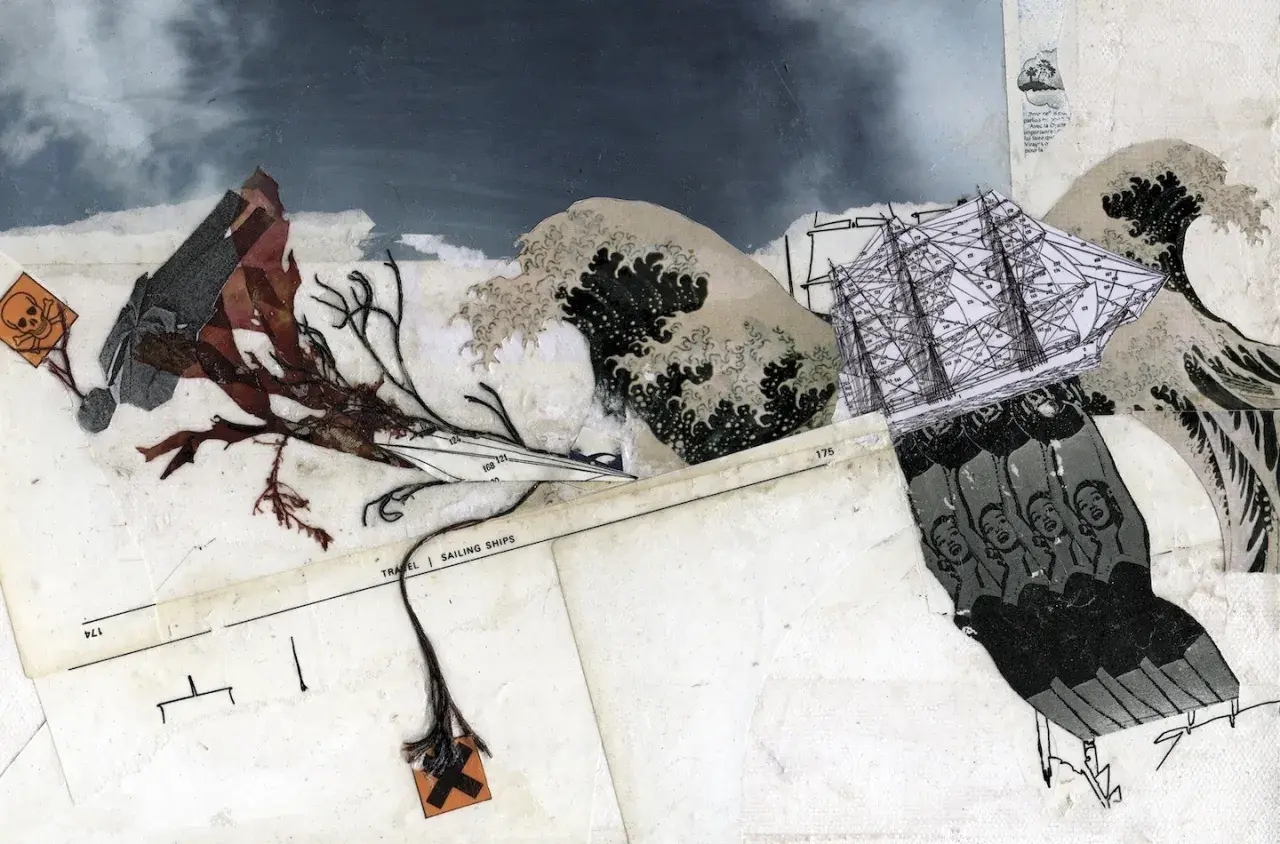
Collage turns ordinary scraps into a finished image, and that is exactly why the medium still feels fresh. It sits between drawing, painting, print, and sculpture, yet it keeps its own logic: select fragments, attach them to a backing, and let the new relationships do the visual work. In practical terms, this is the best way to understand what an art collage is, along with the materials, methods, and preservation choices that shape the result.
Here are the key things to know about collage art
- Collage is usually a two-dimensional work built by attaching fragments to a support such as paper, board, canvas, or wood panel.
- The strongest collages use contrast on purpose: smooth and rough, printed and hand-made, old and new, quiet and crowded.
- Paper, photographs, fabric, paint, and found ephemera can all work, but each one changes both the look and the lifespan of the piece.
- Archival support and adhesive matter if the work is meant to be collected, exhibited, or preserved.
- The medium became central to modern art because it made everyday materials part of serious visual thinking.
Collage is built from fragments, not just decoration
I think of collage as an image assembled from pre-existing pieces that are cut, torn, layered, stitched, or glued onto a support. The support, or backing, can be paper, board, canvas, or wood panel, and the fragments can come from magazines, drawings, fabric, photographs, maps, packaging, or handwritten notes.
What makes the medium compelling is not the glue itself. It is the change in meaning that happens when a fragment leaves its original context and starts speaking inside a new composition. A ticket stub can become memory, a newspaper headline can become criticism, and a scrap of patterned cloth can carry more emotional weight than a painted shape. That is also why collage often feels immediate: it keeps traces of real life visible while reorganizing them into something deliberate. Once that basic logic is clear, the next step is choosing the materials that support it.

The materials that define the medium
Materials are not a neutral choice in collage. They control texture, edge quality, weight, opacity, color shift, and longevity, so I usually decide on the materials before I decide on the final image. A work made from thin paper scraps behaves very differently from one built with fabric, heavy board, or found objects.
| Material | What it contributes | What to watch for |
|---|---|---|
| Paper and cardstock | Clean edges, layering, crisp color blocks, easy tearing or cutting | Wrinkling, warping, weak fibers, and color shift if the paper is low quality |
| Photographs and printed images | Memory, realism, contrast between image and surface | Fading, toner transfer, and gloss differences between old and new prints |
| Fabric and thread | Softness, pattern, tactile depth, a more handmade feel | Fraying edges, adhesive bleed, and uneven weight across the surface |
| Found ephemera | Context, narrative, time stamp, and an archive-like quality | Acidity, brittleness, and contamination from old inks or coatings |
| Paint, ink, and drawing media | Unity across layers and the ability to bridge unrelated fragments | Smearing, overworking, or burying the collage structure |
For a backing, I usually prefer something flatter and sturdier when the composition is dense, because a firm surface helps the edges stay readable. Heavy paper, mat board, illustration board, and primed wood panels are all practical options; canvas can work, but it introduces more movement and often less precision. When the work is meant to last, I also lean toward archival or conservation-grade adhesive rather than generic craft glue, because the wrong bond can fail slowly and quietly. With the material base settled, it becomes easier to decide which kind of collage you are actually making.
Ephemera are short-lived printed or personal items such as tickets, flyers, labels, or receipts, and they often give collage its sense of time and place.
The main collage families and how they differ
People often use “collage” as a catch-all, but the distinctions matter. A paper collage, a photomontage, and a mixed-media composition can look related while serving very different ideas. I keep assemblage in the comparison too, because the boundary between flat and dimensional work is where many artists first get confused.
| Form | Typical materials | Visual effect | Best use |
|---|---|---|---|
| Paper collage | Cut or torn paper, cardstock, printed scraps | Clear layering and sharp surface relationships | Illustration, abstraction, studies, and image-making with strong edges |
| Photomontage | Photographs, printed images, fragments of text | Rupture between realism and construction | Conceptual work, commentary, memory, and visual storytelling |
| Mixed-media collage | Paper plus paint, ink, fabric, charcoal, or transfers | Richer surfaces and more painterly unity | Expressive work that needs both image and texture |
| Assemblage | Found objects and material fragments that project from the surface | More sculptural depth and physical presence | Three-dimensional or relief-based work |
The useful distinction is simple: collage stays primarily two-dimensional, while assemblage moves into space. I find that boundary helpful because it forces a more honest material decision. If the piece depends on depth, weight, or shadow, I treat it differently from a flat composition. Once that choice is made, the process itself gets much cleaner.
How I would build a collage from scratch
There is no single correct method, but there is a reliable order of operations. The mistakes I see most often come from starting to glue before the composition has been tested, or from collecting so many elements that the final image loses its point of view.
Start with one visual rule
I usually begin with a constraint: a limited palette, a single dominant shape, a repeated motif, or one strong source image. The rule matters because collage can get visually noisy very quickly, and a rule gives the piece a spine.
Sort by scale, value, and texture
Before anything touches the backing, I sort the fragments into broad categories. Large pieces establish structure, mid-size pieces connect the composition, and small accents handle rhythm. Value, meaning light-to-dark contrast, matters as much as color because it keeps the eye from getting lost.
Test the layout dry
I always arrange the elements without adhesive first. That lets me see whether the image has a focal point, whether the negative space is doing any work, and whether the surface feels balanced or merely busy. This is also the stage where tearing can outperform cutting, especially if I want a softer edge or a more weathered look.Read Also: Egg Tempera Painting - Master This Demanding Medium
Glue in layers, not all at once
Once the layout works, I attach the background first, then the midground, then the smallest accents. I use adhesive sparingly and press each piece flat so the surface does not buckle. If paper starts to cockle, meaning ripple or warp from moisture, I stop and let it settle rather than forcing the next layer on top. That patience is usually what separates a clean collage from one that looks rushed.
When the structure is finally working, the last decision is not what to add but what to leave alone. That restraint matters more than most beginners expect, and it leads directly to the history of the medium, where collage became a serious artistic language rather than a craft exercise.
Why collage became central to modern art
Modern collage took shape in the early twentieth century, especially in Cubist experiments by artists such as Pablo Picasso and Georges Braque around 1912. Their pasted papers changed the game because the artwork no longer pretended to be only an illusion; it also admitted its own construction. That shift opened the door for text, wallpaper, newspaper, and other real-world fragments to enter fine art without apology.
From there, the medium spread into Dada photomontage, Surrealist image-making, and later work by artists such as Kurt Schwitters, Hannah Höch, Romare Bearden, and Wangechi Mutu. Each of those artists used collage for a different reason, but the common thread is visible enough: collage lets art hold contradiction. It can be witty and serious, intimate and political, damaged and elegant at the same time. That flexibility is one reason the medium still feels current in 2026, especially in a visual culture built from screens, feeds, edits, and fragments. The question then becomes less about style and more about survival.
How collage ages and what conservators watch first
For preservation, collage is a mixed blessing. Its layered surface creates visual richness, but every layer introduces a possible failure point: weak adhesive, acidic paper, brittle ink, lifting corners, cockling, or warping from moisture. I pay attention to those issues early because repair is always more complicated than prevention.
The first things I look at are the support, the adhesive, and the most fragile inserted material. A collage built on acid-free board with a stable, neutral-pH adhesive has a much better chance of staying visually coherent than one built with low-grade paper and a glue that dries brittle or yellow. I also keep the work out of direct sun, avoid damp storage, and frame it with spacing when the surface has raised elements. If the piece includes unusual materials, I document them clearly: paper types, adhesives, found components, and any later additions. That record helps future conservators, and it also matters when the object is being authenticated or cataloged.
In practice, I treat collage like a work whose meaning is inseparable from its materials. A newspaper clipping, a receipt, or a printed photograph is not just imagery; it is evidence of a particular moment, and that evidence becomes harder to read if the material is allowed to decay unchecked. With that in mind, the last thing I check is whether the piece still reads as one intentional image rather than a stack of interesting scraps.
These are the signs of a collage that will hold its own
When I look at a finished collage, I check four things first: a clear focal point, a purposeful contrast of materials, secure adhesion, and enough open space for the eye to rest. If all four are present, the piece usually feels intentional rather than overworked.
- A readable hierarchy means the viewer knows where to look first and where to move next.
- Material contrast gives the work tension, but only if the contrasts are chosen rather than accidental.
- Stable construction keeps the collage from becoming a preservation problem within a few years.
- Documented materials make later care, exhibition, and authentication much easier.
That is the simplest answer I can give: collage is the art of arranging fragments so they feel newly inevitable. When the materials, composition, and support are chosen with care, the result is more than a pasted surface; it becomes a durable visual argument.
