
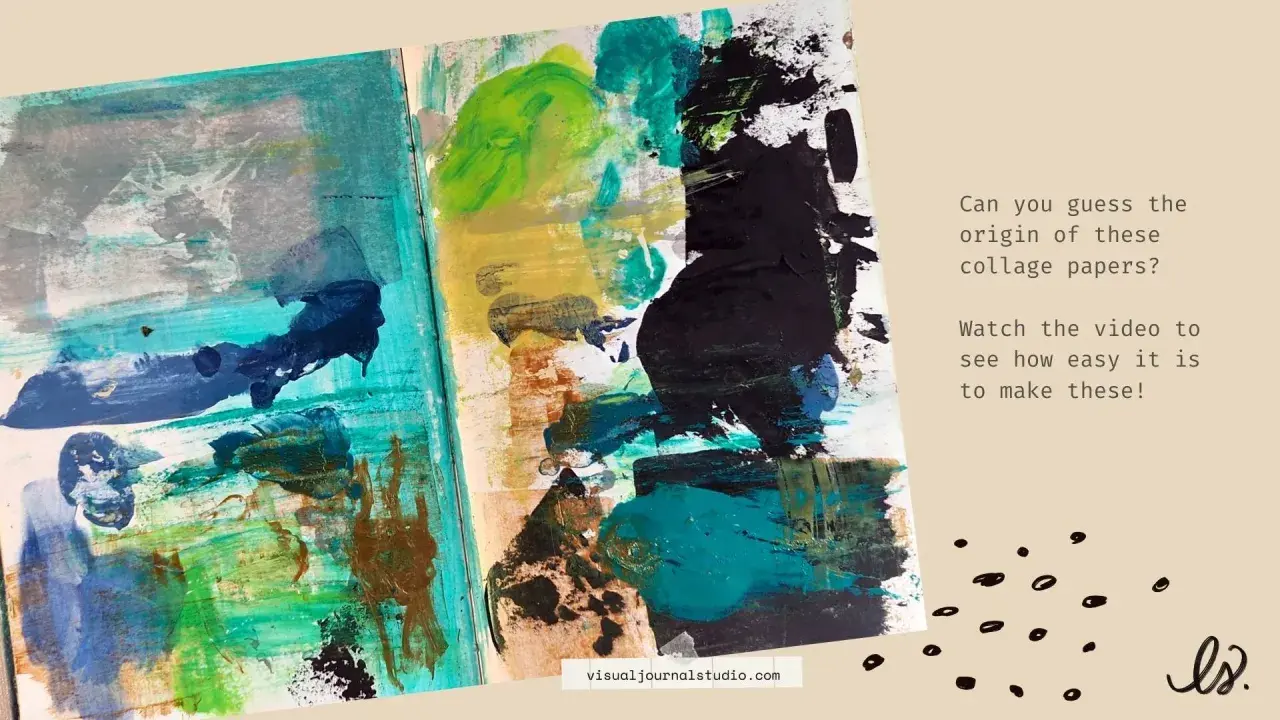
Paper collage art looks simple until you have to make it hold together, read clearly, and age well. The real decisions happen before the first scrap lands on the support: which papers will carry light, which adhesive will stay flexible, and how much texture the finished image can handle without buckling. In this article I focus on the practical side of the medium, from materials and assembly to composition and preservation, so the finished piece is not only attractive but dependable.
What matters most when paper becomes a finished image
- A rigid, acid-free support prevents the slow warp that ruins many beginner collages.
- Cut edges, torn edges, and translucent layers create very different visual rhythms.
- Archival adhesives such as pH-neutral PVA or acrylic gel are safer for work meant to last.
- Newsprint and magazine pages are expressive, but they are not the best choice for a piece you want to frame for decades.
- Framing with a mat, spacer, and UV-aware glazing protects the surface without flattening the image.
What gives collage with paper its strength
At its best, collage is not just glued fragments; it is an argument made from edges, overlap, scale, and timing. I think of the support as the silent partner in the work, because a weak backing or a poor adhesive can undermine even the strongest composition. The medium is powerful precisely because it lets ordinary paper carry weight, memory, and contrast at the same time.
Cut edges and torn edges
Cut edges feel deliberate and architectural. Torn edges feel softer, more human, and often a little more atmospheric because the fiber line catches light differently. I use cuts when I want clarity, geometry, or typography to lead; I use tears when I want weather, age, or movement to show through.
Layering and transparency
Thin papers, tissue, tracing paper, and lightly printed scraps can create depth without adding much bulk. When a lower layer remains visible through an upper one, the image starts to read like memory rather than simple decoration. That is one of the reasons paper-based collage can feel so alive: the surface is flat, but the reading of it is not.
Once those basic behaviors are clear, the next question is which materials will support them without causing problems later.
The materials that change the result most
A workable starter kit in the US can be modest if you already have cutting tools: roughly $25 to $60 for basics, or about $75 to $150 if you buy archival paper, adhesive, board, and a decent cutting tool at the same time. I would spend first on paper variety, a reliable adhesive, and a rigid support; decorative scraps matter less if the structure underneath fails.
| Material or tool | Best use | Why it matters | Watch-outs |
|---|---|---|---|
| Cotton rag or heavyweight watercolor paper | Stable foundations for finished work | Handles moisture better and resists cockling, which is the puckered waviness paper gets when wet and dries unevenly | Costs more than ordinary drawing paper, often about $10 to $25 per pad |
| Tissue, tracing paper, and handmade sheets | Soft layers, translucency, glow | Create depth without much weight and let lower layers show through | Can wrinkle, bleed, or tear easily if overworked |
| Magazine pages, newspaper, and book paper | Found-image work, typography, quick studies | They are accessible, cheap, and visually immediate | They are usually acidic and can yellow faster in light |
| pH-neutral PVA or acrylic gel medium | General-purpose archival adhesion | Flexible, strong, and better suited to work meant for framing | Too much product leaves ridges, shine, or visible seepage |
| Wheat starch paste | Conservation-minded bonding | Reversible, flexible, and long trusted in paper conservation | Less convenient for beginners because it needs preparation and practice |
| Mount board or a cradled panel | Final support for finished collage | Helps keep the surface flat and reduces long-term distortion | Thin card can warp once glue and paper start to pull against it |
If I had to reduce this section to one rule, it would be simple: build on a better support than you think you need. The decorative surface gets the attention, but the support decides how the piece behaves over time.
That material choice becomes much easier once the workflow itself is under control.
My preferred workflow for building a collage
In my studio, the image is usually clearer before glue enters the conversation. I move scraps around, photograph a few versions, and only then commit. That habit saves time and keeps the surface from turning into a pile of good intentions.
- Choose and prepare the support. If I am using reclaimed card, I seal it with an acrylic primer or use a barrier layer so the backing does not contaminate the collage.
- Sort paper by weight, opacity, and edge behavior. Fragile tissue should not sit in the same pile as heavy card stock.
- Test the composition dry. I look for a strong focal area, a few supporting shapes, and at least one quiet space where the eye can rest.
- Adhere from the largest shapes downward. A bone folder, which is a flat pressing tool used to smooth paper without scuffing it, helps remove bubbles when you work through release paper.
- Let the piece dry flat. Twelve to 24 hours is a realistic window for many small works; thicker builds often need longer.
- Trim, sign, and document the materials. I like to note paper types and adhesive on the reverse or in studio records, because that information matters later if the piece is framed, sold, or conserved.
If the piece feels overworked at this stage, the problem is usually not talent but timing. Dry fitting first solves more problems than a second round of glue ever will.
From there, the real craft is deciding how the viewer should move through the surface.
Composition choices that make the surface feel intentional
Use contrast as structure
Matte next to glossy, opaque next to translucent, torn next to cut, large next to small - these contrasts keep the eye moving. When every fragment has the same finish, the collage can flatten out fast, even if the colors are attractive.
Let negative space breathe
Empty areas are not wasted space. They create pause, and pause gives the denser clusters more authority. I often remove one more fragment than I think I need, because the image usually improves when it can breathe.
Repeat with restraint
One repeated color, shape, or paper stock can unify a work. Too many repeated motifs make the piece decorative instead of directed. Repetition should organize the surface, not decorate it for its own sake.
Read Also: Art Casting Explained: Bronze, Glass, Plaster & Resin Methods
Build a hierarchy
Ask what the viewer should notice first, second, and third. If that answer is unclear, the collage probably needs a stronger focal shape, a quieter background, or a cleaner edge between competing areas.
Those choices matter even more when the work is expected to survive handling, framing, and storage.
How to keep a paper collage flat and legible over time
Once a collage leaves the studio, light and humidity become part of the medium whether you want them to or not. I treat preservation as design, because a good frame can protect the edges, texture, and color balance that made the piece work in the first place.
| Risk | What it does | Practical response |
|---|---|---|
| Direct sunlight | Fades dyes and yellows paper, especially newsprint and magazine stock | Display away from direct sun and consider UV-filtering glazing |
| Humidity swings | Causes cockling, edge lift, and in bad cases mold risk | Keep the work in a stable room and avoid damp spaces like bathrooms or kitchens |
| Acidic backing | Can discolor the work over time | Use acid-free mat board, backing, and hinges |
| Tight glazing | Crushes texture and can stick to raised areas | Use spacers or a shadowbox-style frame if the surface has height |
| Heavy spray coatings | Can change sheen and make future treatment harder | Test first and use sparingly; do not assume a coating equals conservation |
If you are making work to sell or archive, photograph it before framing and keep a note of dimensions, paper stocks, and adhesive. That record is useful not only for your own studio practice but also if condition or authenticity is ever questioned later.
The final trap is mistaking a neatly glued surface for a finished one.
Common mistakes that age badly
- Using too much glue. It stains fibers, slows drying, and leaves ridges that never quite disappear.
- Choosing paper only for color. Bright scraps are useless if they crumble or fade in natural light.
- Mounting on flexible card. A thin backing can warp once the adhesive dries and the paper starts to pull.
- Ignoring edge lift. Even small corners that are not fully anchored can catch dust and eventually detach.
- Oversealing the surface. A glossy coat can flatten texture and complicate later conservation, so I only use it when the medium truly benefits from it.
Most of these mistakes come from trying to finish too quickly. Collage rewards patience more than speed, and the difference shows months later, not minutes later.
The last checks I make before a collage leaves the studio
Before I sign off on a collage, I look at it from three distances: close enough to see glue and edge quality, arm’s length to read the balance, and across the room to see whether the composition still holds. If it fails at any of those distances, it is not finished yet.
- The support is rigid and flat enough for the intended frame.
- The surface has no unintended shine, tide marks, or wrinkled adhesive pools.
- The piece is documented with date, materials, and size.
- The frame plan matches the physical height of the layers.
- The work can be stored away from heat, sunlight, and damp backing boards.
That is the practical heart of the medium: the image can be poetic, but the build has to be disciplined. When the paper, adhesive, and support are chosen with care, collage stays vibrant instead of becoming fragile too soon.
