
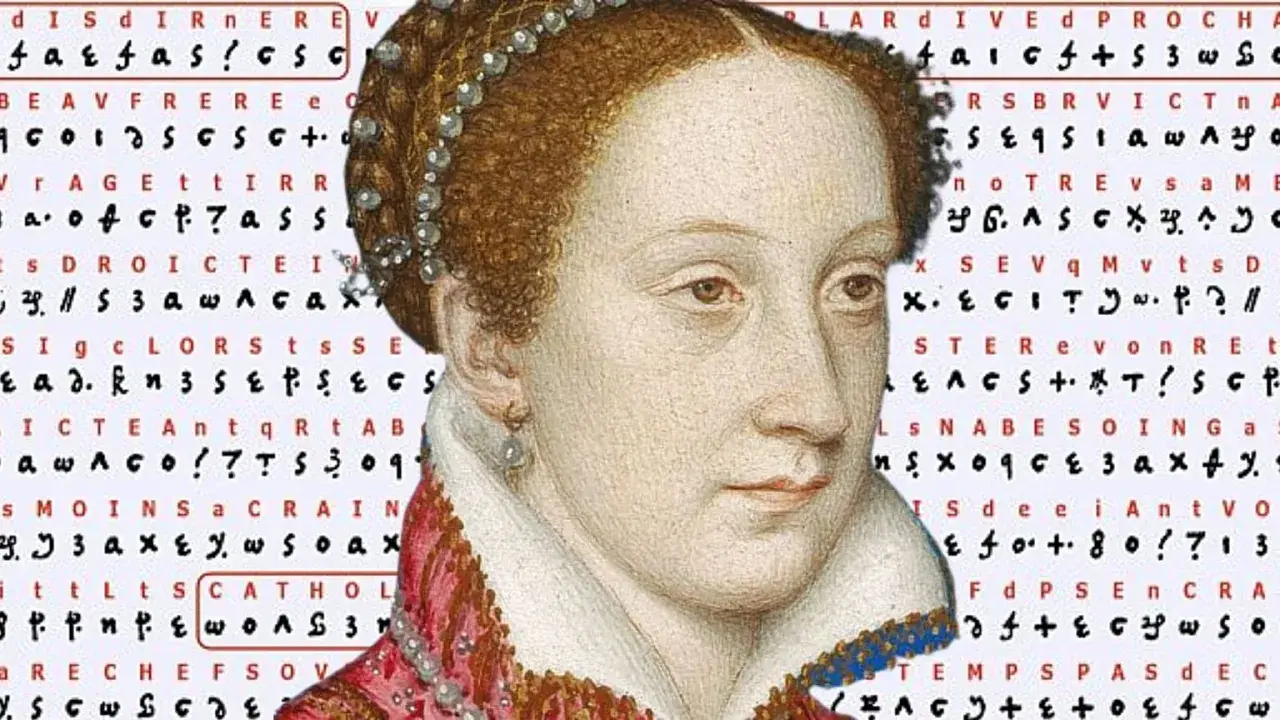
A portrait of Mary, Queen of Scots is never just a face on a panel. It is a political image, a devotional statement, a dynastic claim, and often a later copy that preserves an earlier prototype more faithfully than the surface first suggests. In this article I break down the main painted versions, the symbols that shape their meaning, and the technical checks I would use before trusting any attribution.
Key things to know before you read Mary Stuart’s portraits as evidence
- The image most people picture is not a single fixed portrait but a family of related works.
- Mary’s portraits circulated as diplomatic gifts and political messages, not simple likenesses.
- Some of the most important paintings are tied to Nicholas Hilliard’s miniature tradition and later large-scale versions.
- Details such as the rosary, veil, black clothing, and inscriptions change how the portrait should be read.
- Authentication depends on provenance, dendrochronology, pigment analysis, and the amount of later restoration.
Why Mary’s portraits were political objects, not just likenesses
The first thing I tell people is that Mary’s portraiture belongs to politics as much as to art. In a sixteenth-century court culture, an image could stand in for presence, reinforce rank, and circulate when the sitter could not. Mary sent a portrait to Elizabeth I in 1561; portraits were exchanged again in 1562, and in 1564 Elizabeth showed Sir James Melville a miniature of Mary. That is not casual decoration. It is image diplomacy.
Once Mary was forced to abdicate in 1568 and later held in captivity, portraiture took on a second life. The image had to do more than show a recognizable face. It had to preserve legitimacy, signal identity, and sometimes carry quiet Catholic or dynastic meanings that made sense to a sympathetic viewer. Once you see that function, the technical questions make more sense: the paint is part of the argument.
The main painted versions most readers encounter
There is no single “standard” painted portrait of Mary Stuart. What survives is a chain of related works: small panels, large replicas, workshop versions, and later copies. I usually sort them by scale, date, and how close they are to a likely source image.
| Version | What to notice | Why it matters |
|---|---|---|
| Small panel portrait, about 9 7/8 in. x 7 1/2 in. | Oil on panel, now understood as sixteenth century rather than eighteenth; the costume matches a miniature in the Uffizi. | It may be closer to an early source image than older catalog records once suggested. |
| Large portrait after Nicholas Hilliard, 31 1/8 in. x 35 1/2 in. | Inscribed 1578, associated with captivity imagery, rosary, veil, and black dress. | Often treated as the earliest surviving large-scale version and one of the most important visual statements about Mary. |
| Later canvas versions, engravings, and prints | Frequently repeat the same pose or costume but with later handling and sometimes altered details. | They are essential for reception history, but they are not proof of a life sitting. |
The National Portrait Gallery notes that one small panel once thought to be eighteenth century moved firmly into the sixteenth after dendrochronology, while the larger 1578 version is tied to a Hilliard miniature and likely belongs to Mary’s lifetime. That is exactly why I never trust appearance alone. From there, the next question is what the sitter’s clothing and objects were meant to say.

How to read the symbols in the image
Mary’s portrait language is unusually dense, and the details are doing most of the work. If you strip away the costume and objects, the image becomes much flatter. With them, it becomes a statement about faith, captivity, and royal memory.
- Black clothing often reads as restraint, mourning, or formal severity, but in Mary’s case it also helps frame her as a woman under pressure rather than a courtly flourish.
- The veil and ruff sharpen the silhouette and push the face forward, which keeps the viewer focused on expression rather than luxury.
- The rosary is one of the strongest signals of Catholic identity in the painted tradition.
- The small cross and repeated “S” motifs are generally read as references to Stuart identity, so the object is both devotional and dynastic.
- The motto or inscription usually associated with the rosary is often translated in the spirit of “troubles on all sides,” which fits the image of a queen under confinement.
- The gaze matters more than many viewers realize; in some versions it has been altered from the source miniature, and that changes the emotional temperature of the work.
I treat these elements as evidence, not decoration. A rosary can be a prayer object, a political signal, or both at once. A black gown can suggest dignity, loss, or strategy. That symbolic reading is useful, but it only becomes reliable when the physical object is checked with conservation methods.
How conservators and historians date and test attribution
This is where the subject becomes especially interesting for me. A portrait can look old and still be much later; it can also be heavily restored and still preserve a genuine sixteenth-century core. The job is to separate age, originality, and condition, because those are not the same thing.
The National Portrait Gallery’s technical notes are a good reminder of how much can change under examination. In one case, dendrochronology pushed a panel back into the sixteenth century. In another, the original boards were shown to be compatible with a work from the second half of the sixteenth century, while later repairs and replacement boards were also identified. That is the practical value of technical study: it prevents a portrait from being dismissed too early or trusted too easily.
- Dendrochronology dates the wood support by reading tree rings, which helps determine whether a panel could really belong to the stated period.
- Pigment analysis checks whether the materials fit the supposed date or reveal later intervention.
- Infrared reflectography can show underdrawing or confirm that the artist worked more directly on the surface.
- Provenance research tracks documented ownership, which is often the fastest way to separate a credible history from a romantic claim.
- Condition mapping identifies overpaint, restoration, and replaced sections, all of which affect how much of the visible image is original.
One important example is the large portrait associated with 1578: its surface shows significant abrasion and restoration, and part of the composition is not original. That does not make the work useless. It means the object has a layered history, which is exactly what a serious reader should expect. Those methods matter because Mary’s image was copied so often that one portrait can lead to several historical branches.
Why copies matter in Mary’s portrait tradition
It is tempting to treat copies as secondary, but with Mary Stuart that is too simple. Copies can preserve a lost prototype, spread a political image, or show how a later generation wanted to remember her. In other words, they are not just echoes. They are part of the historical record.
Some later versions bearing the date 1578 are likely not immediate sixteenth-century works at all. They seem to belong to the early seventeenth-century revival of Mary’s reputation under her son, James VI and I. That matters because it changes the reading of the portrait from “life image” to “retrospective memorial.” I would not call that a downgrade. It is simply a different historical job.
For collectors, curators, and anyone cataloging a work, the label matters. “By,” “after,” “school of,” and “copy after” are not bureaucratic filler. They tell you how much independence the object has, how close it may be to a source, and how cautious you should be with claims about authorship. That is why the final question is not “which one is the real one?” but “what exactly am I looking at?”
What I would check before calling a version authoritative
When I assess a Mary Stuart portrait, I start with the support, then the surface, then the documentation. That order keeps me from being fooled by a convincing face or a dramatic inscription.
- Check the support first by asking whether it is panel, canvas, or print, and whether the size fits a courtly original or a later reproduction.
- Read the label carefully to see whether the work is described as by, after, or in the style of another artist.
- Separate original paint from restoration before making any judgment about quality or date.
- Compare the costume and symbols against known prototypes rather than against modern expectations of royal portraiture.
- Look for ownership history that reaches back far enough to support the claimed period.
The most reliable reading of a Mary, Queen of Scots portrait comes from the combination of image, material evidence, and history. When those three line up, the work becomes more than an attractive likeness; it becomes a document of power, belief, and survival.
