
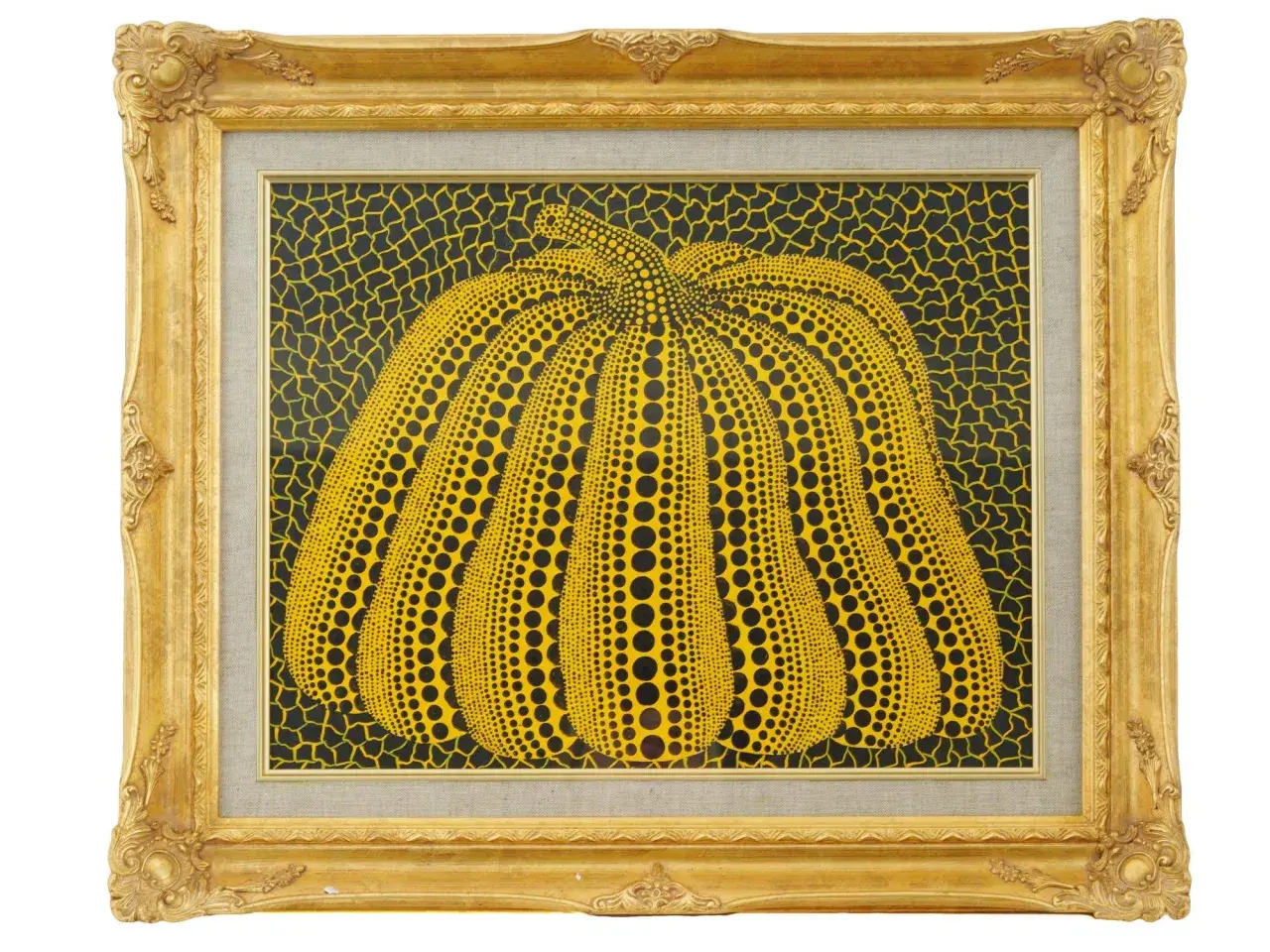
The spotted pumpkin artist most readers mean is Yayoi Kusama, and the subject is richer than a cheerful seasonal image. I look at how her pumpkins became one of contemporary art’s most recognizable motifs, why the dots matter, and what collectors or museum readers should check when they want to identify, interpret, or preserve a work. That makes the topic useful whether you care about art history, authentication, or simply understanding why the image keeps showing up in major museums.
Key facts about Kusama’s pumpkin motif
- Yayoi Kusama is the artist most closely associated with the spotted pumpkin image.
- Her pumpkins are not decoration; they function as symbols of memory, repetition, and self-portraiture.
- The motif appears across paintings, prints, soft sculpture, and monumental bronze works.
- Authenticity usually depends on medium, signature, edition details, provenance, and condition.
- Preservation matters because spots, painted surfaces, and textile forms show wear quickly.
- For viewers, the pumpkin is both immediately legible and conceptually dense, which is why it has endured.
Who the artist behind the motif is
Yayoi Kusama, born in 1929, is a Japanese contemporary artist whose work moves fluidly between sculpture, installation, painting, printmaking, and environmental art. She is sometimes nicknamed the “princess of polka dots,” but that label only scratches the surface. When I look at her pumpkin works, I do not see a cute motif repeated for brand recognition; I see a visual system built from memory, obsession, scale, and control.
Tate describes her pumpkin sculptures as alter-egos, which is a useful way to read them. They are not just objects placed in front of the viewer; they stand in for a psychological state, a bodily presence, and a recurring artistic identity all at once. That is why the image feels so strong even when it appears in different media and at very different sizes. Once that is clear, the next step is to ask why pumpkins and spots lock together so effectively.
Why pumpkins and spots work together so well
The pumpkin is not an arbitrary subject in Kusama’s practice. It is tied to childhood memory, to the agricultural landscape around her, and to a form with ridges and curves that naturally invites pattern. In other words, the pumpkin gives the dots something to sit on. The surface is already broken into sections, so repetition feels earned rather than applied as decoration.
The spots matter just as much. They are not simply cheerful polka dots. In Kusama’s work, repetition pushes the object toward a state that feels both stable and unstable: ordered enough to read at a glance, obsessive enough to suggest an inner loop of thought. That tension is one reason the pumpkin works so well as a self-portrait surrogate. It is ordinary, even humble, but the pattern turns it into something psychological. The object becomes a vessel for endurance, vulnerability, and containment, and that is why the major works feel bigger than an autumn motif.

The works that made the pumpkin a landmark
The pumpkin motif becomes most interesting when you compare how it behaves across different formats. A small print, a canvas, and a public sculpture do not ask the viewer to respond in the same way, and Kusama uses that difference deliberately. In 2024, Serpentine Galleries presented Pumpkin, a bronze work that reached 6 metres in height and 5.5 metres in diameter, showing how the motif can shift from intimate symbol to architectural landmark without losing its identity.
| Work type | What it shows | Why it matters |
|---|---|---|
| Monumental bronze sculpture | Large-scale pumpkins with painted spots and clean, durable surfaces | Turns the motif into a public object that can anchor a site, not just decorate it |
| Mirror installation | Repeated pumpkins reflected into seemingly endless space | Connects the pumpkin to infinity, disorientation, and immersive viewing |
| Screenprint or editioned print | Signed, titled, dated, and numbered works on paper | Shows how the image circulates in the market and how editions need careful verification |
| Painting with nets and pumpkins | The pumpkin set against Kusama’s net-like abstraction | Bridges figure and field, letting the object dissolve into a larger visual system |
What I take from these examples is simple: the pumpkin is not one work, but a recurring structure that can be scaled up, flattened, mirrored, or editioned. That range makes it easier to understand the next question, which is how to tell an authentic Kusama work from something that only borrows the look.
How to tell an authentic work from a decorative imitation
This is where I slow down and look at the object like a registrar or buyer would. A pumpkin-shaped item with dots is not automatically a Kusama work, and that distinction matters more than many people expect. Authorized editions, gallery objects, and museum-shop merchandise can all resemble one another at a glance, but their status, value, and documentation are very different.
| What to verify | What a genuine work usually shows | Common red flag |
|---|---|---|
| Signature and numbering | Clear signing, titling, dating, and edition information on prints or documents | A generic printed mark or no edition trail at all |
| Provenance | Gallery, auction, exhibition, or private collection history that can be checked | Only a vague claim such as “in the style of” or “inspired by” |
| Medium | Specific material description such as bronze, screenprint, acrylic on canvas, or soft sculpture | Unclear material wording that hides a decorative object |
| Condition and restoration history | Documented wear, conservation notes, or treatment records | No condition report for an expensive object |
| Edition reference | Published edition size, publisher, or catalogue reference where relevant | No edition details even though the seller claims a fine-art origin |
The safest habit is to separate inspiration from authorship. A pumpkin object can still be attractive, useful, or collectable without being an original Kusama work. Once you make that distinction, the practical side of ownership becomes much easier to handle, because preservation and authentication start to overlap.
How I would care for and preserve a pumpkin work
For a museum, a collector, or even a framing specialist, the biggest mistake is to treat every pumpkin piece as if it ages the same way. It does not. Bronze, paper, and textile respond to the environment differently, and the spot pattern makes flaws easier to see. I would start with the medium, then build the care plan around it.
Bronze sculptures
Bronze is durable, but not carefree. I would avoid abrasive cleaning, harsh polish, and unnecessary handling. For outdoor pieces, drainage, stable mounting, and surface monitoring matter because weathering can change the visual balance of the dots and the base color. Even a small loss of surface consistency can alter the reading of the work.
Prints and paintings
Paper and canvas need controlled light and stable humidity. I would keep framed works away from direct sun, use UV-filtering glazing where appropriate, and request a condition report before purchase or display. With Kusama’s dot fields, fading and abrasion are easier to notice than in a more forgiving image, so early documentation matters.
Read Also: John Dyer Paintings - Wales & Amazon Art Explained
Soft sculpture and textile pieces
These require the most careful handling. I would support the form evenly, keep it away from heat and pests, and store any original packaging, labels, or documentation that belongs with the work. Seams, stuffing, and printed surfaces should be checked regularly because stress marks often appear before obvious damage does.
In practice, the right conservation approach is not dramatic. It is disciplined, quiet, and consistent. That is what protects the meaning of the work as well as the materials, and it is why the motif still feels current in 2026.
Why the motif still feels current in 2026
As of 2026, Kusama’s pumpkin remains one of those rare art images that works in a museum lobby, an auction catalogue, and an art-history classroom without losing force. I think that is because the motif is easy to recognize but hard to flatten. It can be read as childhood memory, self-portrait, public landmark, market object, or psychological diagram, and none of those readings cancels the others out.
For readers trying to identify a real work, the practical takeaway is straightforward: check medium, edition, provenance, exhibition history, and condition before you trust the image. For readers simply trying to understand the appeal, the important thing is to see that the spots are not ornament. They are part of the structure of the work. Once you see that, the pumpkin stops being a decorative image and becomes what Kusama made it into: a durable piece of visual language.
