
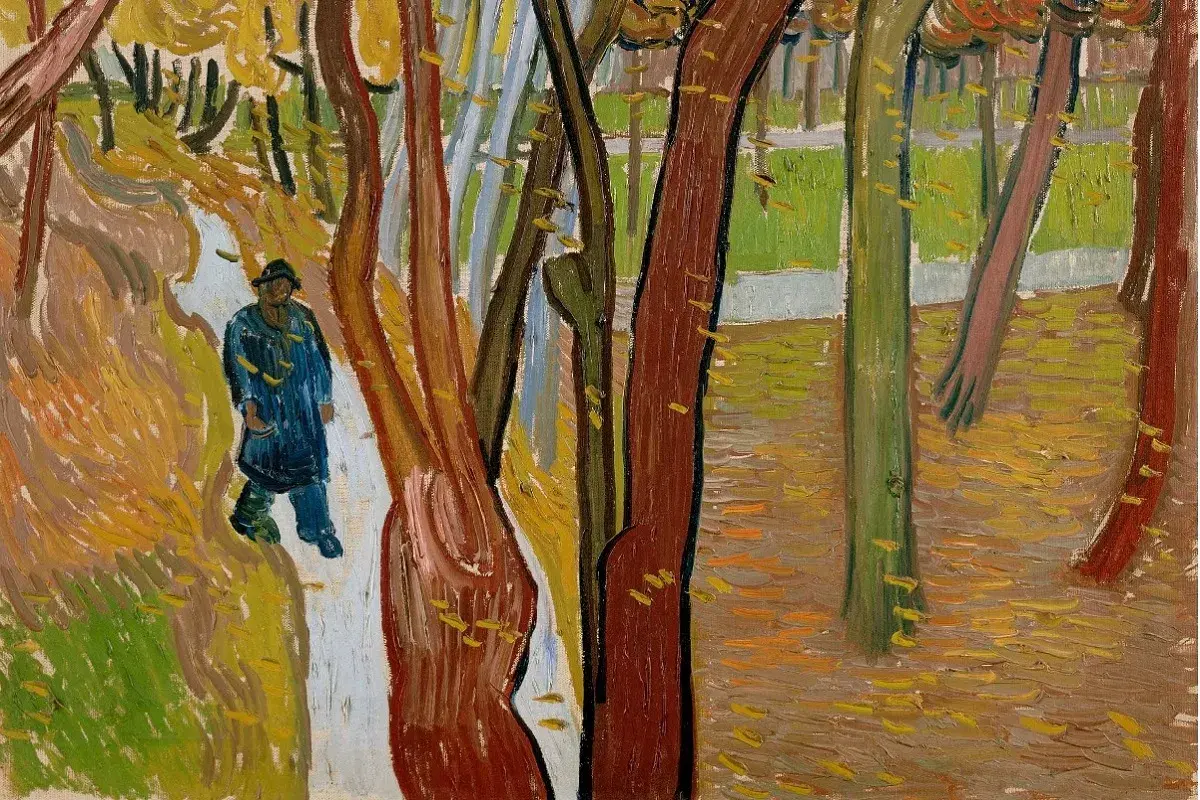
Autumn gives painters a rare combination of color, weather, and emotional tension: the season can look generous, melancholy, or almost theatrical, sometimes in a single canvas. This guide looks at famous autumn paintings across Europe and the United States, explains why they endure, and shows how artists from Arcimboldo to Monet turned fall into something more than a decorative palette.
What to know before you start comparing autumn paintings
- Some of the best-known works are literal landscapes; others are allegories built from fruit, grain, and leaves.
- Cropsey, Monet, Van Gogh, and Inness each treat autumn as a different problem: scale, light, movement, or mood.
- The most convincing fall paintings usually rely on atmosphere, not just orange foliage.
- Preservation matters because warm reds, yellows, and varnished surfaces can shift the original balance over time.
- If you are studying or collecting, provenance and condition are as important as the image itself.
Why autumn keeps reappearing in art history
I read autumn paintings as a very efficient visual test. The season asks artists to show change without losing structure, and that makes it useful whether the goal is allegory, landscape, or pure atmosphere. A fall scene can signal abundance, labor, decline, memory, or national identity, which is why the subject keeps coming back in different centuries and styles.
That range is also why autumn works rarely feel generic when they are done well. The strongest examples do not just describe leaves; they organize space, light, and time so the viewer can feel the season turning. That split between literal view and symbolic meaning is where the most memorable paintings begin.

The autumn works I would start with
| Work | Artist | Date | Why it matters |
|---|---|---|---|
| Autumn | Giuseppe Arcimboldo | 1572 | A season turned into an allegorical portrait; the image is part riddle, part harvest display. |
| Autumn Oaks | George Inness | ca. 1878 | A quiet tonal landscape where autumn becomes mood instead of spectacle. |
| Autumn - On the Hudson River | Jasper Francis Cropsey | 1860 | A monumental Hudson River School statement that turns foliage into national-scale drama. |
| The Four Trees | Claude Monet | 1891 | A poplar series painting that makes seasonal change a study of light, repetition, and time. |
| Stacks of Wheat (End of Day, Autumn) | Claude Monet | 1890/91 | The haystack motif gives autumn a sculptural shape; weather and hour do the expressive work. |
| Avenue of Poplars in Autumn | Vincent van Gogh | October 1884 | The cropped view and restless brushwork make the season feel kinetic, not static. |
What I notice first is that autumn never arrives as one look. Arcimboldo makes it edible, Cropsey monumental, Monet serial, Van Gogh restless, and Inness atmospheric. The season is doing different jobs in each case, which is exactly why these works stay relevant: they are not just pretty fall scenes, they are distinct solutions to the same visual problem.
How painters make autumn feel different from one another
Allegory makes the season legible
Arcimboldo’s Autumn is not really a landscape at all. It is a composite portrait built from the harvest itself, so the viewer reads grapes, grain, and produce as both objects and symbols. That is a useful reminder that autumn in art history is often about abundance first and foliage second.
Landscape gives autumn a geography
Cropsey and Inness take the opposite route. Cropsey’s Autumn - On the Hudson River is a broad, high-angled panorama, roughly 5 feet tall and 9 feet across, and its size is part of the message. It turns fall into a public spectacle, almost a civic claim. Inness, by contrast, works in a more restrained tonal mode, where the exact edge of a tree matters less than the way air and light soften the whole scene. Tonal painting means a limited, closely related color range, and Inness uses that compression to make autumn feel reflective rather than triumphant.
Read Also: Hitler's Art - Authenticating Controversial Watercolors
Impressionism turns autumn into time
Monet treats the season as a moving target. In The Four Trees, he painted poplars along the Epte River during the summer and fall of 1891, even using a specially adapted boat studio to change viewpoint without changing the motif. That is classic plein air thinking, meaning painting in the open air to catch direct effects of light and weather. The Stacks of Wheat paintings push the same idea further: the subject is almost secondary to the changing hour, sky, and surface color.
Van Gogh’s Avenue of Poplars in Autumn is more unsettled. The high viewpoint, the cropped trunks, and the clipped vertical rhythm make the avenue feel alive and slightly unstable. He learned that kind of framing from Japanese prints, and the result is not a calm seasonal view but a nervous one, which is exactly why it still feels modern.
Once you can sort autumn paintings into these modes, the category stops feeling repetitive and starts looking like a set of very different artistic choices. That distinction matters even more when you examine the surface itself, because time changes how these works read.
Why preservation and authentication matter more than people expect
Seasonal paintings are especially sensitive to surface change. Warm reds, transparent glazes, and delicate yellows can shift under light exposure, and old varnish can yellow enough to make a bright autumn scene look heavier or muddier than it originally was. In conservation terms, light fastness is the ability of a pigment to resist fading, and not every color in a fall palette performs equally well over decades.
- Light matters. UV and strong display light can fade sensitive pigments and alter the balance of the picture.
- Varnish matters. Old varnish can yellow, which compresses contrast and changes the temperature of the whole canvas.
- Provenance matters. Ownership history helps confirm whether a work is an original, a studio version, or a later copy.
- Technical imaging matters. Infrared and ultraviolet examination can reveal underdrawing, revisions, hidden signatures, or later restoration.
- Surface wear matters. Craquelure, the fine network of cracks in aged paint, can help support dating and authenticity when read alongside materials and documentation.
When I examine an autumn painting, I usually start with provenance, then condition, then style. That order keeps me from being fooled by a surface that looks more “seasonal” than it really is. A heavy amber varnish can make a work appear richer than it should, while an aggressive cleaning can flatten the very warmth that made the painting compelling in the first place.
Those conservation details are not separate from the experience of the image. They shape what the viewer thinks the artist saw, which is why a careful reading of the surface belongs in any serious discussion of autumn art.
How to look closely without flattening the mood
When I stand in front of one of these paintings, I try not to begin with the leaves. I start with the structure. The first question is whether the artist is building a place, a symbol, or a memory. The second is whether the light is low, diffused, and late, because that is often what turns ordinary scenery into autumn.
- Look for the season’s job. Is autumn here as harvest, as ending, as weather, or as a metaphor for time?
- Check the distance. Strong autumn paintings usually handle foreground and horizon differently, with distant forms softened by atmosphere.
- Notice the human trace. Hunters, walkers, workers, bridges, and fields often tell you more than the foliage does.
- Compare restraint with drama. A painting that looks quiet may be doing more sophisticated work than one that simply piles on orange and red.
The same advice applies whether you are in a museum or looking at reproductions at home. If the painting feels too obvious, I look for subtler greens, browns, and blue-gray shadows. If it feels too muted, I ask whether the artist is trading spectacle for atmosphere. That habit usually reveals more than a quick glance ever will, and it keeps the season from collapsing into a decorative cliché.
The small autumn canon I would keep in mind
If I had to keep a compact autumn canon in mind, I would start with Arcimboldo for allegory, Cropsey for the grand American landscape, Monet for repetition and light, Van Gogh for movement, and Inness for mood. Together they cover the full range of what a fall painting can do, from abundance to introspection.
That is the real reason these works matter in 2026 and well beyond: they show that autumn is not one visual formula but a flexible artistic problem. The best paintings of the season do more than show color change. They hold together place, time, and feeling at once, which is why they remain useful to viewers, historians, and anyone trying to understand how artists turn a familiar season into something lasting.
