
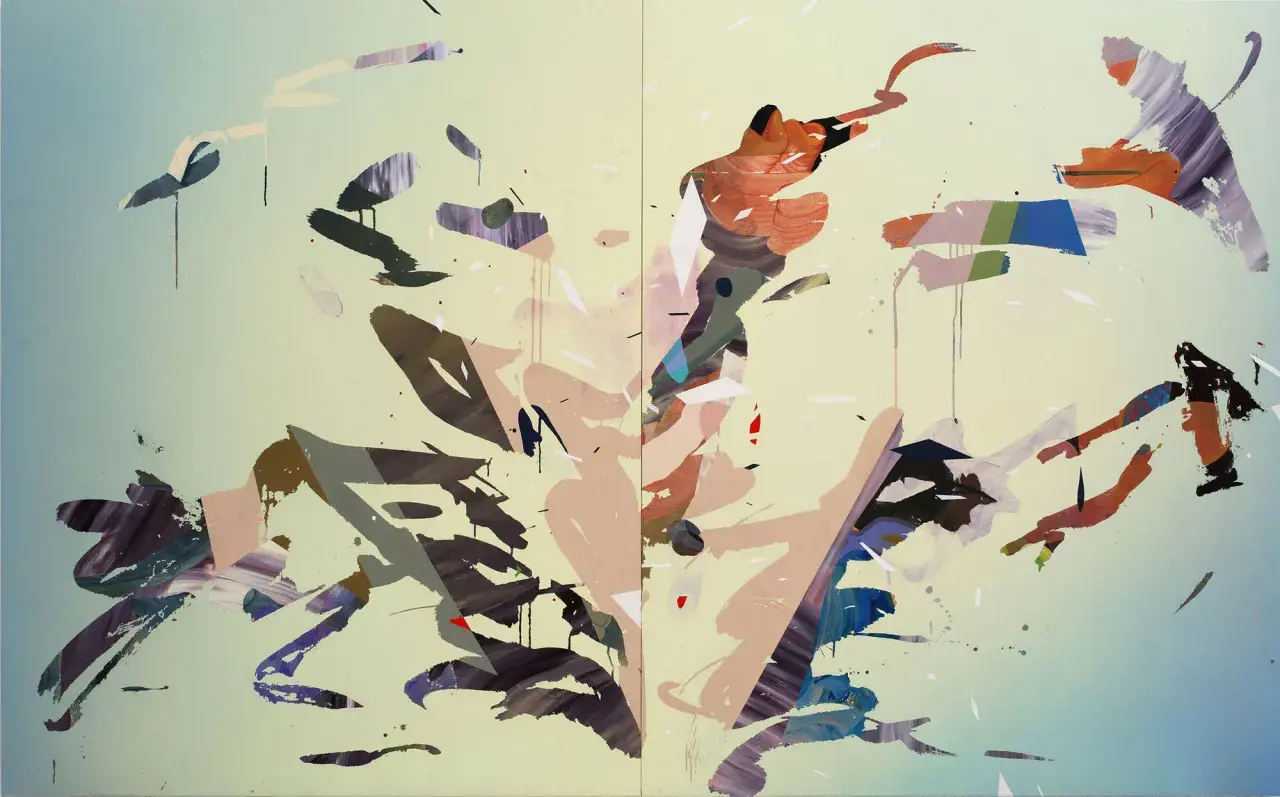
A strong abstract painting can look simple at first glance, but the best ones reveal a precise logic of color, scale, and surface. This article explains what abstraction is actually doing, introduces the artists and artworks that shaped the field, and shows how I read quality, preservation, and authenticity without relying on a literal subject.
What matters most before you look any further
- Abstraction replaces recognizable subjects with relationships between line, color, rhythm, and surface.
- Early pioneers such as Kandinsky, Malevich, and Mondrian opened the door; postwar American artists pushed the form into larger, more physical territory.
- The best way to read these works is by tracking composition, distance, gesture, and material depth.
- For collectors and institutions, provenance, condition, and technique matter as much as visual impact.
- The strongest works feel internally necessary, not merely decorative.
What abstraction is doing when there is no subject
I usually start with one simple distinction: some works still begin with a visible subject and then simplify it, while others leave representation behind almost entirely. That difference changes how the painting should be read. Instead of asking “What is it of?”, I ask what the work is made to do through structure, color, and scale.
In practice, abstraction usually falls into a few broad modes. They overlap, but the distinctions help when you are comparing artists or evaluating a work in a collection.
| Mode | What it tends to look like | What to notice first |
|---|---|---|
| Geometric abstraction | Grids, rectangles, hard edges, measured spacing | Balance, proportion, and how negative space holds the image together |
| Gestural abstraction | Brushy marks, drips, sweeps, visible movement | Rhythm, pressure, speed, and the trace of the artist’s hand |
| Color field painting | Large zones of color with softened edges or minimal structure | Atmosphere, scale, and the way color changes with distance |
| Organic or lyrical abstraction | Flowing, biomorphic, or fluid shapes | Contour, translucency, and the sense of motion across the surface |
That is why abstraction can feel both disciplined and open-ended. The image may not depict a person or place, but it still carries a point of view. Once that is clear, the real question becomes who gave the language its strongest form, and why those works still matter.

The artists and artworks that gave abstraction its history
The history of abstraction did not arrive in one neat burst, but a handful of artists made the break feel irreversible. Kandinsky, Malevich, and Mondrian helped establish the early grammar; later, the center of gravity shifted to New York, where Pollock, Rothko, Krasner, Frankenthaler, and Kline turned abstraction into something larger, more physical, and more immediate.
Georgia O’Keeffe belongs in that conversation too. Abstraction Blue shows how closely observation and nonliteral form can coexist: the work feels rooted in sensation, yet it refuses to resolve into a single named object.
| Artist | Work | Why it matters |
|---|---|---|
| Wassily Kandinsky | Swinging (1925) | One of the clearest early arguments that color and rhythm can carry meaning without a literal subject. |
| Kazimir Malevich | Black Square (1915) | A radical reduction that made the break from depiction feel like a historical event. |
| Piet Mondrian | Broadway Boogie Woogie (1942–43) | Shows that geometric abstraction can feel musical, urban, and alive rather than cold. |
| Jackson Pollock | One: Number 31, 1950 | Turns painting into an arena of motion, where process becomes part of the meaning. |
| Mark Rothko | No. 16 (Red, Brown, and Black) (1958) | Uses color and scale to create a quiet, immersive pressure that can feel almost architectural. |
| Helen Frankenthaler | Vessel (1961) | Expands abstraction through staining, translucency, and a looser relation between paint and support. |
| Lee Krasner | Gothic Landscape (1961) | Demonstrates that abstraction can be forceful, layered, and emotionally charged without being illustrative. |
| Franz Kline | Chief (1950) | Proves that black-and-white structure can feel explosive when gesture and spacing are handled with precision. |
What I find useful about these artists is not just their fame, but the different problems they solved. Kandinsky pushed expression. Malevich pushed reduction. Mondrian pushed order. Pollock pushed action. Rothko pushed atmosphere. Frankenthaler pushed fluidity. Krasner and Kline pushed energy and scale in very different ways. Seen together, they show that abstraction is not one style but a language with multiple dialects. The next step is learning how to read that language in the room.
How to read an abstract work without forcing a story
The biggest mistake I see is treating abstraction like a puzzle with a hidden literal answer. It usually rewards sustained looking, not decoding. I read it in layers, because the work often changes depending on how close I stand and how long I stay with it.
- Step back first and register the overall balance of the image.
- Notice the dominant colors and whether they collide, separate, or dissolve into one another.
- Trace how the eye moves across the surface: diagonals, interruptions, repetitions, and pauses.
- Look for edges and transitions, especially where brushwork, stain, scrape, or layering becomes visible.
- Move closer and check whether the surface is flat, dense, matte, glossy, rough, or delicately worked.
A work that changes as you move is usually doing something right. It means the artist understood that abstraction is not only about image content; it is also about perception over time. The viewer becomes part of the work because the work asks for more than a single glance. That eye for structure also helps separate serious painting from something merely decorative.
What separates a strong canvas from a decorative one
Not every nonrepresentational image is compelling. A strong work feels inevitable, as if the colors, marks, and scale had to end up exactly where they are. A weaker one may look polished for a moment, but it does not keep producing new relationships when you spend time with it.
- Coherence means the colors and shapes relate to one another instead of sitting on the surface by accident.
- Tension means the image is not over-resolved; something remains active or slightly unsettled.
- Surface intelligence means the paint handling itself carries information, not just the overall image.
- Restraint matters when the artist leaves room for the viewer instead of over-explaining the composition.
- Repeatability is crucial: the work should stay interesting after the first reaction has worn off.
Rothko is a good example of restraint that still feels charged, while Pollock shows how density can remain readable without becoming chaos. Even Reinhardt’s near-black paintings, though quieter than many viewers expect, depend on precise internal structure. In other words, the best abstraction is never empty; it is controlled, even when it looks loose. And once you start judging works this way, preservation and authenticity stop being side issues.
Preservation and authenticity change how you judge the work
For collectors and institutions, abstraction becomes practical very quickly. Because there is often no literal subject to anchor the eye, a small change in color, varnish, grime, or restoration can alter the whole reading. I would never treat a signature as the final word. The better question is whether the physical evidence matches the artist’s known practice.
That means looking at more than the front of the canvas.
| Check | What it tells you |
|---|---|
| Provenance | Shows the ownership chain and can expose gaps that need explanation. |
| Exhibition history | Helps confirm whether the work was known publicly at the right time. |
| Materials and support | Can support or weaken a claimed date, especially if the artist used specific paints, canvases, or grounds. |
| Condition report | Reveals cracks, abrasions, overcleaning, or old retouching that may affect both value and appearance. |
| Technical imaging | UV, infrared, or X-ray work can uncover later additions, underdrawing, or changes beneath the visible surface. |
| Documentation | Invoices, labels, studio records, and catalog entries help connect the object to its history. |
On the conservation side, the main risks are light exposure, unstable supports, aggressive cleaning, and repairs that flatten surface differences. In abstraction, those differences are not minor. A matte passage beside a glossy one, or a thin wash beside a dense stroke, may be part of the composition itself. That is why preservation is not just about keeping a work intact; it is about keeping its visual logic intact. Once you factor that in, the most important question becomes what the strongest examples still teach us now.
What the best examples still teach us now
The works that endure do more than avoid representation. They replace it with a more demanding kind of attention. They ask the viewer to notice how color behaves against color, how scale changes feeling, and how a surface can hold both order and uncertainty at once.
- They hold up at a distance and at arm’s length.
- They feel specific, even when they are nonliteral.
- They make the material process visible without turning into spectacle.
- They keep offering new information instead of collapsing into a single interpretation.
If I had to reduce the field to one test, it would be this: the best works make you aware of paint, space, and time at the same moment. That is why they continue to matter in museums, collections, and conservation studies alike, and why a careful eye still gets more out of them than any quick label ever will.
