
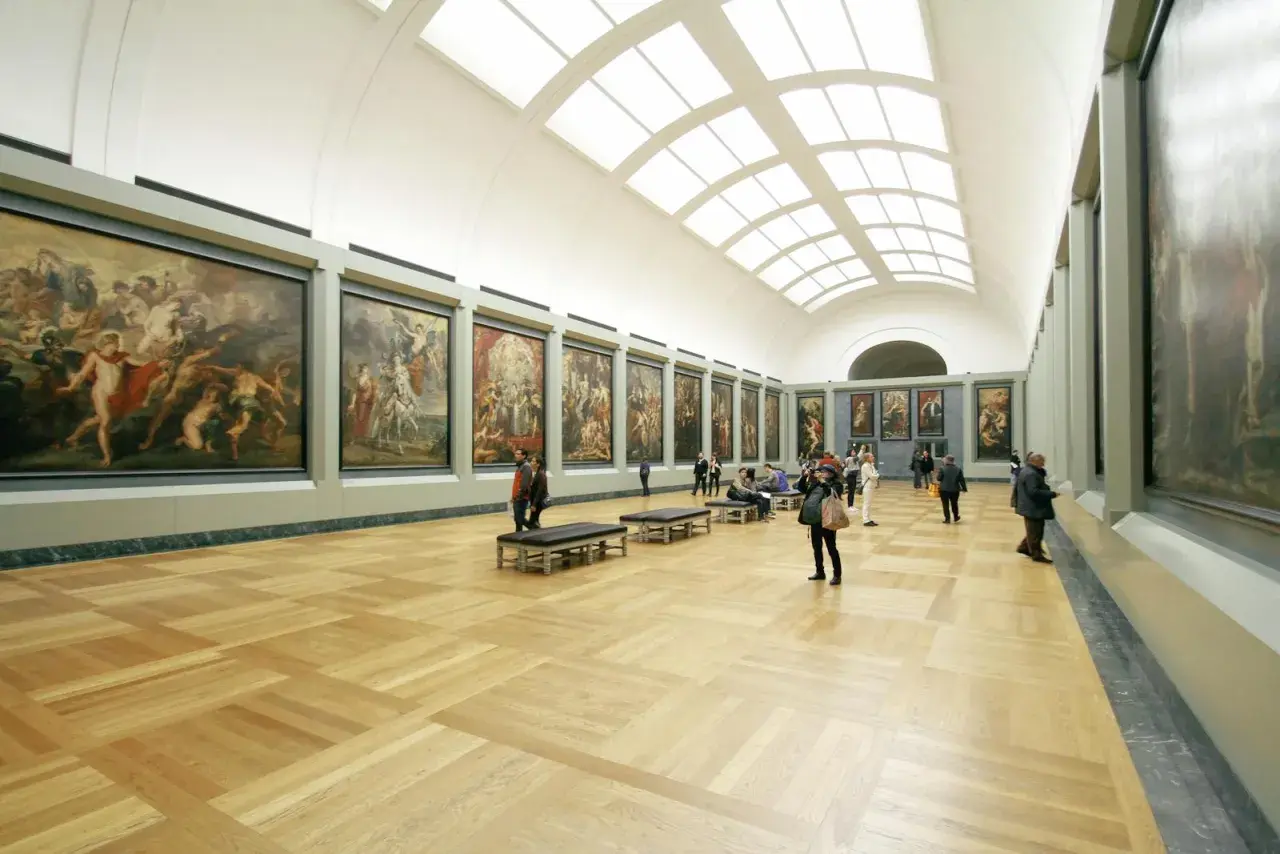
Fine art is easiest to understand when you stop treating it as a prestige label and start looking at how a work is made, what it is trying to say, and why the material matters. A solid answer to what is fine art starts with purpose: the artist is creating something meant to be seen, interpreted, and valued for aesthetic or conceptual reasons rather than direct utility. In this article, I’ll break down the defining traits, the techniques and materials behind them, and the practical clues I use when a work needs to be read, conserved, or authenticated.
The core idea is that fine art is defined by intention, form, and material language
- Purpose comes first: fine art is made primarily for aesthetic or conceptual meaning, not function.
- Technique shapes interpretation: oil, watercolor, pastel, printmaking, and mixed media each create a different visual logic.
- Materials are not neutral: support, surface, and finish affect both the look and the lifespan of the work.
- Boundaries are porous: craft, design, and fine art overlap, especially in contemporary practice.
- Condition matters: materials age differently, which affects preservation and authentication.
Fine art is about intention before utility
I define fine art as work made primarily to be experienced, interpreted, and judged for its aesthetic or conceptual force. That does not mean it must be “beautiful” in a narrow sense, and it definitely does not mean it has to be expensive, traditional, or made with rare materials. It means the object’s main purpose is not to do a job like a chair, a teapot, or a poster; its main purpose is to communicate, provoke, or hold attention.
In the United States, that distinction still matters in museums, galleries, classrooms, and the art market, even though the category has widened a great deal. Painting and sculpture remain central, but photography, printmaking, installation, performance, and video can all sit inside fine art when the artist’s intent and the context support that reading. Historically, the term was broader still, but in everyday use today it usually points to visual and time-based work that asks to be considered rather than simply used.
The practical takeaway is simple: when I evaluate a piece, I ask what kind of experience it is trying to create. That question leads directly to the traits that separate fine art from other kinds of making.
The traits that usually set it apart
Fine art is not defined by one single feature. It is usually a combination of choices that work together: the artist’s intention, the composition, the material handling, and the context in which the work is shown. If one of those elements is missing, the work may still be interesting, but it often reads differently.
| Category | Main purpose | How value is judged | Typical example |
|---|---|---|---|
| Fine art | Aesthetic, expressive, or conceptual impact | Originality, visual force, coherence, context | Gallery painting, installation, editioned print |
| Craft | Functional object with artistic skill | Use, workmanship, material mastery | Ceramic vessel, woven textile, furniture |
| Design | Solve a communication or usability problem | Clarity, utility, audience response | Poster, book layout, product, chair |
The boundary is useful, but it is not absolute. A ceramic object can be fine art if the concept and presentation are central. A poster can be visually brilliant and still function primarily as design. A museum piece can borrow the look of craft or design and still read as fine art because its meaning depends on interpretation, not utility.
That distinction becomes much clearer once you look closely at the techniques and materials behind the work.

How techniques and materials shape the work
Materials are not just the stuff a work is made from. They are part of the work’s language. The Met’s materials-and-techniques series makes the point I care about most here: once you understand how a work was made, you read it differently. Tate’s materials guidance adds a useful reminder as well, because texture, symbolism, and technique are always linked.
Here is the practical version of that idea:
| Technique or medium | What it tends to do visually | Why artists choose it | Conservation note |
|---|---|---|---|
| Oil painting | Rich color, depth, smooth blending, glazing | Slow drying allows reworking and layered effects | Can crack, yellow, or show surface instability over time |
| Watercolor | Transparent washes, luminosity, light touch | Fast, portable, sensitive to atmosphere and light | Highly vulnerable to fading and moisture |
| Pastel | Velvety texture, intense color, immediate mark-making | Directness and tactile surface quality | Powdery surface can smudge or shed easily |
| Printmaking | Editioned image, crisp line, variation between impressions | Repeatability with room for controlled nuance | Paper, ink, and matrix condition all matter |
| Acrylic paint | Flat color, quick layering, flexible finish | Fast drying and adaptable across supports | Can trap dirt and age differently from oil |
| Mixed media | Multiple textures and visual registers in one work | Conceptual flexibility and material contrast | Different materials age at different speeds |
One detail people often miss is that fine art printmaking is not the same thing as a reproduction. An etching, lithograph, or screenprint may be an original artwork in its own right when the matrix, process, and editioning are part of the artist’s practice. The edition number can affect rarity, but it does not replace the more important question: what does the medium contribute to the meaning of the work?
Once you think in those terms, the next layer becomes obvious. The support, surface, and finish can change the whole reading of the piece.
Why support, surface, and finish matter so much
I always pay attention to the physical backbone of a work. A painting on linen canvas behaves differently from a watercolor on cotton paper or an ink drawing on board. The support affects scale, tension, absorbency, and how a surface ages. In other words, it shapes both the look of the work and its long-term stability.
- Support is the base the artist works on, such as canvas, paper, wood panel, metal, or wall.
- Surface preparation includes sizing, ground, primer, or any layer that changes absorbency and tooth.
- Finish includes matte, gloss, varnish, texture, and any surface decision that changes how light hits the work.
These are not secondary details. A glossy varnish can deepen color but also create glare. A rough ground can energize drawing or paint, while a smooth one produces a more controlled image. Heavy impasto makes paint feel sculptural, but it also introduces physical stress as the layer dries and ages. If I want to understand the artist’s choices, I start by looking at the object’s skin, not only its subject.
That same attention helps when we compare fine art with craft, design, and commercial imagery, because those categories often use similar materials for different ends.
Where the line with craft and design really sits
The cleanest way to separate these categories is to ask what the object is for. Craft generally makes a usable object, design generally solves a practical or communicative problem, and fine art is primarily judged as an artwork. But in real life, the edges blur fast.
A hand-thrown bowl can be craft, or it can be fine art if the artist is using the vessel form as an expressive idea. A photograph can be documentary, commercial, editorial, or fine art depending on intent and presentation. A performance may have no durable object at all, yet still belong to fine art because the action itself is the artwork. That is why I resist rigid labels when the work itself is clearly asking for more than one reading.
The overlap is not a flaw in the category. It is evidence that the category is alive. Contemporary artists borrow from craft, design, and even industrial processes when those materials help them say something sharper.
That fluidity also explains why the condition of a work matters so much. Materials age, and that aging changes both interpretation and value.
What materials reveal about preservation and authentication
If you care about preservation or authentication, materials are the first evidence I trust. They tell you how a work should age, what kinds of damage are plausible, and whether the surface history makes sense. A paper work that claims to be a century old but looks chemically untouched may deserve scrutiny. An oil painting with convincing style but incompatible ground layers or support can raise even bigger questions.
Different materials leave different aging patterns. Paper can yellow, become brittle, or show foxing. Oil layers can crack, sink in, or darken. Acrylic behaves differently again, often holding dirt on the surface and aging with its own kind of plastic response. Pastel is especially vulnerable because the pigment sits loosely on the support. Mixed media can be the hardest of all to stabilize, because each component expands, contracts, or degrades at its own pace.
For authentication, I look for consistency rather than drama. Does the support fit the period? Do the pigments, inks, fasteners, and surface wear make sense together? Does the signature look more convincing than the object itself? The most reliable answers usually come from structural evidence, not from a story attached later.
That is why fine art is never just about taste. It is also about reading materials honestly and understanding what they can, and cannot, tell us.
What I check before I call a work successful
When I stand in front of a piece and want to know whether it really works as fine art, I usually ask three things:
- Does the material choice reinforce the idea, or does it feel decorative by accident?
- Does the composition hold my attention without over-explaining itself?
- Does the work still make sense when I look at the surface, edges, and evidence of making?
If the answer to all three is yes, the work usually has real force. That is the part many people underestimate: the strongest fine art is rarely just an image or just an idea. It is the moment when intention, technique, and material all point in the same direction, and the object stays convincing whether you are seeing it from across the room or close enough to notice the brush hairs, paper grain, or print impression. That is the level at which fine art stops being a category and starts becoming a reading experience.
