
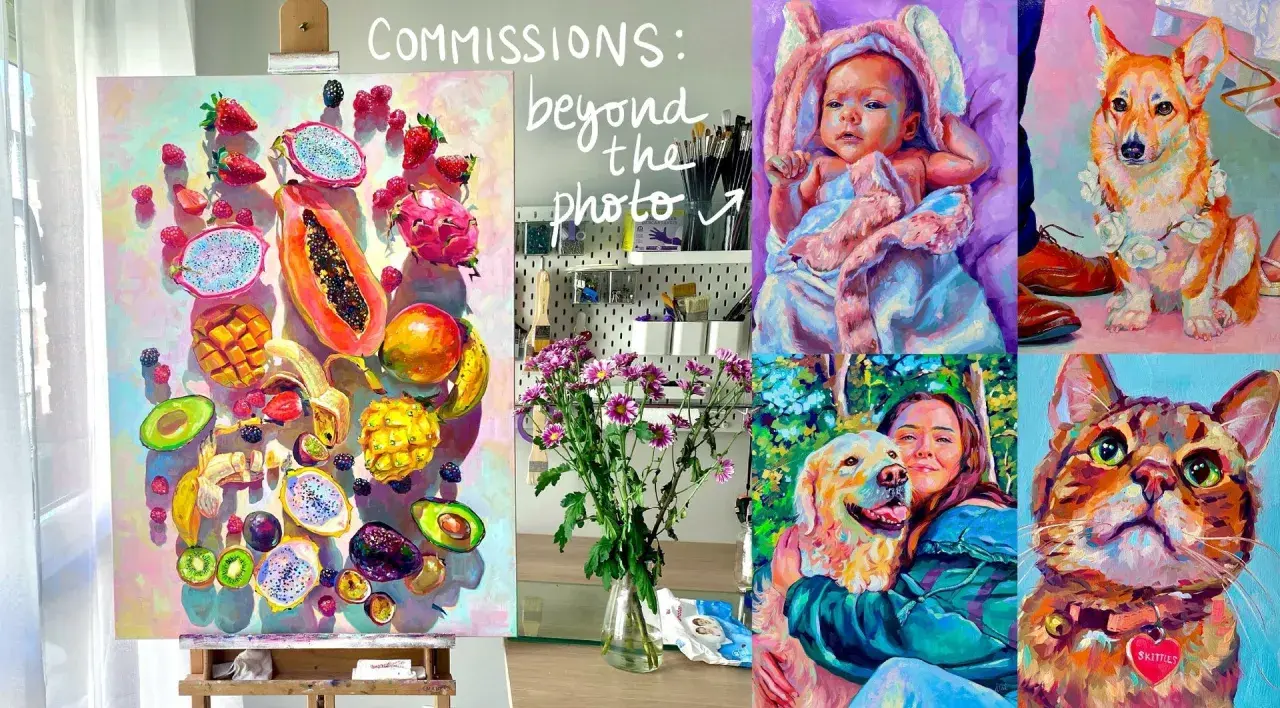
Portraits become memorable when the artist gives you more than a face. The appeal of unique portrait artists is that they treat likeness as only the starting point, then build identity through color, pose, symbol, or performance. In the pages below, I look at what makes a portrait style feel original, which artists are worth studying, and how I would judge a work before commissioning, collecting, or preserving it.
The essentials behind memorable portraiture
- Originality is not novelty. A portrait stands out when the visual language matches the subject and the idea.
- Different artists lead with different strengths. Some rely on likeness, others on symbolism, distortion, staging, or process.
- A strong signature should repeat. If the artist can only surprise once, the style is probably a gimmick.
- For commissions, clarity matters. Medium, size, background, rights, and timeline shape the result as much as talent does.
- Preservation and provenance matter. Good documentation helps keep distinctive portrait work readable and authentic over time.
What makes a portrait artist genuinely distinctive
I look for three things first: a repeatable visual language, a clear point of view about the sitter, and enough control over technique to make the idea feel inevitable. A portrait can be highly realistic and still feel generic; it can also be stylized and still feel deeply truthful. What matters is whether the artist uses the style to sharpen the person, not to hide behind cleverness.
The strongest work usually shows the same discipline across different subjects. If every portrait depends on a single gimmick, novelty fades fast. If the decisions about cropping, color, surface, and scale keep making sense from one piece to the next, I start to trust the artist’s eye.
That distinction matters because the next layer is not “pretty” versus “not pretty”; it is the actual strategy behind the portrait. Once you can name the strategy, the work stops feeling random and starts feeling intentional, which is exactly what I want before I compare actual artists.
The portrait styles that create a strong signature
I usually sort memorable portrait work into a few recurring approaches. Artists can mix them, but most of the strongest ones are unusually clear about which language they are using.
Psychological realism
This is the closest thing portraiture has to a direct conversation. The face may be rendered naturally, but the painting or photograph is really about interior state, tension, or mood. The sitter does not have to smile or perform. In fact, the absence of performance is often the point. When this approach works, I feel as if the artist has stripped away distraction and left me with a person who is still complicated.
Symbolic and narrative portraiture
Some portraits carry meaning through objects, pattern, costume, or setting. That can feel literary if it is overdone, but in the right hands it expands the image without flattening the sitter into a type. Symbolic portraiture is strongest when the extra details are not decorative filler. They should tell me something specific about status, memory, culture, work, or self-presentation.
Distortion and abstraction
Not every useful portrait tries to preserve exact features. Distortion can reveal emotion faster than accuracy can. A compressed jaw, flattened plane, or exaggerated color shift can say more about stress, vulnerability, or power than a literal likeness does. The risk, of course, is that distortion becomes an effect on its own. Good artists know where to stop.
Staged identity and self-portraiture
Some of the most original portrait makers use themselves, or theatrical staging, to question identity altogether. These works are less about “what does the person look like?” and more about “how is identity built?” That makes the portrait more conceptual, but not less human. If anything, the staging can expose how much of selfhood is already performance.
Read Also: Lady Agnew of Lochnaw - Sargent's Masterpiece Explained
Process-driven realism
Here, the method is part of the meaning. A grid, a series of marks, a visible buildup of layers, or a strict system of repetition can become the signature. The portrait reads as both image and record of labor. I find this approach compelling when the process is visible but not self-conscious. The technique should help me see the sitter differently, not simply admire the artist’s patience.
Once you can read those strategies, it becomes much easier to tell a serious portrait practice from a one-off visual trick. The next step is seeing how those ideas show up in actual artists.

A shortlist of unique portrait artists worth studying
When I make a shortlist of distinctive portrait artists, I want work that reveals a coherent logic, not just a recognizable look. These names are useful because each one solves the portrait problem differently, and each one teaches a different lesson about originality.
| Artist | Distinctive move | Why it matters |
|---|---|---|
| Giuseppe Arcimboldo | Built faces from fruit, flowers, books, and other objects | Shows that portraiture can work as metaphor, puzzle, and likeness at the same time |
| Frida Kahlo | Used self-portraiture as autobiography and symbol | Proves that a portrait can carry pain, politics, and identity without losing intimacy |
| Kehinde Wiley | Placed contemporary Black subjects inside the visual grammar of Old Master painting | Rewrites historical power language instead of merely imitating it |
| Amy Sherald | Rendered skin in gray tones and used cool, controlled color fields | Redirects attention away from easy categorization and toward presence |
| Chuck Close | Turned portraiture into monumental, grid-based, process-heavy realism | Makes the act of seeing feel constructed, not automatic |
| Cindy Sherman | Used staged self-portraits to test identity, role, and image | Expands portraiture into performance and cultural critique |
What I take from this group is not one shared style but a shared seriousness. Arcimboldo proves that a face can be built from metaphor. Wiley and Sherald show that contemporary identity can sit comfortably inside art-historical language. Close and Sherman push the portrait toward process and performance, while Kahlo reminds me that self-portraiture can be a form of autobiography rather than simple likeness.
Once you can read those differences, you can evaluate an artist for your own purpose instead of just collecting famous names. That matters whether you are buying for a wall, building a collection, or commissioning work for someone specific.
How I would choose a portrait artist for a commission or collection
If I were commissioning a portrait, I would not start with “Who is the most unusual?” I would start with “Whose visual system matches the person, setting, and result I want?” A good artist can make a portrait distinctive without making it difficult to live with, display, or preserve.
| What I check | Good sign | Red flag |
|---|---|---|
| Body of work | The artist has repeated the style successfully across different sitters | The portfolio depends on one lucky image or one overly repeated formula |
| Medium and surface | The materials suit the concept and the intended display environment | The work looks fragile, improvised, or poorly matched to the final use |
| Communication | Terms, timeline, revisions, and reference material are clear from the start | Vague promises, shifting deadlines, or no real process |
| Rights and editioning | Photo-based and digital portraits have clear usage and edition terms | No discussion of reproduction, resale, or print scarcity |
| Presentation | Framing, size, and finish make the work usable in real space | The portrait only works in a perfect studio context |
In the US market, the practical realities matter quickly. A talented emerging artist may be affordable, while a sought-after portraitist can move into several thousand dollars or more as size, complexity, and reputation increase. I would not treat price as a proxy for originality, but I would treat it as a clue to how much time, labor, and risk the artist is absorbing.
If the work is photographic or digital, edition size and print method become part of the decision. If it is painted, surface quality and durability matter more than people usually admit. Once those basics are clear, the conversation naturally shifts to authenticity and preservation.
Why authenticity and preservation matter in portrait work
Distinctive portrait work can be harder to verify than more conventional paintings because a strong style invites imitation. That is exactly why I keep the paper trail close: invoice, provenance notes, condition photos, exhibition history, and any studio documentation the artist provides. Style can guide attribution, but it should never be the only evidence.
Material care matters just as much. For paintings and works on paper, I prefer stable conditions, low light exposure, and modest humidity swings; museum guidance often centers around roughly 45 to 55 percent relative humidity and about 15 to 25 degrees Celsius when conditions can be controlled. For photographs and digital prints, archival mounts, UV-filtering glazing, and clearly recorded edition information are part of the object’s value, not an optional extra.That is also where conservation thinking helps collectors avoid expensive mistakes: overcleaning, poor framing, direct sunlight, and rushed repairs usually do more harm than the original handling ever did. If a portrait is unusual enough to be memorable, it is unusual enough to deserve careful documentation.
The final question, then, is not whether the portrait is eye-catching. It is whether the work will still read well, and still be trustworthy, years from now.
The details that keep a portrait compelling long after first glance
When a portrait keeps working, it usually does four things well: it respects the sitter without flattening them, it uses technique in service of meaning, it stays legible from across a room, and it holds up under closer inspection. I think of that as the real test of originality. The work should be specific enough to feel personal, but disciplined enough to outlast the first surprise.
- Look for consistency. The artist should be able to repeat the language without becoming repetitive.
- Check the material logic. The chosen surface, medium, and finish should support the idea instead of fighting it.
- Ask how the image will age. Light, framing, and documentation affect how well the portrait survives.
- Separate signature from noise. A memorable hook is not the same thing as a lasting artistic voice.
If I had to reduce the whole topic to one rule, it would be this: the best portrait artists make the viewer linger because the image feels both unmistakable and earned. That is the standard I would use whether I were studying, buying, or commissioning portrait work in 2026.
