
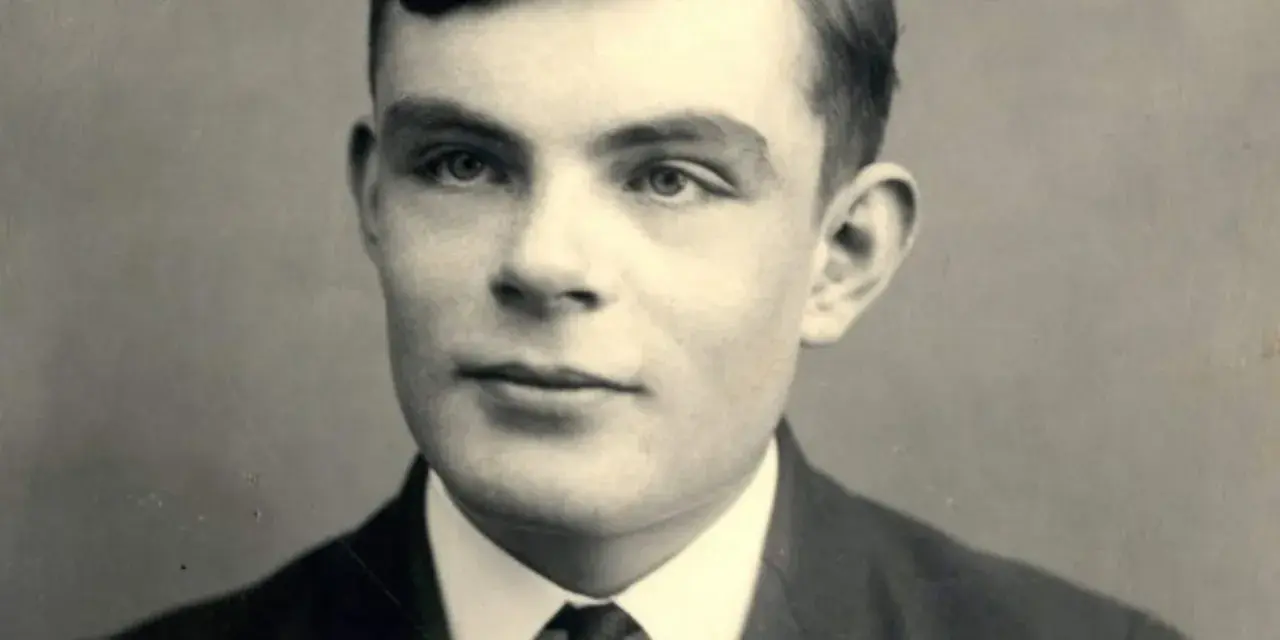
An Alan Turing portrait can be a historical photograph, a commemorative print, or a contemporary reinterpretation, and those differences matter more than people usually expect. I’m looking at the image that shaped his public face, the later works that turned him into a symbol of computing, and the practical details that help you judge a reproduction or original with confidence. For a subject this important, the medium is never a side note. It changes the meaning.
Key facts about Turing portraits
- The best-known image is a 29 March 1951 Elliott & Fry photograph, not a painted studio portrait.
- The National Portrait Gallery lists five portraits of Turing, and the 1951 sitting is the anchor for most of them.
- Later versions are often interpretive, using symbolism, color, or AI to talk about computing and memory.
- For collectors and editors, provenance, medium, and print state matter more than the caption alone.
- A strong Turing portrait should feel historically grounded, not just visually recognizable.

The 1951 image that defined his public face
The portrait most people recognize is the 1951 Elliott & Fry photograph: calm, formal, slightly reserved, and stripped of visual noise. That restraint is exactly why it works. Turing does not appear staged as a heroic monument; he looks like a serious working scientist, which fits the historical record better than a dramatic pose would.
I pay close attention to that kind of understatement because it tells you what the sitter, the photographer, and the culture around him wanted to communicate. The National Portrait Gallery catalogs the image in more than one photographic state, including a bromide print and a glass negative, and that matters for anyone thinking about authenticity or reproduction. A bromide print is a silver-gelatin print, so a vintage example is a physical object with its own tonal range, surface, and aging pattern, not just a picture file in paper form.
That archival photograph is only the beginning, though, because later portraits turn Turing from a historical sitter into a larger cultural figure. Once that shift happens, the real question becomes what the artist is trying to say about him.
Why later portraits feel more symbolic than documentary
Once artists move away from the 1951 photograph, they stop merely describing Turing and start interpreting him. That can be effective, but it changes the rules. A painted portrait, a digital work, and an AI-generated image each make a different claim about likeness, memory, and authorship.
A useful way to read those works is to ask what each medium is good at. Photography captures a specific face at a specific time. Painting can emphasize psychology, atmosphere, or iconography. AI-based work often foregrounds the idea of computation itself, which makes Turing an especially charged subject.
Ai-Da’s portrait of Turing, which sold at Sotheby’s for $1.08 million, is a good example of that shift. It is not trying to replace the 1951 image. It is arguing with it, using the subject’s legacy to ask what machine-made art can mean in the first place.
| Portrait type | What it gives you | Main limitation |
|---|---|---|
| Documentary photograph | A specific date, sitter, and visual record of the person | Later prints can flatten tone or crop away important detail |
| Interpretive painting or digital work | Mood, symbolism, and the artist’s reading of the subject | Less reliable as historical evidence |
| AI-generated reimagining | A conversation about technology, authorship, and legacy | Conceptually strong, but not documentary unless clearly labeled |
That comparison is the practical heart of the topic. Once you know whether you are looking at evidence, interpretation, or concept, the next step is reading the object itself with more care.
How I read the image as an art object
When I evaluate a portrait of Turing, I start with four things: pose, light, surface, and caption. The pose tells me whether the sitter is being presented as approachable, authoritative, or remote. Light tells me whether the artist wants clarity, tension, or softness. Surface tells me whether I am looking at a photographic print, a painted canvas, or a digital output. The caption tells me how much of the work’s meaning is supposed to come from the label rather than the image.
For a historical photograph, I also look for tonal balance and print quality. Good vintage prints usually preserve detail in the shadows and do not feel overly sharpened or digitally smeared. For a painting, I look at brushwork, edge control, and how the artist handles the face versus the background. If the portrait uses code fragments, rainbow color, or circuitry motifs, those elements are rarely decorative only. They are the thesis.
That is why the most convincing portraits of Turing tend to be disciplined rather than busy. He is a subject who can easily be overloaded with symbolism, and the weaker works try to do too much at once. The stronger ones leave room for the viewer to feel the tension between the man and the myth.
Those cues also matter if you are considering a purchase or a reproduction, because the same visual image can exist in very different material forms.
What matters if you are buying or preserving a print
If I were assessing a Turing portrait for a collection, a publication, or a wall, I would not start with aesthetics alone. I would start with object identity. Is it a vintage photographic print, a later exhibition print, a licensed poster, or a contemporary edition? Those are not interchangeable categories, even when they look similar at a glance.
- Confirm the exact medium and date.
- Check who created it and whether the work is signed, stamped, or editioned.
- Ask for provenance and a condition report if the object is valuable.
- For prints, find out whether the copy is vintage or later.
- For framed works, use archival matting, UV-filtering glazing, and stable environmental conditions.
In preservation terms, I prefer moderation over heroics. Keep light exposure low, avoid direct sun, and aim for stable humidity rather than chasing an impossible perfect number. Around 40-50% relative humidity is a sensible general target for many paper-based works, but stability matters more than precision. A thoughtfully handled reproduction can last for years; a poorly mounted original can age badly in a very short time.
If the image is being used in print or online, licensing and credit also matter. The safest assumption is that not every picture of Turing is free to reuse just because the subject is historic. The object, not just the face in it, is what carries the rights, the history, and the value.
Once you think in those terms, the continued appeal of Turing as a portrait subject becomes easier to explain.
Why Turing still invites new portrait readings
Turing remains compelling because his life sits at the intersection of several narratives that modern audiences care about: wartime codebreaking, the birth of computing, the ethics of intelligence, and the injustice he suffered. That gives artists a lot to work with, but it also creates a risk. If the portrait becomes only a symbol, the person disappears. If it becomes only a likeness, the historical weight gets lost.
The best work finds a balance. It recognizes that his face is now part of the history of science, but it does not flatten him into an icon with no interior life. That is why the 1951 photograph still matters so much. It gives later artists a factual anchor, a way to stay honest while they interpret.
If I wanted one dependable reference, I would begin with the 1951 image and ask what every later version is changing, adding, or withholding. If I wanted a collectible or display piece, I would insist on clear object details before I cared about style. That distinction usually tells me more than the title on the label, and it is the best way to judge whether a Turing portrait is doing real work or just borrowing a famous face.
