
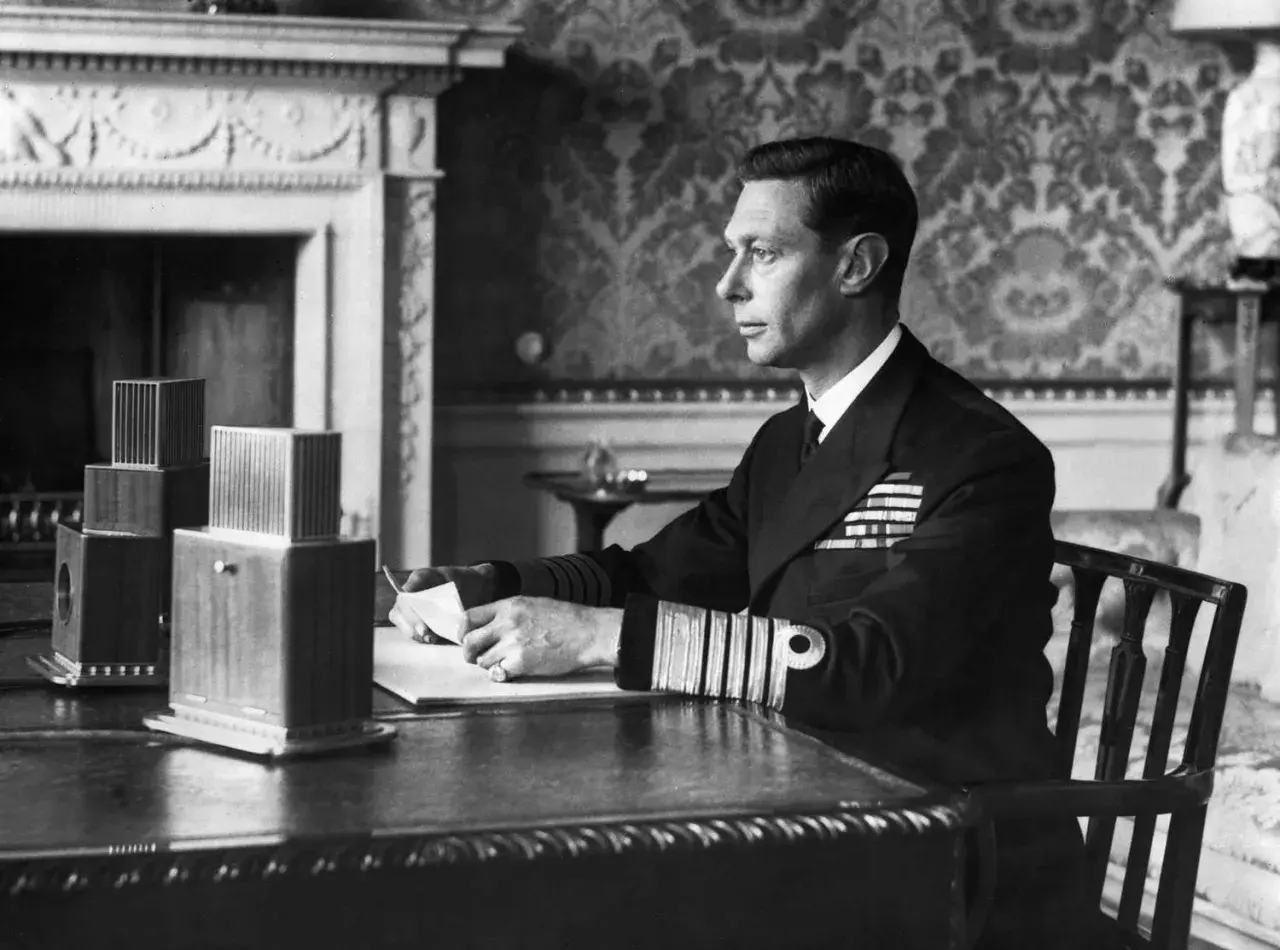
A King George VI portrait is never just a likeness. In paint, George VI is usually presented as a constitutional figure: composed, restrained, and surrounded by the language of regalia, uniform, or family stability. This article looks at the painted versions that matter most, the symbols they carry, and the details I would check before treating one as an original work rather than a later reproduction.
What matters most in these royal portraits
- George VI is usually shown as dignified and controlled, not theatrically heroic.
- The most useful painted examples are Meredith Frampton’s 1929 Duke of York portrait, Sir Gerald Kelly’s state portrait, and Sir James Gunn’s 1950 family scene.
- Uniform, coronation robes, and setting do most of the symbolic work.
- Provenance and artist-specific handling matter more than a generic royal look.
- Original oil portraits show brushwork, texture, and aging that prints cannot fully reproduce.
With that frame in place, I can break the subject into what the portrait means, how the main versions differ, and how to evaluate one with a more careful eye.
What a George VI portrait is really doing
In royal portraiture, the sitter is only half the story. The rest is a visual argument about authority, continuity, and public trust, and George VI needed that argument more than most monarchs of the twentieth century. He came to the throne in 1936, carried the burden of war, and was often painted in ways that emphasized steadiness rather than spectacle.
That is why I read these works as controlled images of monarchy. The artist is rarely trying to show a dramatic personality. Instead, the portrait must turn a modest, private man into a figure who can stand for the state without looking inflated or false.
In practice, that means a few repeated choices: a disciplined pose, carefully selected regalia, a setting that feels ceremonial but not chaotic, and a finish that is polished enough to read as official. Once you recognize that grammar, the individual portraits become much easier to compare.
The next step is to look at the actual paintings and see how each artist solved the same problem in a different way.
The painted versions that matter most
The National Portrait Gallery preserves several useful painted examples, and the Royal Collection Trust documents the official state image that defined George VI’s reign. When I compare them, I look for three things: whether the portrait is pre-reign, official, or domestic; how the artist handles clothing; and whether the setting is ceremonial or deliberately relaxed.
| Work | Date | Visual signal | Why it matters |
|---|---|---|---|
| Meredith Frampton, King George VI | 1929 | Full Royal Navy captain’s uniform, upright but restrained pose | A pre-reign image that frames the future monarch as disciplined, exacting, and service-minded. |
| Sir Gerald Kelly, study for the state portrait | Circa 1941 | Order of the Garter robes, formal pose, carefully staged dignity | Useful for seeing Kelly test the ceremonial language that would later define the official image. |
| Sir Gerald Kelly, state portrait of George VI | 1938-45 | Full-length coronation robes in a stately interior | The clearest official painted statement of the reign, completed through wartime disruption. |
| Sir James Gunn, Conversation piece at the Royal Lodge, Windsor | 1950 | Family at tea, casual seating, domestic scale | Recasts monarchy as stable, intimate, and post-war modern rather than remote. |
The important shift here is not just costume but tone. Frampton gives you the future king, Kelly gives you the sovereign, and Gunn gives you the family man whose authority is inseparable from domestic stability. That progression is the clearest way to understand George VI in paint.
Once you see that progression, the symbols inside each work become much easier to read.
How the costume and setting do the talking
Uniform signals service
Frampton’s 1929 portrait uses the full dress of a Royal Navy captain to anchor George in service before sovereignty. That choice matters because it keeps the image grounded. The uniform is formal, but it does not yet carry the full burden of kingship, so the portrait feels disciplined rather than ceremonial in the grander sense.
Robes signal authority
Kelly’s state portrait moves into coronation robes and the Order of the Garter, which are classic state-painting devices. They immediately place the sitter inside a lineage of rule, ceremony, and institutional continuity. Kelly also sets the king in an interior based on the Viceroy’s Building in Delhi, a reference that expands the image without cluttering it.
Read Also: Catherine Parr Portrait - How to Authenticate a Tudor Queen
Domestic space softens power
Gunn’s 1950 family portrait changes the register again. The tea table, the relaxed grouping, and the Royal Lodge setting create a portrait of lived authority rather than pomp. This is not accidental. After the war, the monarchy’s public image depended as much on stability and shared ritual as on grandeur, and the conversation-piece format captures that shift cleanly.
When I see a portrait that gets these details wrong, I start doubting the date, the sitter status, or the later caption. That is why costume and setting are not decorative extras; they are evidence.
How I would check authenticity and authorship
Authentication starts with the obvious and then gets more technical. If I were cataloguing a George VI painting, I would not begin with the frame or the signature; I would begin with the sitter’s status on the claimed date, the artist’s known practice, and the document trail around the commission.
- Check whether George VI is being shown as Duke of York, king, or family member, because the title should match the date.
- Compare the costume, insignia, and regalia with the exact year.
- Look for provenance, exhibition history, and any record of the commission.
- Separate the original oil from prints, photogravures, and later copy works.
- Use technical examination only after the documentary basics make sense.
On the canvas itself, brushwork and surface texture matter. Frampton tends toward precision, Kelly toward stately finish, and Gunn toward a more conversational family scene. If the surface looks mechanically flat or the clothing has been copied without understanding how fabric folds, I become cautious very quickly. That is usually where a false attribution starts to wobble.
For an American buyer or collector, that caution is especially useful because royal images often circulate first as decorative reproductions and only later as purported “originals.” The paper trail matters more than the marketing copy.
From there, the condition of the painting becomes the next concern, because even an authentic work can be visually distorted by age or poor treatment.
Preservation details that change the reading of the work
For portrait conservation, I pay close attention to changes that alter the image’s authority. Yellowed varnish can turn crimson robes muddy and flatten skin tones; overcleaning can strip the subtle glazes that make royal fabric look expensive rather than decorative. Craquelure, the fine network of age cracks, is normal in older oil paintings, but active flaking or patchy retouching can signal more serious instability.
Frames matter too. A portrait of George VI was often intended to project hierarchy from the first glance, so damaged gilding, wrong replacement frames, or poorly matched mounts can weaken the reading of the piece. For museum work, treatment records are part of the object’s history, not an afterthought.
If you are comparing two examples, the better-preserved one is not automatically the more truthful one, but it is often easier to read. That distinction matters when the goal is historical interpretation rather than merely display.
With that in mind, the final step is to turn visual impressions into a clean, defensible record.
What I would note before cataloguing one as a George VI original
- Separate the portrait type: state, studio, family, or study.
- Confirm the sitter’s rank at the time the pose was made.
- Match regalia and uniform details to the date.
- Document provenance, exhibition history, and any conservation treatment.
- Record whether the work is the original oil, a reproduction, or a later painted version.
That is usually enough to move from a vague royal likeness to a defensible catalogue entry. In practice, the strongest George VI portraits are the ones where image, documentation, and surface all tell the same story.
