
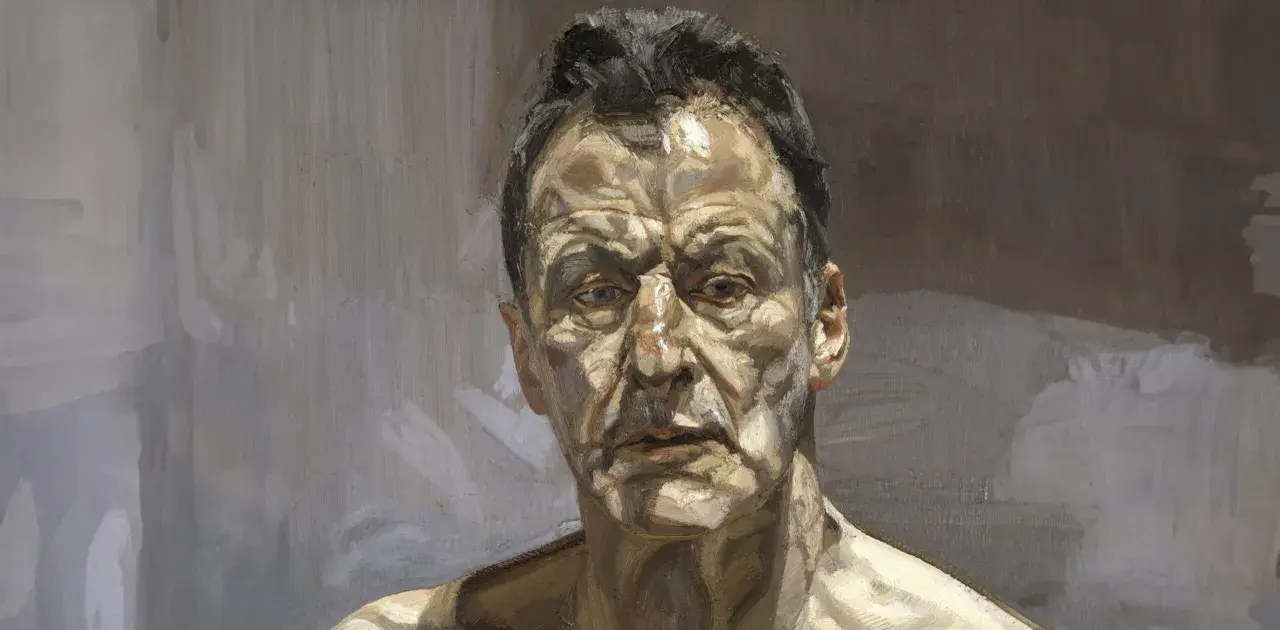
I treat a Sigmund Freud portrait as both likeness and archive: it tells you how Freud was seen, what kind of image each photographer wanted, and what has happened to the print since then. This article focuses on the historical photographs most readers are after, how to tell an original object from a later reproduction, and how to preserve one without flattening its value.
The details that matter most when you read a Freud portrait
- Medium comes first: a vintage print, later print, and modern reproduction are not the same object.
- The most useful portraits are usually documentary photographs, not decorative reworks.
- Authenticity depends on paper, printing method, inscriptions, and provenance, not just image quality.
- Late portraits are especially revealing because they show Freud as both public thinker and aging patient.
- For preservation, keep the work cool, dry, stable, and in low light.
What people usually mean by a Freud portrait
Most readers are not chasing a fanciful interpretation; they want a historical likeness of Sigmund Freud himself. That is why the search usually leads to photographs, archive prints, and museum records rather than painted images. It also explains the common confusion with Lucian Freud, whose name dominates contemporary art searches but belongs to a different figure and a different visual legacy.
When I read this material, I start with a simple question: is the image meant to document a man, or to sell a mood? Freud's portraits usually do both, but the strongest ones stay grounded in biography. A serious portrait should tell you where Freud was, who photographed him, and why the sitting happened at that moment.
The Freud Museum London photo library spans 1884 to 1939 and includes several hundred portraits of Freud, which is a reminder that his public image developed over decades rather than arriving fully formed. That long record makes the subject richer than one famous face; it gives you an evolving visual history. From there, the next practical step is to separate the object types, because that is where most buyers and researchers go wrong.

The portrait types you are likely to encounter
Not every Freud portrait has the same evidentiary weight. A vintage print, a later print from the original negative, and a modern reproduction may show the same image, but they do not carry the same historical or market value. I would always ask what the object actually is before I ask how good it looks.
| Type | What it is | What to verify | Why it matters |
|---|---|---|---|
| Vintage photographic print | A print made near the time the image was taken, often in a period process such as silver gelatin or albumen. | Paper age, verso marks, mount, photographer's stamp, and matching provenance. | Usually the strongest historical object and the most desirable for collectors. |
| Later print from the original negative | A legitimate print made afterward from the same negative. | Edition information, printer details, and whether the paper dates fit the claimed print date. | Still meaningful, but less scarce than a true period print. |
| Modern reproduction or poster | A decorative reprint made from a scan or published image. | Whether the seller clearly states it is a reproduction and not an original print. | Useful for display, but not the same as an archival photographic object. |
| Digital scan or online image | A reference image viewed on screen or downloaded for research. | Image source, resolution, and whether the file preserves crop and tonal information. | Good for study, but not a collectible object. |
One especially important benchmark is the London portrait made by Marcel Sternberger near the end of Freud's life. The Sternberger Collection describes it as one of Freud's final documented images, and that matters because late portraits tend to reveal more about age, illness, and presentation than early studio likenesses do. When an image sits so close to the end of the subject's life, the portrait becomes as much historical evidence as visual likeness. That is why object type comes first, before style or sentiment.
How I check authenticity before I treat it as collectible
If I were cataloguing or buying one of these images, I would not begin with the face. I would begin with the paper, the print surface, and the back of the object. Authenticity in photographic portraiture is usually a chain of small confirmations, not one dramatic clue.
Start with the medium
Gelatin silver print is a term you will see often here: it means a black-and-white photographic print made with silver halides suspended in gelatin, and it is one of the most common fine-print processes of the twentieth century. If a seller claims a mid-century origin, the tonal range, paper fiber, borders, and any period lab marks should make sense together. A print that looks visually old but sits on paper that feels chemically modern is a warning sign, not a surprise.
Read the verso and the margins
The back of the print often tells you more than the front. Photographer's stamps, studio notes, crop marks, inscriptions, and old mount evidence can all support the story of the image. If the portrait is supposed to be vintage but the verso is blank, pristine, and oddly generic, I would want a stronger provenance chain before calling it historical.
Ask for the ownership trail
Provenance is just the documented chain of custody, and it matters because portraits move through families, archives, dealers, and estates. For a Freud image, I would want at least a coherent story about where the print came from, who handled it, and whether it has been published or exhibited before. Missing provenance is not always fatal, but vague provenance usually means you are dealing with a decorative object rather than a well-documented one.
Read Also: Cleopatra's Real Face - What Do Her Portraits Actually Show?
Watch for the usual red flags
- The seller cannot say whether the print is vintage, later, or reproduced.
- The image is described with grand language but no photographer, date, or process.
- The paper looks too uniform or too white for the claimed age.
- The portrait is cropped from a book page or website scan and then presented as if it were a real print.
The practical rule is simple: if the object cannot explain itself materially, do not let the image do all the work. Once authenticity is clearer, you can read the portrait with more confidence and less guesswork.
What the image reveals about Freud himself
The best portraits do not flatten Freud into a symbol. They show a person who is controlled, alert, and difficult to sentimentalize. I pay attention to the eyes, the mouth, the angle of the shoulders, and the kind of room he is placed in, because those details tell you whether the photographer was trying to emphasize authority, fatigue, intellect, or vulnerability.
Freud is often shown in a suit, seated rather formally, sometimes with the cigar that became part of his public identity. That prop is easy to overread, but it still matters. It suggests a man who understood image-making and was willing to use a small set of visual cues to project intellectual seriousness. In other words, the portrait is not just about what he looked like; it is about how he wanted to be legible.
The late portraits are the most affecting because they do not hide the cost of time. Freud's advancing jaw cancer, the tension of exile, and the compressive feel of old age all sit inside those images. A portrait made near the end of life does not have to be dramatic to be revealing; sometimes the plainness is the point. That is why these photographs continue to matter as historical documents, not just likenesses.
How to preserve and display one without damaging it
If the portrait is an actual photograph or print, preservation matters just as much as authentication. Paper, emulsion, and mounting materials all age, and the wrong display choices can do damage that is slow, cumulative, and expensive to reverse. I always treat display as a controlled compromise, not as a permanent solution.
- Keep the room cool, dry, and stable. A practical target is around 65 to 70°F with relative humidity between 30% and 50%.
- Limit light. For sensitive photographic material, I would aim for about 50 lux or lower and avoid prolonged display.
- Use UV-filtering glazing if the work is framed, but do not rely on glass alone. Light level, heat, and duration still matter.
- Choose archival mats and backing materials. Acid-free means the materials are made to reduce long-term chemical deterioration.
- Store unframed prints flat in inert sleeves or folders, away from attics, basements, radiators, and exterior walls.
In practice, the safest setup is often the least theatrical one. A portrait can look excellent in restrained light with proper framing, while still staying within preservation limits. That balance is what keeps a historically important image from becoming a damaged decoration.
What I would check before buying or hanging one in 2026
If you are evaluating a Freud portrait now, I would keep the decision tree brutally simple. First, identify the object type. Second, confirm the photographer, date, and print process. Third, ask for front and back images, dimensions, and any ownership trail. If those three steps remain fuzzy, the price should stay modest no matter how compelling the face looks.
For display, I would choose a location with controlled light rather than a bright hallway or sunlit wall. For collecting, I would favor the print that can explain itself through material evidence, not the one with the loudest description. The strongest portraits of Freud are memorable because they are both psychologically sharp and physically credible, and that is the standard I would use in any serious collection.