
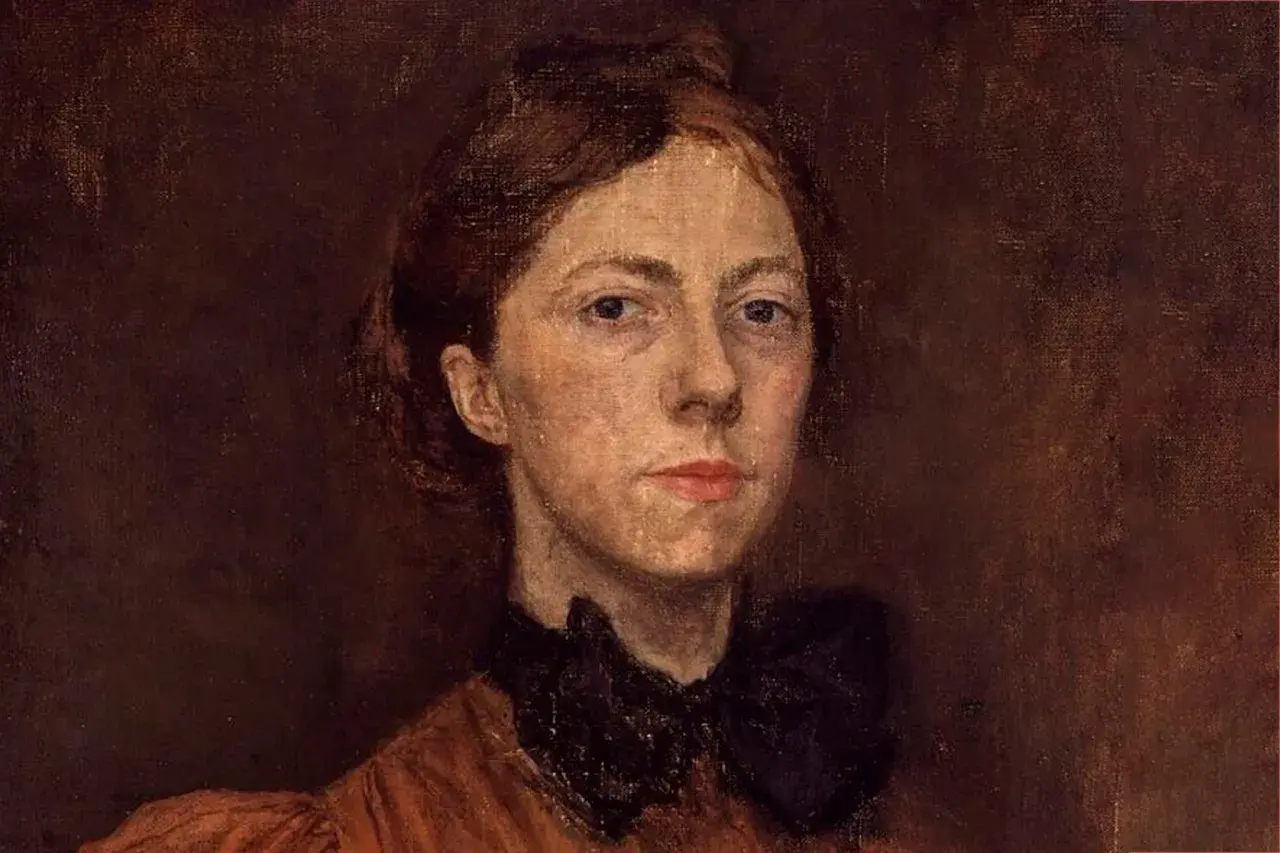
Gwen John paintings reward slow looking: they compress emotion, space, and structure into small, concentrated works that rarely raise their voice. This article breaks down what makes her style distinct, which subjects recur, how she handled paint and color, and how to read her work if you are studying it for collecting, preservation, or simple appreciation. I also point out the details that matter most when a painting is being judged in the room rather than only in a reproduction.
The essentials before you look closely
- Her most important strength is restraint: she uses quiet compositions, narrow tonal ranges, and very controlled brushwork.
- Her preferred subjects are intimate: seated women, interiors, self-portraits, flowers, and cats.
- Scale matters: many works are small, and the intimacy is part of the meaning, not a side effect.
- Technique is central: thin layers, smooth passages, and transparent glazes create depth without visual noise.
- Authentication depends on context: provenance, material consistency, and condition carry real weight with this artist.
What makes her paintings quietly forceful
Gwen John’s work is easy to underestimate at first glance because it does not rely on spectacle. She builds paintings from near-silent tonal shifts, careful proportion, and a sense that every object and figure has been placed with intention. The result is not emptiness; it is concentration.
What I find most compelling is how little she needs to do to hold a composition together. A chair, a wall, a book, a turned head, a shaft of light, and a muted background can carry the whole picture if the relationships are precise enough. That is why her paintings feel modern even when the subject matter is modest. Once you see that discipline, the recurring subjects make far more sense.
The recurring subjects that give the work its inner scale
Her subject matter is narrower than many artists of her generation, but that narrowness is a strength. John kept returning to women alone in rooms, women reading, her own face, cats, and the occasional flower arrangement or domestic object. In other words, she chose subjects that could support silence, distance, and inwardness.
- Anonymous female sitters let her focus on mood and structure instead of biography.
- Interiors turn ordinary rooms into psychological spaces, often with very little furniture.
- Self-portraits reveal how controlled she was about presenting identity: direct, unsentimental, and composed.
- Cats and small still lifes show her patience with modest forms and soft edges.
- Readers and contemplative figures give her the perfect excuse to explore stillness without stiffness.
I think this repetition is often mistaken for limitation. It is closer to a deliberate narrowing of field. By refusing distraction, she makes posture, gesture, and spacing carry more weight than they usually do in portrait painting. That repetition is the clue to how she builds meaning from very little, which is why the surface matters so much.
How she built color, light, and surface
John’s painting process is a big part of her identity as an artist. She worked with thin layers, smooth brushwork, and transparent glazes, which means later passages of paint were allowed to breathe through what came before. A glaze is a thin, transparent layer of color laid over dry paint, and in her hands it helped create depth without thickening the surface.
She also thought carefully about color relationships. Rather than pushing contrast, she often worked within a limited range of browns, greys, creams, chalk blues, and subdued reds. That gives her paintings a soft, compressed atmosphere, but it also gives them structure. A small accent can suddenly matter a great deal because the rest of the palette has been held in reserve.
| Feature | What it does visually | Why it matters |
|---|---|---|
| Thin paint layers | Keeps the surface light and controlled | Prevents the image from becoming heavy or overworked |
| Transparent glazes | Lets earlier passages show through | Adds depth without dramatic texture |
| Narrow tonal range | Creates unity and quiet tension | Shifts attention to proportion, edge, and mood |
| Small scale | Pulls the viewer in close | Turns looking into an intimate act |
| Careful drawing | Stabilizes the composition | Stops the work from drifting into mere atmosphere |
A few key works that show the range of her art
A handful of paintings is enough to map her concerns across time. I like to think of these as entry points rather than a complete canon, because each one reveals a slightly different aspect of her language.
| Work | Approximate date | What to notice | Where it helps to look now |
|---|---|---|---|
| Self-Portrait | 1902 | Direct gaze, strict composition, and a serious sense of self-possession | Tate |
| Chloë Boughton-Leigh | c. 1904–8 | A close friend painted with relaxed informality and delicate handling | Tate |
| Cat | c. 1904–8 | Her affection for animals and her skill with paper-based media | Tate |
| A Corner of the Artist’s Room in Paris (with Open Window) | 1907–9 | The room itself becomes a portrait of space, light, and distance | Tate |
| A Lady Reading | c. 1909–11 | Stillness, inward concentration, and the quiet power of a seated figure | Tate |
| The Convalescent | c. 1919–26 | A mature late work that shows how persistent her themes remained | Ashmolean Museum |
These paintings also make one practical point clear: John often revised ideas over long periods, so a broad date range is not a weakness in the record. It usually reflects a working method that was slow, reflective, and more concerned with exactness than speed. That is also why authentication and condition matter more here than people sometimes expect.
How I would assess authenticity and preservation
When I look at a work attributed to Gwen John, I start with the basics: provenance, support, medium, and comparison with catalogued works. A genuine painting usually fits her known habits in several ways at once. The drawing will be controlled, the palette restrained, the scale often intimate, and the subject matter consistent with her established themes. One strong clue is not enough; the whole package has to make sense.
Just as important, I do not separate authenticity from condition. A work that has been badly cleaned, overvarnished, relined, or poorly mounted can lose the very qualities that make it recognizably hers. For works on paper, fading and cockling are serious concerns. For oils, surface cracks, discolored varnish, and aggressive restoration can distort the subtleties of tone.
If the work is on paper
- Check whether the sheet has been mounted with acid-free materials.
- Look for even support, because waviness can hide earlier damage or poor storage.
- Use UV-filtering glazing if the work is framed for display.
- Keep display light conservative, ideally around 50 lux for sensitive paper works.
Read Also: Rousseau's Jungle Paintings - Unpacking the Dreamlike Art
If the work is an oil painting
- Inspect the varnish for yellowing or flattening that masks the subtle surface.
- Look for cracking patterns that suggest age, movement, or past structural stress.
- Maintain stable relative humidity, ideally in the 45-55% range.
- Avoid heat spikes and cold drafts, which are more damaging than many owners realize.
As a general rule, I would treat museum-style display conditions as a benchmark rather than a rigid formula: steady temperature, controlled humidity, limited light, and careful framing are what protect both value and legibility. The final test, though, is visual. Even before a report is read, the work has to feel coherent in front of the eye.
Why her quiet canvases still feel contemporary in 2026
In 2026, John still reads as current because her paintings resist the habits that make a lot of portraiture feel dated. She does not flatter the sitter, over-explain the scene, or push the viewer toward an easy emotional answer. Instead, she gives us restraint, solitude, and an unusually disciplined sense of interior life.
If I were standing in front of one of her paintings today, I would look first at four things: the balance between figure and space, the tonal distance between nearby colors, the control of the edges, and whether the picture keeps its authority when I move closer. That combination is the real signature of Gwen John, more reliable than any single motif or label. Her paintings endure because they are small in scale but not in ambition, and because they ask for the kind of attention most art no longer rewards.
That is why the best way to understand her work is to slow down, notice the structure beneath the calm, and let the silence do part of the speaking.
