
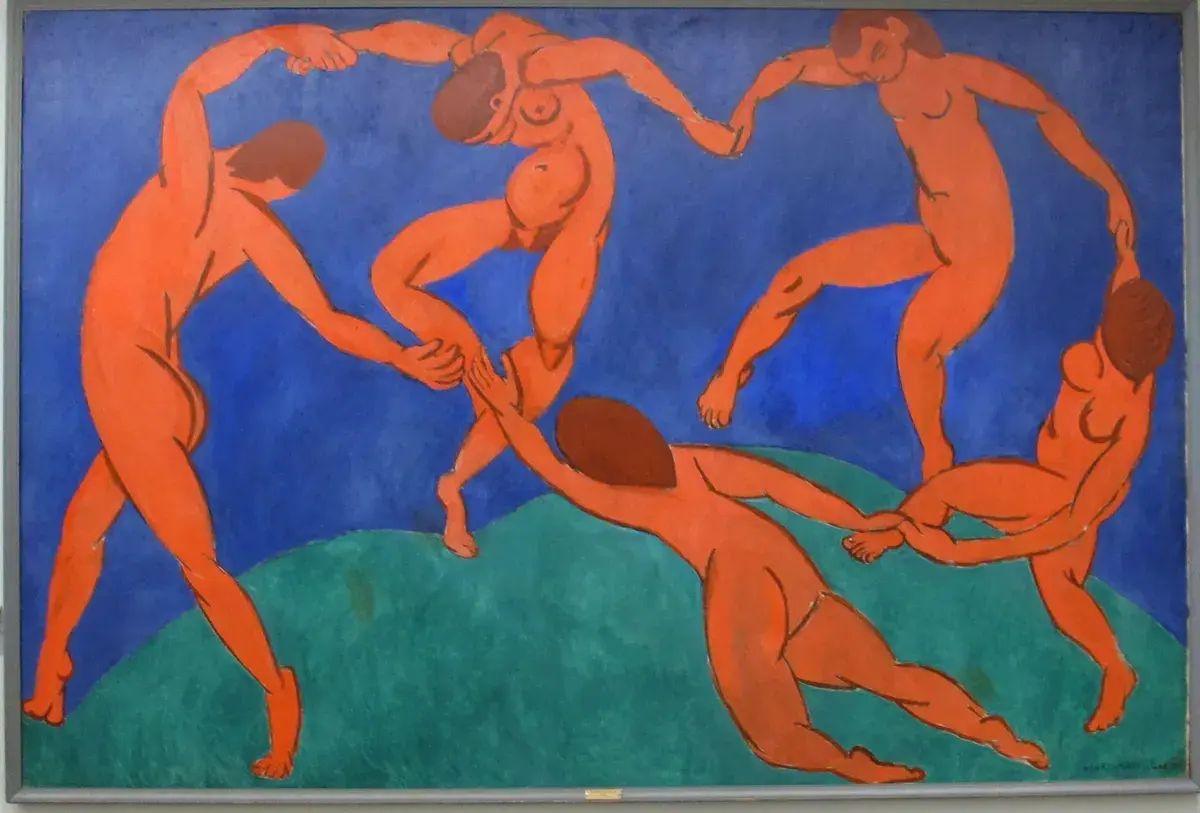
Among the best-known fauvism artists, color was never a backdrop; it was the architecture. That is why the movement still matters today: it explains how a small group of painters made color, brushwork, and simplified form carry more meaning than literal realism ever could. In the sections below, I focus on the main painters, the works that define them, and the practical details that matter when a painting needs to be read, compared, or preserved.
The movement becomes clear once you separate the core painters from the wider circle
- Henri Matisse, André Derain, and Maurice de Vlaminck form the core of Fauvism, with Georges Braque, Raoul Dufy, Kees van Dongen, and others in the broader orbit.
- The style is built on non-naturalistic color, visible brushwork, and compressed space.
- Its key works date mainly from 1905 to 1908 and include portraits, interiors, and landscapes.
- Not every Fauvist stayed Fauvist for long, and that short lifespan is part of the movement’s importance.
- For authentication and conservation, provenance and surface condition matter as much as style.
The core Fauvist painters and what each brought
The Metropolitan Museum of Art’s overview places a wider group around the movement, but I always start with the small cluster of painters who made Fauvism impossible to ignore. Their work is close enough to share a visual language, yet different enough to show that the movement was never just one uniform look.
| Artist | What to remember | One artwork to know |
|---|---|---|
| Henri Matisse | The central figure, and the most disciplined color architect of the group. His Fauvist paintings balance intensity with structure. | Woman with a Hat, The Open Window, Landscape at Collioure |
| André Derain | Co-founder of the movement, especially important for the Collioure period with Matisse. His canvases keep color bold but readable. | Bridge over the Riou, Fishing Boats, Collioure |
| Maurice de Vlaminck | The most forceful brushwork of the core group. He gives Fauvism its raw, fast-moving energy. | The Seine at Chatou, Boats on the Seine at Chatou |
| Georges Braque | A short but revealing Fauvist phase, valuable because it shows the transition toward Cubism. | House behind Trees |
Beyond that core, I would keep the wider Fauve circle in view, especially Raoul Dufy, Kees van Dongen, Albert Marquet, Charles Camoin, Henri-Charles Manguin, Othon Friesz, Jean Puy, Louis Valtat, and Georges Rouault. Some stayed close to the style longer than others, and some only passed through it briefly, but that is exactly why the movement is useful to study: it was a shared experiment, not a fixed school. Once that map is clear, the next question is what actually made the paintings look so radical.
What made their paintings feel radical
Fauvism is easy to reduce to “bright colors,” but that misses the point. The real break was that color stopped serving nature and started organizing the painting itself. I read Fauvist canvases as systems, not as pretty surfaces.
| Trait | How it appears in Fauvism | Why it mattered |
|---|---|---|
| Color | Pure, high-key, often non-naturalistic hues | Color carries emotion and structure, rather than merely describing local reality |
| Brushwork | Visible, broad, and energetic marks | The hand of the artist stays present, so the painting feels immediate |
| Space | Flattened or compressed depth | The canvas reads as a decorative field instead of a window onto illusionistic space |
| Subject matter | Portraits, landscapes, interiors, and harbor scenes | Ordinary motifs become radical through treatment, not through exotic subject matter |
If Impressionism studied light and Cubism dissected form, Fauvism sits between them as a forceful act of reordering. The painters were not copying what they saw in a literal sense, they were deciding what a scene should feel like once color had been given authority. That logic becomes much easier to see in the best-known works of the movement, which are still the fastest route into its visual language.

The artworks that define the movement
MoMA’s Fauvism grouping is useful because it ties the movement to a small set of works rather than to a vague label. That is how I prefer to study it too: through a handful of canvases that show the shift from natural observation to expressive construction.
| Artwork | Artist | Why it matters |
|---|---|---|
| Woman with a Hat (1905) | Henri Matisse | The scandal picture. It announced that skin, cloth, and shadow no longer had to obey natural color. |
| The Open Window, Collioure (1905) | Henri Matisse | A compact lesson in how Fauvist color can fuse interior and exterior space into one charged surface. |
| The Seine at Chatou (1906) | Maurice de Vlaminck | One of the clearest examples of forceful brushwork turned into atmosphere, speed, and tension. |
| Bridge over the Riou (1906) | André Derain | Shows how a landscape can be simplified without becoming empty, because the color relationships still do the heavy lifting. |
| House behind Trees (1906–7) | Georges Braque | Important as a transition work, since Braque’s brief Fauvist phase helps explain his move toward Cubism. |
What these works share is not a single palette, but a common decision to let paint do structural work. In practice, that means the outline, the brushstroke, and the color patch often matter more than the object depicted. Once you know that, you can tell when a painting belongs to the movement itself and when it is only borrowing the surface look.
How I check a Fauvist painting for authenticity and condition
Style alone is not enough, because Fauvist language is easy to imitate and easy to distort. When I assess a possible Fauvist work, I start with provenance, exhibition history, and materials before I trust the color in front of me.
- Provenance matters because early ownership, gallery records, and exhibition labels can place a work in the right period.
- Materials matter because canvas, board, ground, and pigment choices should be consistent with the claimed date.
- Brushwork matters because Fauvist paint handling is usually alive, direct, and not overly polished.
- Surface condition matters because yellowed varnish, abrasion, and retouching can change the color relationships that define the work.
- Signature and inscription matter, but they should confirm the object, not carry the whole attribution by themselves.
The biggest conservation trap is assuming that bright color automatically means good condition. A Fauvist canvas can look dramatically different after cleaning, and a discolored varnish can mute the very relationships that make the painting work. For preservation, I care about stable light exposure, careful handling, and conservative treatment, because the movement depends so heavily on the integrity of the surface. From there, the broader question is why this short-lived style still occupies such a large place in museum history.
Why Fauvism still anchors modern-art narratives
Fauvism matters because it marks a clean break. It is brief enough to understand quickly, but influential enough to explain how early modern painting opened up to more subjective color, flatter space, and a looser relationship to reality.
That is also why the movement keeps showing up in collection labels, museum galleries, and teaching collections. A Fauve canvas may be modest in size, yet it often sits at a hinge point between Impressionism and later modernism. Matisse keeps the decorative intelligence of color alive, Derain shows how landscape can be rebuilt through chromatic decisions, and Braque’s short Fauvist phase makes his move toward Cubism look less abrupt and more logical.
For a curator or collector, that has a practical implication: a Fauvist work is not valuable only because it is bright or famous, but because it belongs to a moment when painting changed its rules. The movement’s short span makes every surviving canvas more important as evidence. That context is also what gives Fauvism its lasting place in modern-art history rather than in a simple style category.
A practical way to read a Fauvist canvas today
When I stand in front of a Fauvist painting, I use the same sequence every time.
- Start with the color relationships, not the subject.
- Ask whether the artist is using color to describe, to exaggerate, or to rebuild the image.
- Check whether the brushwork is building form or simply decorating the surface.
- Look at the date and place, especially the 1905 to 1908 window that defines the movement’s peak.
- Read the surface condition before you trust the color, because age and treatment can alter the whole composition.
That sequence keeps the movement legible. Fauvism rewards close looking because its apparent spontaneity is built on specific choices, and those choices remain visible when the work is understood on its own terms. If you read the painting that way, it stops looking like a brief burst of wild color and starts looking like one of the clearest inventions in early modern art.
