
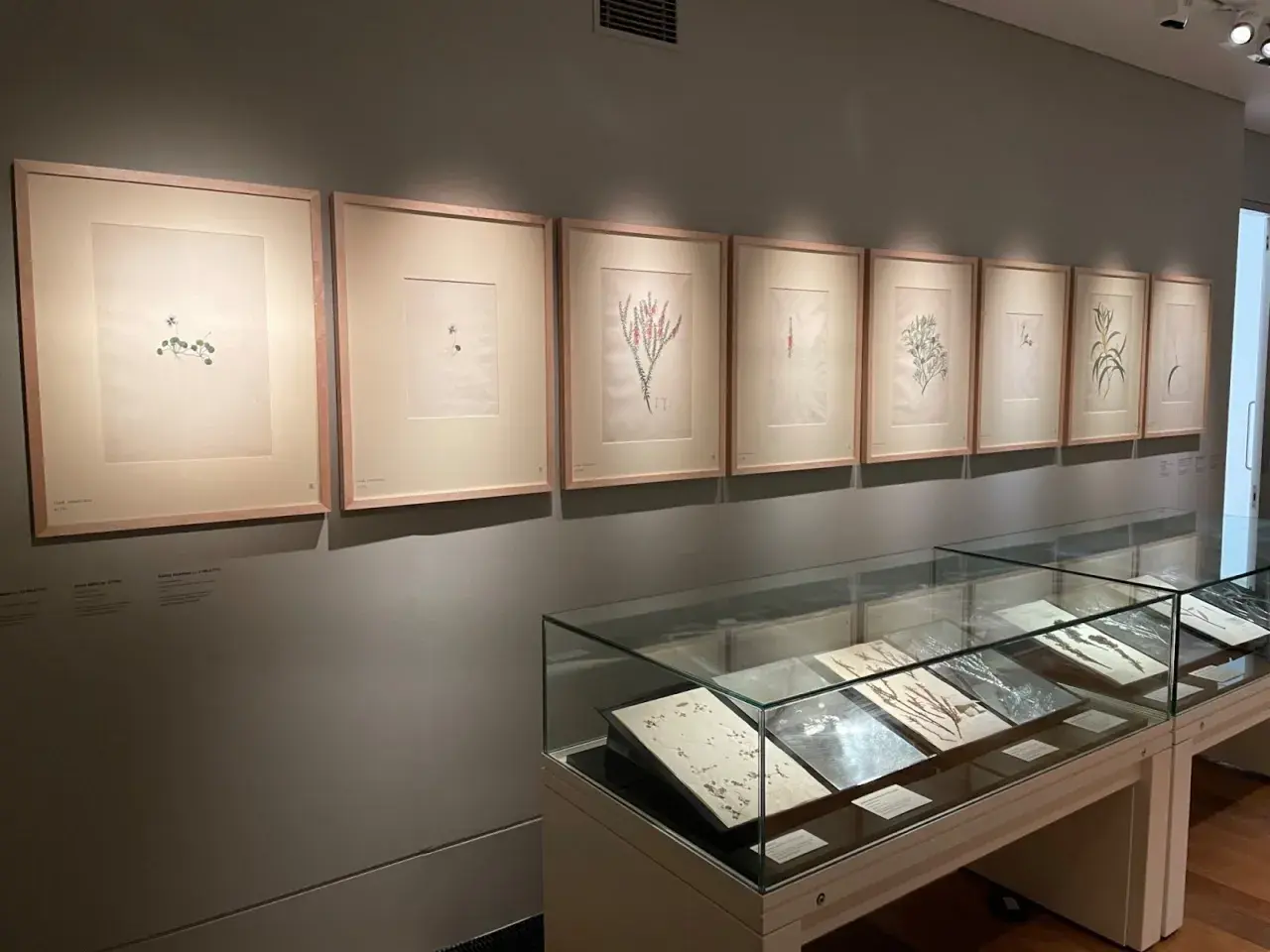
Framing in art is where display choices become preservation choices. I treat the frame as the last compositional decision and the first physical defense: it can sharpen the image, slow wear, and keep vulnerable surfaces from being damaged in handling, light, or transport. This article explains what a frame does, how I choose materials, how the answer changes by medium, and when an original frame is worth preserving rather than replacing.
What a frame should do before it looks beautiful
- A frame should guide the eye, protect the object, and support safe handling at the same time.
- Original frames can carry historical evidence that matters for attribution, provenance, and interpretation.
- Works on paper, photographs, and pastels usually need glazing, spacers, and archival mounts.
- Safe framing depends more on reversibility and material quality than on ornament or price.
- The most common damage comes from acidic boards, bad adhesives, and glazing that touches the artwork.
What a frame changes before the viewer even notices it
A frame does more than make a work look finished. It establishes a boundary, tells the eye where to enter, and can change the balance of a composition without touching a brushstroke. A slim dark frame can compress the picture and make color feel denser; a broader gilded one can add ceremonial weight; a mat can give paper the breathing room a bare edge would not. In that sense, the frame is part optics and part etiquette.
I think of the frame as a visual threshold. It can quiet a busy edge, hold a fragile surface at a safe distance, and make a small work feel intentional instead of undersized. Once that visual role is clear, the historical question becomes harder: is the frame part of the work’s identity, or only a later wrapper?
Why original frames matter to history and authentication
Original frames matter because they can carry information that disappears the moment you swap them out. Joinery, gilding wear, labels, dealer stamps, old hanging hardware, and even dirt patterns can help reconstruct where an artwork lived and how it was shown. A later replacement may be prettier, but it can also erase evidence that supports dating, provenance, or attribution.
I do not treat an old frame as disposable by default. The Met’s work on the Van Eyck frames is a good reminder that even a damaged frame can preserve inscriptions, restoration layers, and original surface detail that are historically meaningful. Not every original frame should be kept at all costs, but the burden of proof is on the replacement, not the original.
Not every tradition even uses a rigid Western frame. Some works are mounted in systems where the display structure and the preservation structure are inseparable, which is another reason I resist treating the frame as a decorative afterthought. Once you see that, the next step is choosing the right frame package for the medium itself.
Which frame package fits which medium
The medium tells me almost everything about the frame build. Works on paper want support and a barrier; paintings on canvas want clearance and stable hanging; fragile media like pastel or charcoal need glazing that does not touch the surface; textiles often need depth more than ornament. For some objects, a conventional picture frame is not enough and a shadowbox or custom mount is the safer answer.
| Medium | What the frame has to solve | Practical setup | What I avoid |
|---|---|---|---|
| Works on paper | Abrasion, cockling, and light exposure | Window mat, spacer, UV glazing, archival backing | Glazing contact and pressure-sensitive tape |
| Photographs | Surface sensitivity and fading | PAT-safe materials, non-adhesive corners or hinges, UV glazing | Unknown plastics and dry mounting |
| Pastel, charcoal, chalk | Friable pigment and static | Deep spacer, anti-static UV acrylic or UV-laminated glass | Direct acrylic contact and loose handling |
| Canvas paintings | Edge protection and stable hanging | Fitted frame with proper clearance and secure hardware | Crushing corners or forcing a tight fit |
| Panel paintings and mixed media | Rigidity, movement, and custom geometry | Custom support, conservator review, padded restraint where needed | Standard frames that stress the edges |
| Textiles | Dimensional support and dust control | Shadowbox or deep frame with archival support | Compression and adhesive mounting |
I also decide early whether the work should be framed at all. Some objects are safer in archival housing than in display framing, especially when the surface is unstable or the object needs flat storage. That brings the discussion to materials, because the wrong board or glazing can undo the benefits of an otherwise careful design.
The materials that make framing safe
The right materials make the difference between support and damage. According to NEDCC, the safest mats are 100% cotton rag mat board or museum board, and paper-based mats sold as “archival” can still contain lignin. I check for acid-free and lignin-free construction, and for photographs I look for materials that pass the Photographic Activity Test, because a material that looks neutral can still react badly over time.
For glazing, The Met’s care-and-handling guidance is blunt: glazing protects against physical and light damage, ordinary picture glass does not filter UV, and acrylic can create static that is risky for powdery media. In practice, that means I choose UV-filtering glass or anti-static UV acrylic when the surface needs it, and I use spacers or a window mat so the glazing never sits on the artwork.
| Component | What I prefer | Why it matters |
|---|---|---|
| Mat board | 100% cotton rag or museum board; PAT-safe materials for photographs | Stable, low-risk surface near the object |
| Backing | Archival board, Coroplast, or archival corrugated board | Support without acid transfer |
| Attachment | Japanese paper hinges or non-adhesive photo corners | Reversible and gentle |
| Glazing | UV-filtering glass or anti-static UV acrylic | Blocks light and surface damage |
| Avoid | Foam board, non-archival tape, dry mounting, spray mounting | Can be irreversible or damaging |
That is the part people often underestimate: framing quality is mostly invisible until something goes wrong. A safe frame package is built to be reversible, chemically stable, and easy to inspect later, not merely attractive on day one. Once those materials are in place, the remaining risk usually comes from avoidable mistakes.
Common mistakes that cause avoidable damage
Most framing damage is boring, not dramatic. I see the same failures repeated: glazing that presses against the surface, window mats used as the mounting point instead of the backing board, tape chosen because it is convenient, and “acid-free” materials accepted without checking whether they are actually lignin-free. Another common error is overvaluing the most expensive option; a premium sheet of acrylic is not automatically safer than the right basic one for the job.
- Letting glazing touch paint, pastel, graphite, photograph emulsion, or delicate paper.
- Using non-archival tape or pressure-sensitive adhesives on the object itself.
- Choosing foam board because it is cheap and rigid.
- Hinging the work to the window mat, which increases tear risk during unframing.
- Ignoring the weight of glass, the quality of hanging hardware, and the wall conditions.
- Framing something that should be stored flat or shown only intermittently.
When I catch two or more of these at once, I stop thinking about décor and start thinking about conservation. That makes the next decision easier: whether the frame should be kept, restored, or replaced.
When to keep, replace, or restore the frame
I usually ask three questions: does the frame belong to the object historically, does it fit safely, and is it actively harming the work? If the answer to the first is yes and the second two are manageable, I lean toward keeping or conserving it. If the frame is structurally unstable, acidic, or physically stressing the object, replacement may be justified, but I still document and store the original whenever possible.
- Keep it when the frame is original, stable, and helps define the work’s period or authorial intent.
- Restore it when losses, grime, or loosened joins can be treated without erasing historic surface and tool marks.
- Replace it when the materials are damaging, the fit is wrong, or the frame prevents safe display.
That balance matters most when the work has custom dimensions or unusual surfaces, because forcing a standard frame onto an irregular object often creates more problems than it solves. The last step is documentation, so the decision can be maintained, insured, and interpreted correctly later.
What I document before a work leaves the studio
Before any framed work goes on the wall, I want a clean record of what is inside the package and why. If the object is ever reframed, loaned, or treated, that record saves time and prevents guesswork.
- Photograph the front, back, corners, and hanging hardware.
- Record the mat board, backing board, glazing type, and attachment method.
- Note labels, inscriptions, stamps, old repairs, and any original frame parts you kept.
- Check annually for dust, warping, loose corners, cracked glazing, and light exposure.
- Keep the original frame or removed components in storage if they have documentary value.
When a frame is done well, it disappears into the experience of the work while still doing quiet technical work in the background. For valuable, fragile, or historically significant art, I would treat the frame as part of the object’s future, not just its presentation.
