
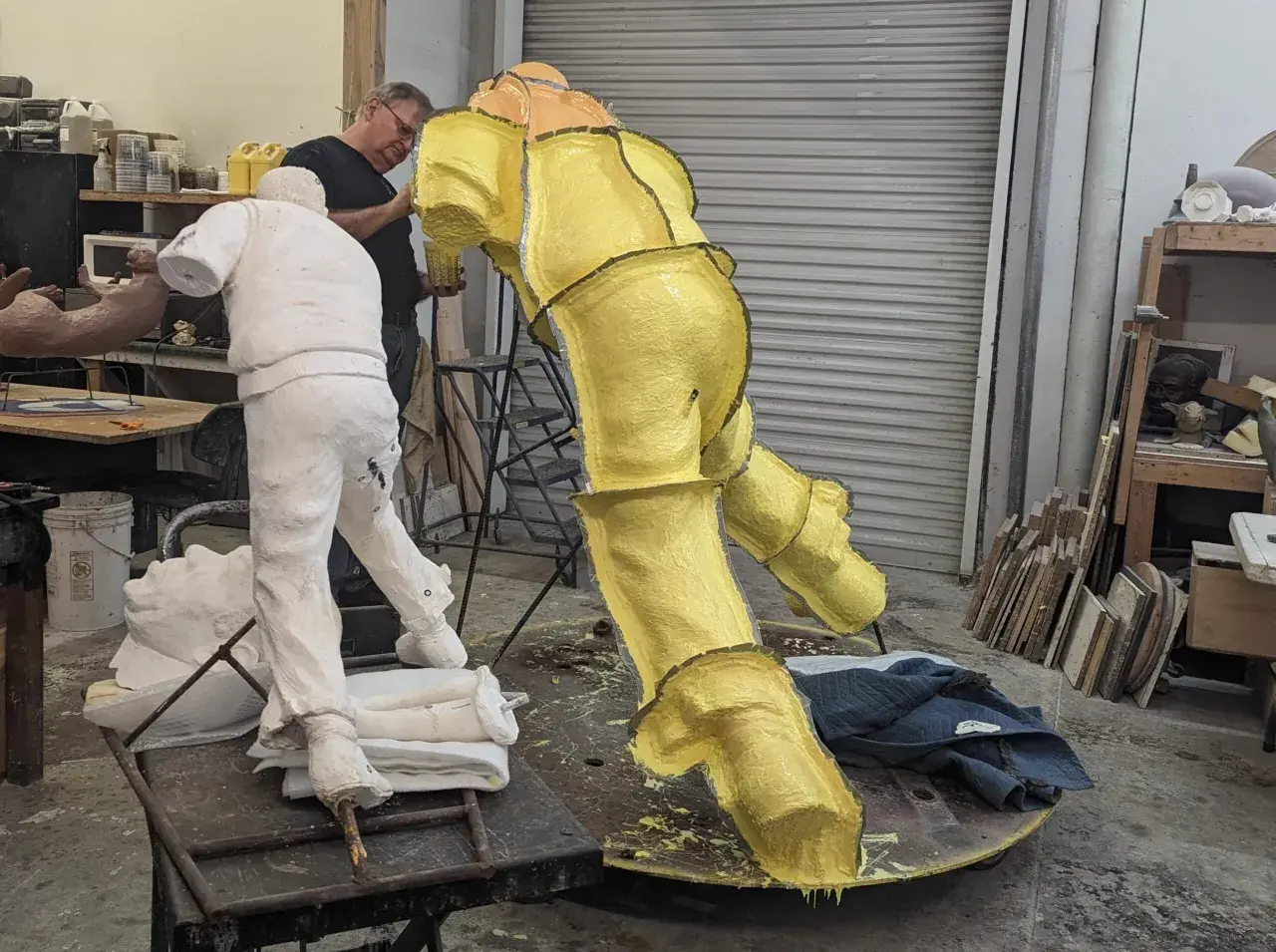
Casting in art is where a modeled form becomes a durable object through a mold and a molten material. In this article, I focus on how the process actually works, which materials and molds artists choose, what separates bronze, glass, plaster, and resin casting, and where the method succeeds or fails in practice. I also look at the technical traces left on the finished work, because those details matter for preservation, editioning, and authentication.
What matters most before you choose a casting method
- The mold is not just a container; it determines detail, texture, and how much hand-finishing will be needed later.
- Lost-wax bronze casting remains the most flexible route for fine detail, but it demands careful temperature control and finishing.
- Glass casting rewards patience and controlled cooling more than speed.
- Plaster and resin are useful for study models, editions, and lighter-weight works, but they do not behave like metal.
- Sprues, seams, core pins, and patina are not flaws by default; they are technical evidence that tells you how the piece was made.
- The best results come from matching scale, material, and finish to the work’s purpose before the pour ever happens.
What casting means across sculpture and decorative art
I treat casting as a translation process. An artist begins with an original model, then builds a mold that captures that form in reverse, and finally replaces the model with a substance that hardens into the finished work. That can mean molten bronze, molten glass, plaster, resin, wax, or another material, depending on the result the artist wants.
The big distinction is between direct and indirect casting. In direct lost-wax work, the model is sacrificed and the mold is broken away, so the final object is unique. In indirect processes, a mold can be reused to produce multiple versions, which is useful for editions, studio studies, or larger forms built in stages. That distinction shapes everything else: the labor, the cost, the surface quality, and how much control the artist keeps over the final object.
For fine art, this matters because casting is rarely just a manufacturing step. It is part of the artistic decision. A crisp bronze surface, a translucent cast-glass wall, and a matte plaster duplicate all communicate differently, even if they started from the same model. Once that basic idea is clear, the material choices become much easier to read.
The materials and methods that actually shape the result
Artists often talk about “the casting process” as if it were one thing, but in practice it is a family of methods. The mold material, the casting material, and the finishing method all affect the result. I usually group the most common art-facing options like this:
| Method | Best for | Main strengths | Main limits |
|---|---|---|---|
| Lost-wax bronze casting | Fine sculpture, editioned bronzes, detailed forms | Excellent detail, strong surfaces, hollow builds that reduce weight | Labor-intensive, expensive, and highly dependent on finishing skill |
| Sand casting | Robust forms and some historical or industrial-style works | Fast setup, good for simpler shapes | Less surface detail and less suited to delicate sculptural textures |
| Glass casting | Translucent sculpture, luminous forms, optical effects | Visual depth, clean internal light behavior, strong sculptural presence | Slow cooling, cracking risk, and a lot of kiln control |
| Plaster or resin casting | Maquettes, display pieces, prototypes, lighter editions | Flexible, comparatively accessible, and easy to color or finish | Less durable than metal, and surface aging can be more fragile |
The mold materials matter just as much. Silicone and latex are common for flexible mold making because they capture detail and release well. Plaster, clay, ceramic shell, and sand each serve different temperatures and forms. For hollow bronze, the internal core is a serious technical element, not an afterthought. For glass, the mold must survive extreme heat and, just as important, the object must cool slowly enough to avoid stress fractures.
One detail I always stress: “bronze” is often a shorthand. In practice, cast sculpture may use copper alloys that vary in composition, and that affects color, flow, and conservation behavior. Once you see casting as a set of choices rather than a single technique, the process becomes much easier to judge critically.

How the process moves from model to finished object
This is the stage most people want to understand, because it is where the object seems to change identity. A model is translated into a mold, the mold is prepared for heat, and the casting material takes over. In bronze work, the sequence is especially clear, and it explains why the process is so demanding.
The model
The starting point is usually wax, clay, plaster, or another material that can hold shape and detail. In lost-wax practice, the model needs to be soft enough to carve and refine, but stable enough to retain texture. Fine details here matter later, because the mold will reproduce exactly what exists on the model, including marks the artist did not intend.
The mold
A flexible mold is often made first, then supported by a rigid outer shell. That shell preserves the negative form while the inner mold captures the surface. In bronze casting, a clay or ceramic investment mold is common. The first layers are especially important because they preserve the finest detail, while later layers provide strength. If the mold is weak or uneven, the final cast will show it immediately.
The wax or cavity stage
In indirect bronze casting, molten wax is often poured into the mold to create a hollow wax copy. This wax shell is usually adjusted, cleaned, and “chased,” which means the artist or foundry worker removes parting lines, seams, and small flaws before the next stage. That step is easy to underestimate, but it often separates an ordinary cast from one that feels resolved.
The spruing and investment
Wax channels called sprues are attached to the model so molten material can flow in and air can escape. The whole assembly is then coated in a fine ceramic or clay investment. Once it is heated, the wax leaves the cavity, creating the empty space that will receive the metal. In a bronze pour, the investment mold has to be properly heated first; otherwise the thermal shock can crack it.
The pour
Molten bronze is poured at more than 2,000 degrees Fahrenheit, and the mold is typically heated above 1,000 degrees Fahrenheit before the pour so it does not fail on contact. That temperature difference is one reason bronze casting takes real expertise. The metal has to fill every recess before it cools, but it also cannot be overheated or handled casually.
Read Also: Egg Tempera Painting - Master This Demanding Medium
The release and finish
Once the metal has cooled, the mold is broken away or removed, the sprues are cut off, and the surface is chased again. Then comes patination, which is the controlled chemical coloring of the metal surface. Brown, green, and black patinas are common, but the point is not just color. A patina can protect the surface, unify the finish, and give the work its final visual tone.
Glass casting works on the same broad principle of filling a mold, but the schedule is different. The cooling phase is not a minor technical detail; it is the point where the work either survives or cracks. That is why the next section is less about romance and more about discipline.
Where cast artworks fail and how I reduce the risk
Most casting problems come from one of four things: trapped air, trapped moisture, uneven thickness, or poor temperature control. Artists sometimes blame the metal or the mold when the real problem is that the system was not prepared for the heat and pressure involved. I try to diagnose the process before I diagnose the object.
- Air pockets cause voids or incomplete fills, especially in narrow forms.
- Moisture in the mold can turn to steam and crack the investment or distort the pour.
- Walls that are too thin may warp, collapse, or cool unevenly.
- Poor venting traps gas and leaves bubbles on the surface or inside the cast.
- Rushed cooling increases the chance of cracking, especially in glass and larger metal pieces.
- Misaligned mold sections create seams that are harder to hide later and can weaken the structure.
There is also a design mistake that shows up early: people often model a form as if it were being carved, not cast. Casting rewards forms that respect material flow, wall thickness, and release paths. If a shape is too undercut, too enclosed, or too fragile for its own scale, the technique will fight back.
My rule of thumb is simple: if the object cannot breathe, drain, and cool in a controlled way, it is not ready to be cast. That leads naturally to a question that matters to museums, collectors, and conservators alike: what evidence does the process leave on the surface?
What casting leaves behind and why conservators care
Cast objects carry technical evidence in a way carved works usually do not. Sprue marks, seams, core pin traces, chase marks, and patina are part of the object’s biography. For conservation and authentication, those traces are useful because they reveal how the work was made and whether later repairs altered it.
I pay close attention to three things. First, the surface: a cast bronze may show fine tool marks from chasing, which is normal and often desirable. Second, the interior logic: a hollow bronze should make sense structurally, especially if the piece is large. Third, the finish: a patina should look integrated, not simply painted over the surface. Re-patinating, over-cleaning, or aggressive polishing can erase evidence that specialists rely on.
That does not mean every visible trace is a problem. A seam line on a bronze, for example, can be expected if the work was cast in parts and joined later. A foundry mark or edition number can also be part of the work’s documented history. What raises questions is a piece that looks technically effortless in a way the process would not reasonably allow.
This is one reason casting sits so naturally beside preservation and authentication. It leaves signatures. If you know how to read them, they tell you far more than the title on the label. And once you know what those signatures look like, the next decision becomes much more practical: which casting route is actually right for the work you want to make?
The checks I make before I choose a casting route
If I were advising an artist, I would start with five practical questions rather than with prestige or tradition.
- How much surface detail matters? Fine detail usually pushes me toward lost-wax or another precision method.
- How large is the object? Scale affects mold design, cooling time, and whether the work should be cast in sections.
- Does the piece need to be editioned? Reusable molds and indirect processes make more sense when multiples are part of the plan.
- What should the surface feel like? Matte plaster, polished resin, raw bronze, and cast glass each carry a different visual logic.
- How much maintenance can the final material tolerate? That question matters more than many artists want to admit, especially for public or outdoor works.
For a study model or a quick prototype, resin or plaster may be the sensible choice. For a serious sculptural edition where surface and longevity matter, bronze is still hard to beat. For work built around light, transparency, or internal depth, cast glass can be extraordinary, but only if the cooling schedule and finishing are treated as part of the artwork itself. I would not choose casting just because it sounds traditional; I would choose it when the material behavior supports the idea. That is usually the difference between a cast object that merely survives and one that feels fully resolved.
