
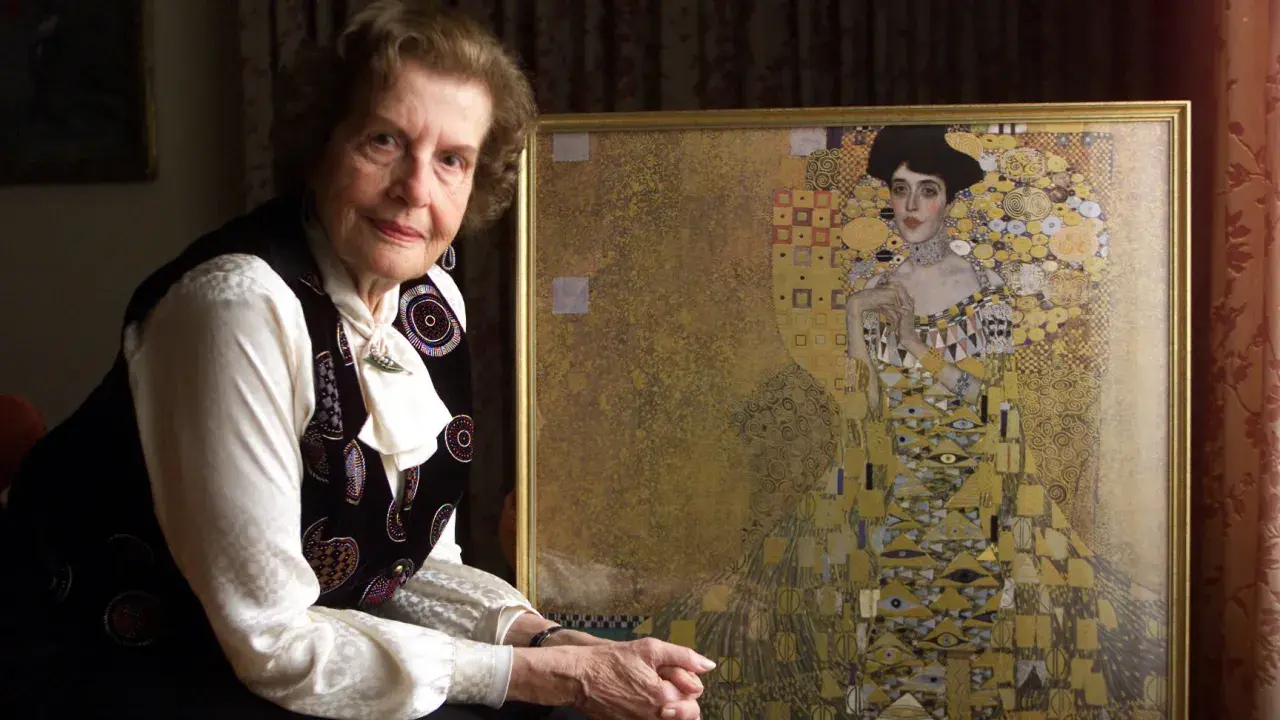
The woman in gold painting is usually shorthand for Gustav Klimt’s Portrait of Adele Bloch-Bauer I, and that shorthand is only useful if you understand what makes the work so important. This article explains the painting’s identity, its place in portrait history, the role of gold leaf and ornament, and the restitution story that turned it into one of the best-known images in modern art. It also shows why the portrait still matters to viewers, collectors, and anyone interested in how art is preserved and authenticated.
The essential facts behind Klimt’s golden portrait
- Artist: Gustav Klimt, a central figure of the Vienna Secession.
- Subject: Adele Bloch-Bauer, a Viennese socialite and patron.
- Medium: Oil with silver and gold leaf on canvas.
- Date: Completed in 1907 after a long, highly controlled process.
- Current home: The Neue Galerie in New York, where it remains a signature work.
- Why it stands out: It is both a portrait and a near-iconic image of Klimt’s golden phase.
What the golden portrait actually is
What I find most useful is to start with the plain facts. Portrait of Adele Bloch-Bauer I is not just a decorative image of a fashionable woman; it is a meticulously constructed portrait made by Klimt at the peak of his golden phase. The sitter was Adele Bloch-Bauer, and the portrait was commissioned by her husband, Ferdinand Bloch-Bauer, a wealthy Viennese industrialist and patron.
The work is square, monumental, and visually dense. Catalogues commonly describe it at roughly 140 by 140 cm, and the medium is oil combined with silver and gold leaf on canvas. That matters because the surface is not meant to behave like ordinary paint: the metallic leaf changes under light, so the image feels less like a static likeness and more like a shifting object. That basic fact matters, because Klimt uses the format of a portrait to do something much more radical.
| Element | What it tells us |
|---|---|
| Title | Portrait of Adele Bloch-Bauer I |
| Artist | Gustav Klimt |
| Date | 1907 |
| Technique | Oil, silver, and gold leaf on canvas |
| Current location | Neue Galerie, New York |
In other words, this is a portrait that deliberately resists the easy categories. It looks luxurious, but it also asks to be read as an image of status, desire, and artistic ambition, which leads directly into Klimt’s broader approach to portraiture.
Why Klimt turned portraiture into something closer to icon painting
Klimt’s great move here was to make the portrait feel at once intimate and impersonal. Adele’s face and hands are rendered with careful attention, but the rest of the body dissolves into pattern, geometry, and gold. The result is unsettling in the best possible way: you see a woman, but you also see an image built to elevate her beyond ordinary social portraiture.
That is why the painting often gets compared to an icon. I would not call it a religious work, but it borrows the authority of sacred imagery. The gold background removes depth, compresses space, and gives Adele a halo-like presence. At the same time, the portrait never fully abandons sensuality. Her red lips, flushed cheeks, and clasped hands keep the image grounded in the body. The tension between distance and physical presence is what gives the painting its force.
This is also where Klimt’s golden phase becomes important. He was not simply decorating a sitter; he was testing how far a portrait could move away from realism while still remaining psychologically alive. Once you see that shift, the visual language of gold and ornament starts to make sense.
How the gold, pattern, and pose shape the image
The surface of the painting is where Klimt’s intelligence becomes easiest to see. The gold leaf is not a background trick. It creates a reflective field that changes with the viewer’s position, making the portrait feel active rather than fixed. That is one reason reproductions often flatten the image so badly: they capture the design but lose the optical life of the original.
Klimt also layered decorative systems over the figure. There are spirals, angular blocks, eye-like motifs, and patterned forms that draw from Byzantine, Egyptian, and Art Nouveau sources. The decorative field does more than beautify. It slows down the eye, forces close looking, and blurs the boundary between Adele’s body and the space around her. Her hands, face, and shoulders become the only clear anchor points, which makes them even more expressive.
There is a technical side to this as well. Klimt used gesso, a chalk-based preparation that can build slight relief and help the surface hold its structure. That means the image is not just visual ornament; it is also a physical object with subtle texture. For anyone interested in conservation, this is a reminder that metallic surfaces, raised detailing, and layered media all affect how a painting ages and how it should be handled. That is also why the work’s later history cannot be separated from its physical presence.
Why the ownership history changed the work’s meaning
The story of this portrait did not end with Klimt’s studio. Like many major European artworks, it was pulled into the violence of the 20th century. The Neue Galerie’s historical timeline remains the clearest public account of the painting’s postwar journey: it was seized by the Nazis after the annexation of Austria, later became part of a major restitution dispute, and was eventually returned to Adele Bloch-Bauer’s heirs.
That restitution mattered because it changed the painting from a famous portrait into a case study in provenance. For art historians, provenance is the documented chain of ownership that connects an object to its past. For this painting, that chain is not a footnote; it is part of its identity. A portrait can be admired for its surface, but its history tells you what happened to the people and institutions around it.
The widely reported 2006 purchase of the work for $135 million made the portrait even more visible, but the price is only part of the story. What stayed with the public was the combination of beauty, loss, legal recovery, and museum stewardship. For me, that is the real reason the painting continues to matter: it is both a masterpiece and a record of cultural repair. For viewers in the U.S., that history still shapes how the portrait is encountered today.
Where the painting is now and what reproductions miss
Today the portrait remains permanently on view at the Neue Galerie in New York, which is the right place for it if you want to understand how the work operates as an object. You can see the gold surface, the scale, and the tension between figure and field in a way that no screen can fully reproduce. The museum says it hangs in the Klimt Gallery, and that context matters because the painting gains meaning from being seen alongside related Austrian modern works.
Reproductions usually miss three things. First, they flatten the metallic surface and remove the shift in light. Second, they compress the scale, which makes the portrait feel more like a print than a presence. Third, they lose the subtle interplay between detail and abstraction. In the original, Adele’s face remains human and immediate even as her body almost disappears into pattern. That balance is hard to reproduce and easy to underestimate.
If you are evaluating a reproduction, a catalog image, or a decorative copy, look for those losses. A good reproduction can preserve composition, but it cannot preserve the full material behavior of gold leaf. Once you keep those limits in mind, the painting becomes easier to read on its own terms.
What this portrait still teaches collectors, curators, and viewers
The lasting lesson of this portrait is that a great painting is never only about likeness. Klimt gives us Adele Bloch-Bauer, but he also gives us an argument about status, ornament, desire, and the limits of realism. That is why the portrait still feels modern: it does not ask to be understood in one pass.
For collectors, the work is a reminder that technique and provenance are inseparable. For curators, it shows how display, lighting, and interpretive framing affect meaning. For casual viewers, it is simply one of those rare paintings that rewards slow looking. The more time I spend with it, the clearer it becomes that the gold is not decoration added after the fact. It is part of the portrait’s logic.
If you remember only one thing, make it this: Klimt’s famous portrait is not memorable because it is golden. It is memorable because the gold changes what a portrait can be, and that is why the image continues to hold attention more than a century later.
