
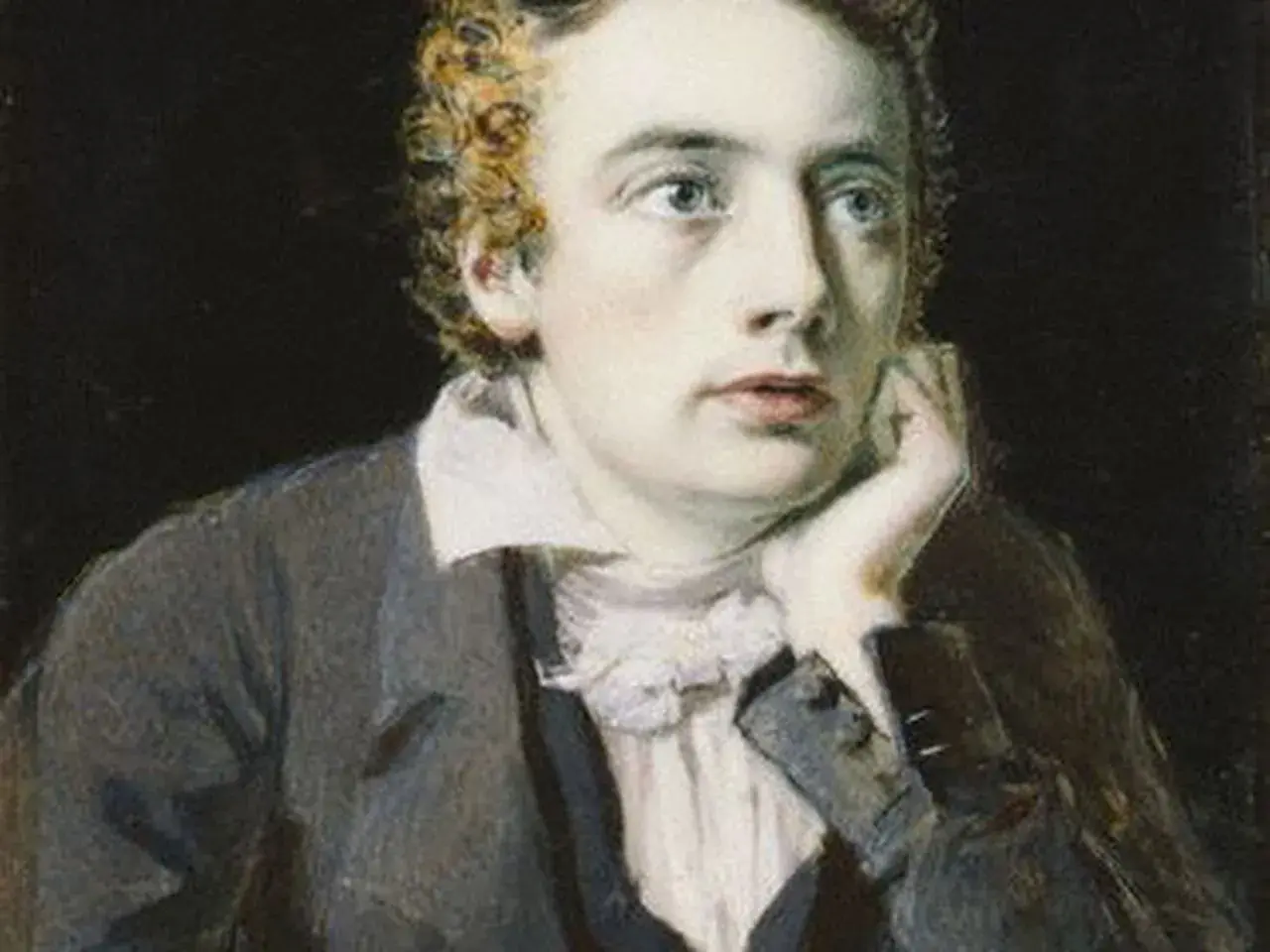
A John Keats portrait is never just a likeness. It can be a life mask, a miniature, a sketch from memory, or a posthumous oil built from grief and recollection, and each version tells a different truth about the poet. In this article I sort the key images, explain which ones shaped the canonical face of Keats, and show how to read reproductions with an authentication-minded eye.
What matters most when you read Keats’s portrait record
- The image history is mixed. Keats survives in masks, drawings, oils, and later engravings, not one fixed portrait.
- The posthumous Severn canvas is the anchor. It became the best-known visual reference for Keats.
- Later copies matter too. They explain how his face was circulated in books and prints.
- Medium and provenance decide meaning. A work “by” an artist is not the same as one “after” an earlier portrait.
- Condition affects interpretation. In paper-based reproductions, trimming, fading, and retouching can change what you think you are seeing.
Why the portrait record is smaller and stranger than it looks
Portrait history for Keats is not straightforward because he died young, in 1821, and the visual record was shaped as much by friends and later editors as by sittings from life. The National Portrait Gallery records him as a sitter in 15 portraits, but that number includes masks, sketches, oils, and reproductive works, not a single stable likeness.
That distinction matters. If I treat every image as if it were an original sitting portrait, I miss the real story: some works are documentary, some are commemorative, and some are already interpretations. For a Romantic poet, that difference is not academic; it changes how the face, the pose, and even the setting should be read. Once you sort the record into those categories, the best-known works become much easier to understand.

The key likenesses worth knowing first
If I had to reduce the field to the images most readers actually need, I would start with five works. They do not all function as “portraits” in the same sense, and that is exactly why they are useful.
| Work | Date and medium | Why it matters | How I read it |
|---|---|---|---|
| Benjamin Robert Haydon, life mask | 1816, plaster cast | Closest direct facial evidence | Useful as a benchmark for facial structure, not as a finished artistic statement |
| Joseph Severn, miniature portrait | 1819, oil on ivory | Intimate life image made while Keats was alive | Shows the sitter before the memorial tradition hardened around him |
| Charles Brown, pencil portrait | 1819, pencil | Informal likeness by a close friend | Valuable because it feels observational rather than staged |
| Joseph Severn, seated portrait | 1821-1823, oil on canvas | The posthumous image that shaped public memory | Built from memory and a mask; this is the portrait tradition’s central reference point |
| William Hilton, after Severn | Circa 1822, oil on canvas | Early secondary version | Important for reception history because it shows how quickly the image was reinterpreted |
Later engravings after Severn and Hilton are just as important to image history, even if they are secondary works. They explain how Keats became recognizable in books and prints long before digital archives made comparison easy. The point is not to find one “true” face. The point is to see how a living sitter turns into a memory, and how that memory turns into a published image.
How Severn turned memory into the standard image
As the National Portrait Gallery notes, Severn’s posthumous canvas was probably the first version painted from memory with help from the death mask, and perhaps Haydon’s life mask as well. That is the decisive point: the work is not a spontaneous scene but a carefully reconstructed memory picture.
The composition makes that clear. Keats is seated in his study, hand on a book, surrounded by room details that Severn wanted to preserve. The result is restrained, almost quiet, which is why it works so well. It gives grief a disciplined shape instead of turning the poet into a melodramatic victim. Its calmness is strategic. It lets the portrait feel intimate without collapsing into sentimentality.
That controlled tone helped the image travel. Once copies and engravings circulated, the seated Keats became the version most readers carried in their heads, and the original canvas stopped being just one picture among many. It became the reference image against which later versions were measured.
What the portraits reveal about Keats himself
These images do not agree on everything, and that disagreement is useful. When I compare them, three patterns keep appearing:
- Youth without polish. The earlier likenesses suggest a face still being formed, not frozen into literary myth.
- Friendship as evidence. Several portraits come from people who knew him personally, so they capture social presence rather than public performance.
- Illness reshaping memory. The later images inevitably pull Keats toward fragility, but that is as much about biography as about appearance.
The result is a portrait tradition that feels emotionally truthful even when it is not strictly documentary. I would treat that as a strength, not a flaw. A good Keats image shows how Romantic portraiture often works: the sitter becomes both person and emblem. That is also why viewers can feel sure they “know” his face even when the sources disagree on the details.
That tension between evidence and interpretation is the bridge to a more practical question: if you are looking at a print, a scan, or a framed reproduction, how do you tell what you are actually holding?
How I would assess a Keats reproduction or print today
When I evaluate a reproduction, I start with provenance and source language before I look at image quality. A faithful print can still be a secondary object, and a weak reproduction can still be historically useful if it honestly identifies its source. The safest rule is simple: do not judge by the face alone.
| Check | What I look for | Why it matters |
|---|---|---|
| Caption wording | Whether the object is described as “by” or “after” another artist | It tells you if the work is primary or reproductive |
| Medium | Oil, pencil, plaster, stipple engraving, photographic reproduction, digital print | Medium changes the object category, the handling needs, and often the value |
| Provenance | Named collection, catalogue number, or publisher history | Strong provenance supports research use and reduces ambiguity |
| Surface clues | Plate mark, trimming, paper tone, inscriptions, later retouching | These details reveal age, state, and alteration |
| Conservation state | Foxing, abrasions, fading, acid burn, unstable mount | Condition changes both appearance and long-term display risk |
If I were advising a collector, I would ask for the reverse side, the full caption, and any paperwork before I cared about the image’s decorative appeal. A reproduction can still be useful, but it should be honest about what it is. For paper-based examples, I would also keep an eye on light exposure, acidic framing materials, and any sign that the print has been trimmed to fit a later mount. In portrait study, the label is part of the object.
Why the portrait record still matters to readers and collectors
Keats’s face survives in a relatively small number of works, but that smallness is exactly why the field rewards close looking. The best image is not the one that feels most poetic; it is the one whose history you can actually explain. If the object can tell you who made it, when it was made, and what source it answers to, then it is doing real historical work.
For anyone studying, buying, or cataloguing a portrait of Keats, I would keep the sequence simple: identify the maker, identify the medium, then identify the relationship to earlier likenesses. Once those three things are clear, the image stops being generic Romantic décor and becomes readable art history. That is the most reliable way to understand Keats’s visual legacy, and it is the same method I would use for almost any poet portrait worth preserving.
