
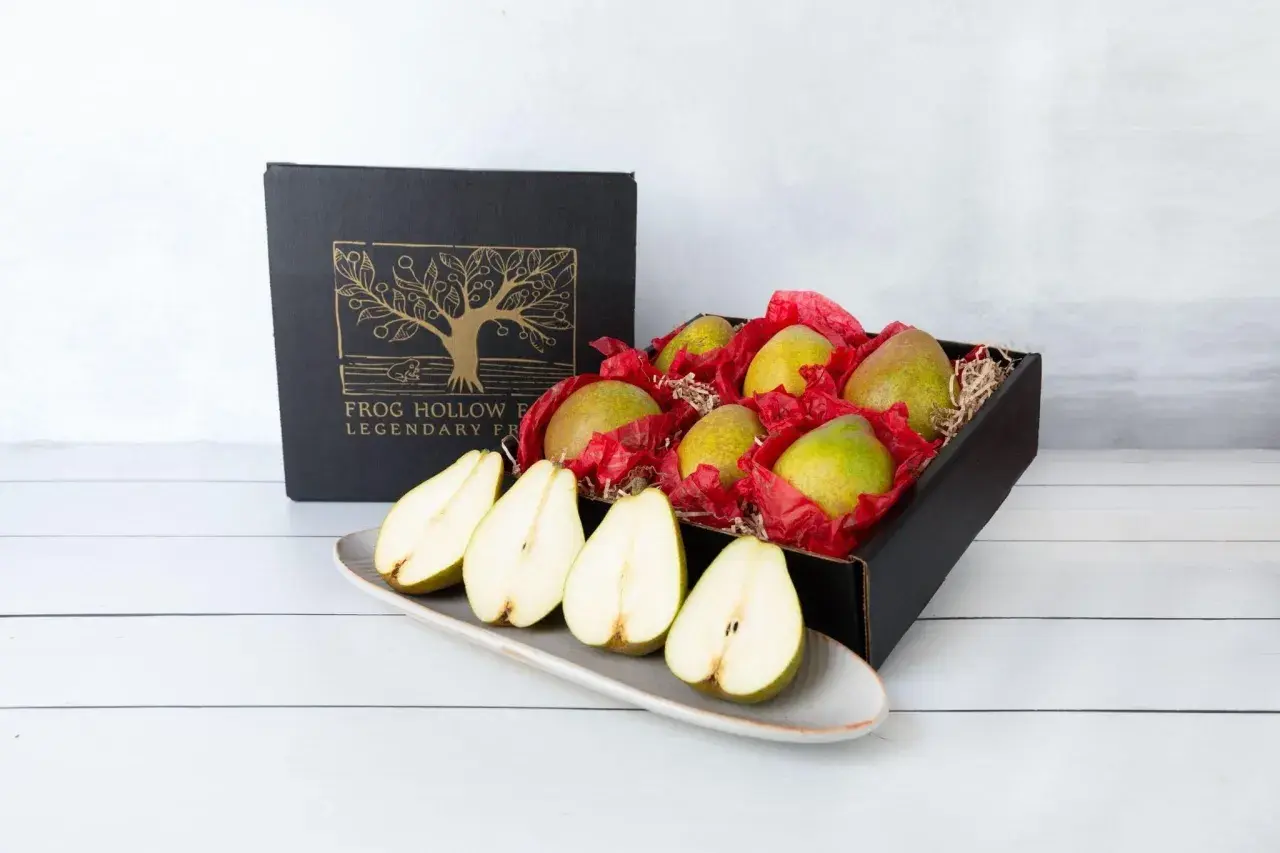
The question of what do pears symbolize rarely has a single answer. In art and cultural imagery, pears can point to abundance, fertility, love, longevity, and sometimes immortality, depending on the setting. I usually read pear motifs by looking first at context, because the same fruit can shift from a simple sign of harvest to a charged religious or allegorical image.
Key meanings at a glance
- Abundance and prosperity are the most common readings when pears appear in still life, harvest scenes, or banquet imagery.
- Longevity and immortality matter especially in Chinese visual culture, where pears and pear blossoms carry auspicious meaning.
- Love and fertility often appear in Renaissance and devotional art, where the fruit suggests fruitfulness, tenderness, or divine love.
- Ripeness and transience come through when the pear is shown as part of a seasonal cycle rather than as a static object.
- Context decides everything; a pear beside saints, family offerings, or poetic inscriptions will not mean the same thing.
The core meanings attached to pears
In the broadest sense, pears are a symbol of fruitfulness. Their rounded form, sweet flesh, and ripening cycle make them easy to read as signs of nourishment, plenty, and the rewards of a productive season. I see them constantly in still life painting for that reason: the fruit does not need to shout. It quietly suggests that the world is offering more than survival.
Two other meanings show up again and again. One is love and fertility, especially in religious or allegorical art where the pear becomes a visual shorthand for warmth, tenderness, and generative power. The other is longevity or immortality, which is stronger in East Asian traditions than in European ones. Classical literature also helped the fruit gather prestige; pears appear as a gift of the gods, which explains why they so often sit near ideas of generosity and plenty. In Renaissance painting, that softer symbolic register is one reason a work like Bellini's Madonna of the Pear feels so intimate. Once those core meanings are clear, the next step is seeing why artists found the pear so adaptable in the first place.
Why pears became such a flexible symbol in art and iconography
Pears work well in iconography because they sit between the ordinary and the elevated. They are common enough to feel domestic, but they also carry enough visual weight to absorb meaning from whatever surrounds them. In a painted basket, a pear can be about plenty; in a devotional panel, the same shape can become a sign of sweetness, purity, or blessing.
The fruit also has practical visual advantages. Its curved outline, soft skin, and muted highlights give painters a chance to show surface, light, and texture without disrupting a composition. In other words, a pear is useful both as symbol and as formal device. I think that dual role is one reason the fruit appears so often in museum collections: artists were not only saying something, they were building a believable world around the thing they wanted to say.
That flexibility becomes even clearer when the pear enters different cultural settings, because the meaning can shift quickly from abundance to devotion or from seasonal beauty to immortality.
How the meaning changes across cultures
There is no single universal code for pears, and that is where careless reading goes wrong. A pear in a Chinese painting, a Renaissance altarpiece, and a modern American still life can all carry different symbolic pressure. I find it safest to start with the cultural language of the work before making any broad claim.
| Cultural context | Common reading | Where it often appears | What to watch for |
|---|---|---|---|
| Chinese art | Longevity, immortality, auspicious wishes | Blossoms, gifts, shrine imagery, festive objects | Look for companion motifs tied to blessing or long life |
| Greek and Roman tradition | Abundance, fruitfulness, hospitality | Mythic gardens, decorative panels, banquet scenes | The pear may simply celebrate seasonal plenty rather than a fixed allegory |
| Christian Renaissance painting | Love, divine fertility, spiritual sweetness | Madonna and Child images, devotional works, sacred still life | Placement near holy figures usually matters more than the fruit alone |
| Modern still life | Domestic calm, ripeness, transience | Tabletop arrangements, market scenes, kitchen interiors | Artists may favor the pear for tone and structure as much as for meaning |
The pattern is consistent: pears almost never act alone. They borrow meaning from the system around them, which is why the blossoms deserve separate attention. That distinction changes the reading more often than people expect.
Pear blossoms and ripe fruit do not tell the same story
A ripe pear and a pear blossom are related, but they do not usually point to the same idea. The fruit tends to imply ripeness, nourishment, and fullness; the blossom leans toward spring, delicacy, and the briefness of beauty. In East Asian painting, that difference matters a great deal, because a flowering branch can carry a poetic mood that is more about feeling than about harvest.
I read pear blossoms as a quieter symbol than the fruit itself. In works like Pear Blossoms associated with Qian Xuan, the branch is not just botanical detail; it carries a mood of fading beauty and poetic reflection. Blossoms can suggest renewal, the passing of time, or a fragile kind of beauty that is already in motion. When a branch is painted with loose, lyrical brushwork, the point is often not botanical accuracy but emotional atmosphere.
That is especially important in literati painting, where inscription, brushline, and image work together rather than competing for attention. Once you separate fruit from blossom, you avoid one of the most common mistakes in iconographic reading: assuming every pear-related image says the same thing. The better question is how the artist has staged the motif, because that is what tells you how to read it.
How I read pear imagery in an artwork
When I am looking at a painting, print, or decorative object, I start with a simple sequence. It keeps me from overinterpreting a motif that may be there for a very practical reason.
Start with the setting
If the pear sits in a kitchen scene or market basket, it may mainly signal food, season, and realism. If it appears beside saints, deities, or poetic text, the symbolic charge is stronger.
Check the companions
Pears often gain meaning from nearby objects. Grapes, apples, peaches, flowers, books, or sacred figures can shift the fruit toward abundance, wisdom, sensuality, or devotion. I rarely isolate a pear until I have read the rest of the composition.
Notice the condition of the fruit
Is it ripe, cut open, rotting, polished, or still on the branch? Ripeness suggests fullness and readiness; a cut or decaying pear may point to time, fragility, or mortality. That small visual detail can change the whole interpretation.
Read Also: Philoctetes' Wound - Art's Enduring Symbol of Pain & Exile
Look for pairings and repetition
One pear may be a casual object. Repeated pears, paired fruit, or a pear placed at the visual center usually signal a deliberate symbolic choice rather than background decoration.
That process is useful because it stops the viewer from importing the wrong symbol system. The next question is how pears compare with the other fruits that artists use as symbolic shorthand.
How pears compare with apples and peaches
Pears are often grouped with other fruits, but the symbolic emphasis is not identical. Apples tend to carry more associations with temptation, knowledge, or the fall from innocence, while peaches are especially strong in longevity imagery in East Asian art. Pears sit somewhere between those poles: less morally loaded than apples, less specialized than peaches, and often more domestic than both.
| Fruit | Typical symbolic direction | Why an artist might choose it |
|---|---|---|
| Pear | Abundance, love, fertility, longevity, ripeness | To suggest nourishment, sweetness, or a calm, settled atmosphere |
| Apple | Temptation, knowledge, desire, choice | To add tension, moral complexity, or biblical resonance |
| Peach | Immortality, longevity, blessing | To make the long-life message unmistakable, especially in East Asian contexts |
That comparison matters because it keeps interpretation disciplined. If an artist wanted to say something severe or doctrinal, the pear is usually not the first fruit I would expect; if they wanted warmth, fullness, or a softer kind of blessing, it becomes a much better fit. From there, the final step is to keep the meaning grounded instead of forcing a single answer onto every image.
What to remember when pears appear in a work of art
The most reliable reading is usually the simplest one supported by context. Pears can mean abundance, fertility, love, longevity, or immortality, but they can also function as beautifully ordinary objects that anchor a scene in real life. I would never treat them as a fixed code.
If you want the strongest interpretation, look for three things: the culture of the work, the fruit's companions, and the artist's style. A pear in a devotional Renaissance panel is not the same as a pear in a Chinese ink painting or a modern market still life. Once those differences are clear, the symbol becomes less mysterious and much more interesting.
That is the real answer behind the question: pears symbolize what their setting allows them to symbolize, and the best readings are the ones that stay close to the visual evidence.
