
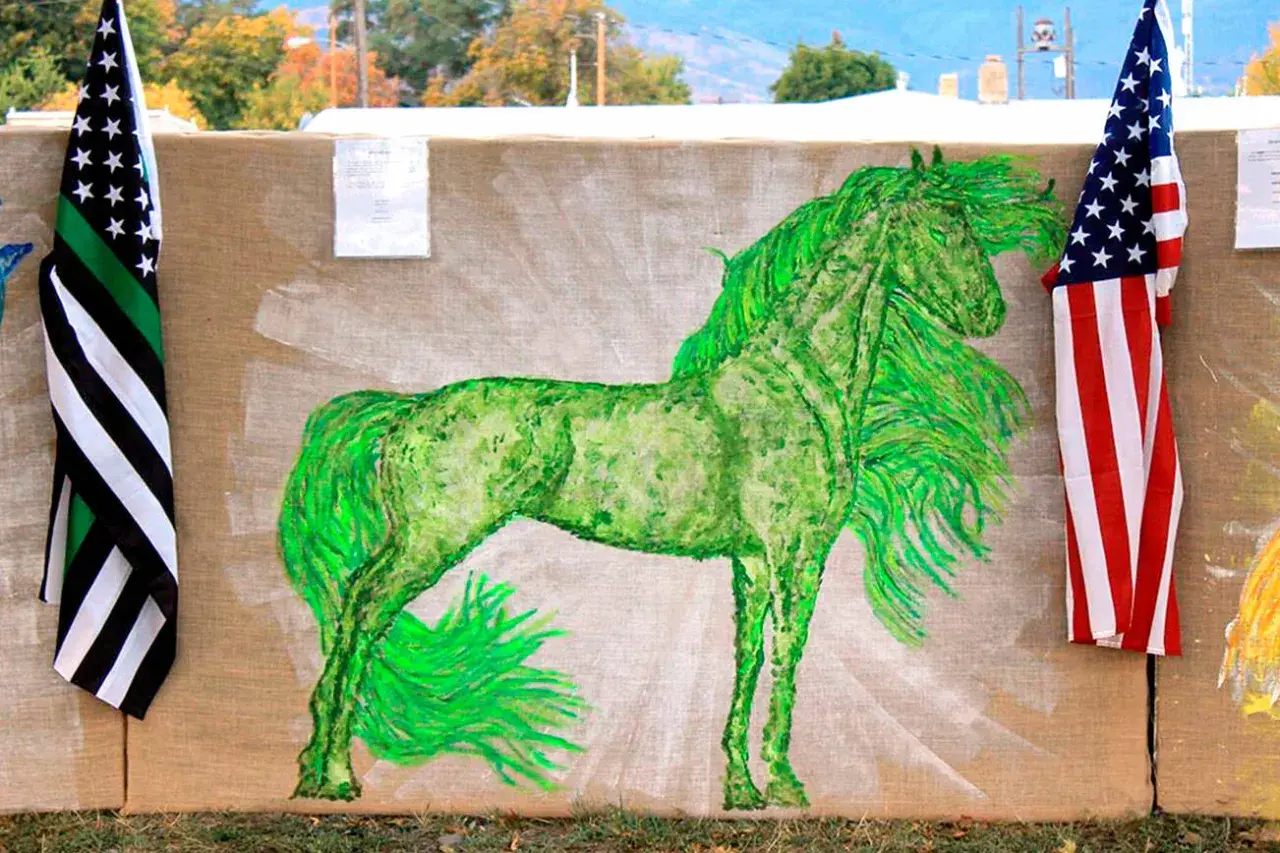
A green horse can feel startling, but that surprise is usually the point. In art, the color often signals symbolism, modernist experimentation, or a deliberate refusal to paint the animal literally. In this article I focus on the artists who use that shift well, the works that make it convincing, and the preservation clues that matter when color itself is part of the message.
What matters most when the horse turns green
- The color is usually symbolic, structural, or surreal, not decorative filler.
- Franz Marc is the key modernist reference because he treated color as emotional language.
- Later artists such as John Balossi and Sakamoto Hanjiro show two very different ways to use an emerald animal figure.
- The strongest works make the hue work with the composition, not against it.
- For preservation and authentication, I would check whether the green is original intent, later retouching, or a color shift caused by aging.
What the color does to the horse
When an artist paints a horse in green, the image usually stops being a straightforward animal study and becomes an idea about the animal. Green can make the form feel more alive, more synthetic, more dreamlike, or more tightly fused to the landscape around it. That is why the best examples do not rely on shock value; they use the color to change the horse’s role inside the picture.
I read this kind of image in three main ways. Sometimes green is symbolic, and the horse stands for vitality, renewal, or a state of mind rather than anatomy. Sometimes it is compositional, helping the animal merge with the background so that the whole surface feels unified. And sometimes it is deliberately surreal, used to deny ordinary expectation and force the viewer to slow down. The effect depends less on the hue alone than on how the artist handles line, scale, and setting, which is why Franz Marc remains so useful as a starting point.
Why Franz Marc still matters
Franz Marc gave animal painting a modernist logic that still holds up. His horses are not livestock studies; they are vehicles for color theory, spiritual feeling, and formal invention. The Guggenheim’s teaching materials describe Marc’s color symbolism in strongly conceptual terms, and that matters here because it shows that color in his work was never just descriptive. For Marc, the animal was a way to think about inner life, not simply nature.
In his 1912 horse-in-landscape study, the green animal does something especially smart: it sits between creature and environment. That is the move I find most persuasive in this motif. The horse is still legible as a horse, but the color pulls it away from literal observation and toward a more symbolic register. In other words, the image does not ask me to believe in a green animal in the biological sense; it asks me to accept a pictorial world where color carries meaning.
MoMA’s discussion of Marc’s animal imagery makes the broader point well: his horses often function as symbols of spiritual renewal, rebirth, and inner peace. Read that way, the green animal becomes less of an oddity and more of a modernist solution to a classic problem. How do you make a familiar subject feel new without losing its clarity? Marc answers by letting color carry the emotional load, and that answer still feels fresh.

Three artworks I would put beside each other
When I compare a few works side by side, the motif becomes easier to read. The color may look similar at first, but each artist uses it differently, and those differences are exactly where the meaning lives.
| Artwork | Artist | Medium and date | What the color is doing |
|---|---|---|---|
| Marc’s 1912 horse-in-landscape study | Franz Marc | Watercolor, gouache, and graphite | The green pushes the horse toward symbolism and ties the animal to the surrounding field. |
| Balossi’s 1976 acrylic horse painting | John Balossi | Acrylic on canvas, 25 x 34 inches | The bright chromatic approach turns the horse into part of a broader modern scene, not a naturalistic portrait. |
| Three Grazing Horses | Sakamoto Hanjiro | Oil on canvas, 1932 | The emerald green is spread across the horses, sky, ground, and trees, so the entire picture plane feels locked together. |
What I find useful in this comparison is the range. Marc separates the horse from ordinary reality; Balossi emphasizes bright chromatic identity; Sakamoto makes green a binding field that unifies figure and setting. Taken together, they show that the same color can create three different kinds of visual intelligence. That variety is what keeps the motif from becoming gimmicky, and it leads directly to how I would actually read such an image in a gallery or collection.
How I read the image before I read the label
Before I look for symbolism, I ask a few practical questions. Is the color confined to the horse, or does it repeat in the background? Are the edges clean and graphic, or broken and painterly? Does the horse still feel anatomically grounded, or has it become almost abstract? Those details tell me whether the artist is aiming for surreal disruption, formal unity, or expressive distortion.
I also pay attention to the title, because titles often steer interpretation faster than the paint does. If the work is titled plainly, the color may be carrying the conceptual burden. If the title is poetic or literary, the image may be asking for a looser, more associative reading. Either way, I do not treat the green as a random novelty. I treat it as a decision, and the better the painting, the more that decision feels necessary.
That distinction matters because a strong image can survive color experimentation, while a weak one usually cannot. If the horse is green for no reason other than surprise, the effect collapses quickly. If the color is integrated into structure, tone, and meaning, the image stays memorable long after the first glance. That brings me to the part many readers skip but should not: what happens when the color itself may have changed over time.
What preservation and authentication change
For a painting like this, I would never assume that the color I see today is exactly the color the artist intended. Conservation research has shown that green pigments and green mixtures can shift under light, humidity, and aging, and visual inspection alone is not enough to sort out original intent from later alteration. The National Gallery of Art notes that copper-based pigments can change in ways that produce green compounds, and that conservators need to distinguish altered passages from intentionally green ones. That distinction is central in a motif like this.
In practice, museums and labs rely on more than the eye. They combine condition review, old photographs, pigment analysis, and imaging methods such as infrared and X-ray-based studies. I like that approach because it respects both the artwork and the evidence. If the green looks unusually bright, unusually dull, or slightly off compared with the rest of the surface, I want to know whether I am seeing the artist’s palette, a later retouch, or a material shift caused by time. In works where color carries the meaning, that question is not secondary; it is the meaning.This is also where authentication becomes more than a market concern. Bindings, pigments, and surface changes can reveal whether the material history matches the supposed date and hand of the work. For collectors, curators, and researchers, that means the color is part of the provenance story, not just the visual story. When a horse is painted in green, I want the material record to support the image as much as the composition does.
What I would verify before trusting the color
If I were cataloging, evaluating, or buying a work like this, I would start with documentation: exhibition history, provenance, and any older reproduction that shows the work before conservation or restoration. Then I would look at the paint surface itself. Does the green sit in one consistent layer, or does it appear in small later corrections? Does the varnish alter the perceived hue? Are there cracks, cleaning marks, or abrasion that might have changed the balance of the image? Those questions are basic, but they usually separate a thoughtful assessment from a guess.
My main takeaway is simple: the strongest horse images in green do not treat color as decoration. They use it to alter structure, atmosphere, and meaning at once. That is why the motif still works for artists, why it still rewards careful looking, and why it still deserves the same level of scrutiny that we give to any significant painting.
