
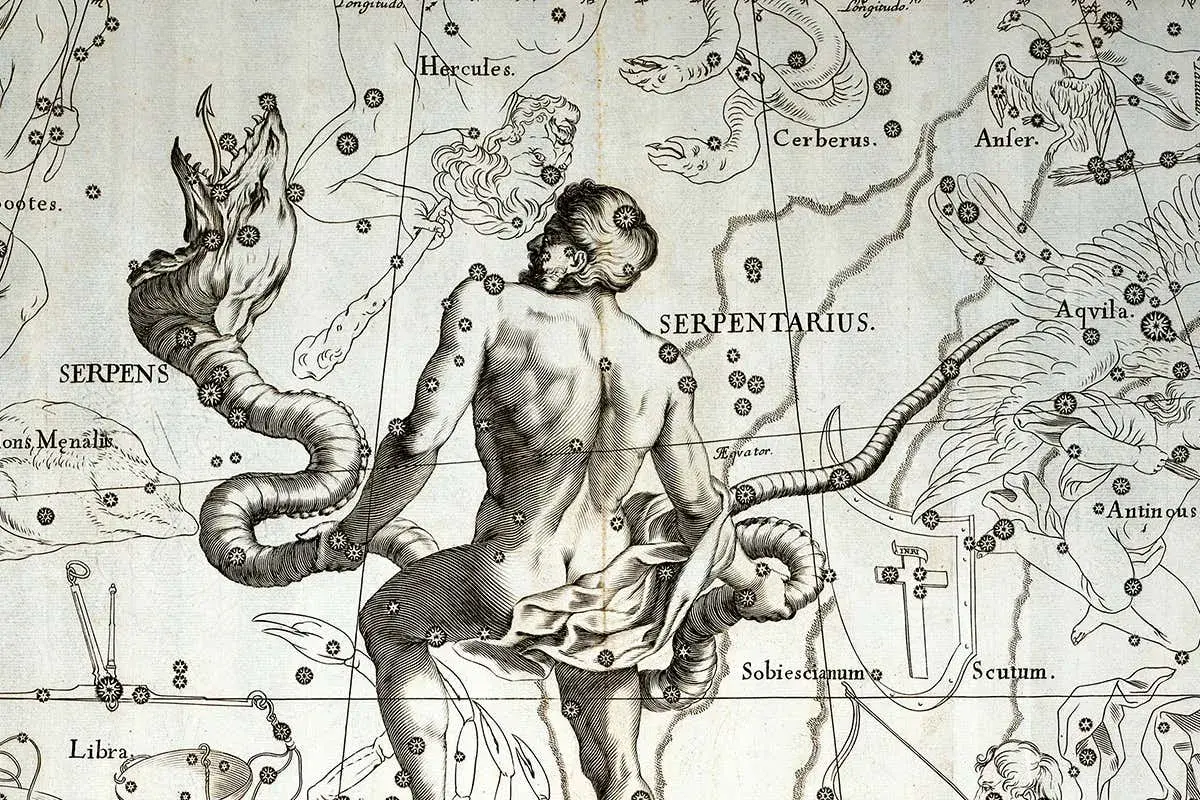
Medieval zodiac signs were never just decoration; they organized time, medicine, and seasonal work into a single visual system. I usually read them as part of a larger medieval worldview rather than as isolated symbols: the sky, the body, and the calendar were thought to mirror one another. This article breaks down how the signs were pictured, what they meant to medieval viewers, and why they still matter when you study manuscripts, church sculpture, and other works of art.
The medieval zodiac worked as a calendar, a medical map, and a visual shorthand for cosmic order
- Medieval viewers saw the zodiac as a practical system tied to seasons, health, and labor, not just personal fortune.
- The same sign could appear as stone carving, manuscript illumination, stained glass, or a medical diagram.
- Books of Hours often paired the signs with the labors of the months, which helps art historians date and localize objects.
- The Zodiac Man connected signs to body parts and medical timing, especially bloodletting and surgery.
- Christian settings did not erase the zodiac; they often reframed it as part of an ordered creation.
What the zodiac meant in daily life
To medieval eyes, the zodiac was a working model of the world. It helped explain when to plant, when to bleed a patient, when to travel, and how to read the passage of the year. I think that is the first thing modern readers often miss: the images were symbolic, but they were also useful.
The key idea underneath the imagery is the relationship between the macrocosm and the microcosm - that is, the universe and the human body. Medieval thinkers assumed that what happened in the heavens could echo on earth, so a sign could stand for a season, a bodily condition, or a proper time for action. That is why the zodiac appears so often in calendars, medical manuscripts, and church programs built around the rhythm of the year.
The system was also visually compact. There are 12 signs, and each one occupies 30 degrees of the ecliptic in the astrological scheme. For a medieval artist or scribe, that made the zodiac perfect for cycles, borders, medallions, and other formats that needed a clear, repeatable structure. Once you see that logic, the images stop looking like scattered emblems and start looking like a single language.
That visual language becomes easier to decode once you look at how artists actually shaped the signs on the page and in stone.
How medieval zodiac signs were pictured in art
The core iconography was stable, but the execution varied a lot. A sign might be shown as a pure animal, a human figure, a hybrid creature, or an action scene that hints at the sign without spelling it out. I usually separate the image into three layers: the literal form, the seasonal association, and the symbolic reading.
That is why Aries may be a simple ram in one manuscript and a more stylized horned figure in another. Capricorn may be a goat, a goat-fish hybrid, or a compressed emblem that only a trained viewer would recognize. Aquarius often becomes a water bearer in a tunic, while Gemini may appear as twins, paired figures, or two mirrored bodies. The artist was not trying to be zoologically exact; the goal was recognition and meaning.
Medieval makers also adapted the zodiac to the medium. In manuscript calendars, the signs often sit in small roundels or corner medallions. In cathedral sculpture, they can be carved in archivolts or portal bands, where they become part of a larger architectural frame. In stained glass, they are flattened into bold outlines so the symbols can still be read from below. The medium shapes the image, and the image shapes how the viewer understands time.
Once the visual grammar is clear, the next step is to look at the individual signs and what their medieval cues usually suggested.
The twelve signs and their medieval visual cues
The table below gives a practical reading guide. These are the most common medieval forms and symbolic associations, but they are not rigid rules. Local artists, workshop habits, and later restorations can all shift the details.
| Sign | Common medieval form | Typical medieval reading |
|---|---|---|
| Aries | Ram with strong horns | Beginning, spring return, renewal |
| Taurus | Bull or ox | Strength, fertility, agricultural force |
| Gemini | Two twins or paired figures | Duality, companionship, mirrored action |
| Cancer | Crab or small shellfish | Retreat, protection, the turn toward summer heat |
| Leo | Lion | Power, solar intensity, nobility |
| Virgo | Maiden or harvest woman | Order, ripening grain, controlled abundance |
| Libra | Scales | Measure, justice, balance |
| Scorpio | Scorpion | Danger, hidden threat, autumn contraction |
| Sagittarius | Centaur archer | Aim, motion, pursuit, directional force |
| Capricorn | Goat or goat-fish | Liminality, endurance, winter resilience |
| Aquarius | Water bearer | Flow, rain, cleansing, renewal |
| Pisces | Two fish | Transition, fluidity, the closing of the cycle |
What matters here is not just the creature itself but the pattern of thought behind it. Aries is not only a ram; it is the sign of emergence. Libra is not only a set of scales; it is a visible claim that the world can be measured. Pisces is not only two fish; it is a reminder that medieval symbolism often preferred paired forms when the season or idea felt transitional or unstable.
That logic of pairing leads directly to one of the most distinctive features of medieval calendar art: the marriage of zodiac signs and the labors of the months.
Why months and labor scenes were paired with the zodiac
In many Books of Hours and calendar cycles, the signs appear alongside monthly labor scenes. January may show feasting or warming by the fire, March may show pruning or vineyard work, August may show threshing, and so on. The pairing is not decorative filler. It is a visual argument that heaven and earth move together in ordered rhythm.
I find this pairing especially useful when I study manuscript pages, because it gives the zodiac a local accent. A vineyard scene suggests one kind of regional economy; a plowing scene suggests another. The calendar can therefore help with more than iconography. It can assist with dating, localization, and workshop comparison, especially when border motifs or saints’ feasts support the same conclusion.
There is also a conceptual balance at work. The signs represent celestial time, while the labors of the months represent terrestrial time. One set points upward, the other points outward into human labor. Together they make a complete medieval year. That balance mattered even more when the zodiac was used not only to mark time but to guide the body itself.
How the zodiac entered medieval medicine
Medieval medicine leaned heavily on astrological timing. The best-known visual form is the Zodiac Man, a diagram that links signs to body parts. The image is old - first documented in the 11th century - and it became especially common in 13th- and 14th-century manuscripts. Physicians used it as a practical guide for bloodletting, surgery, and other treatments.
In broad terms, the mapping ran from head to feet. Aries governed the head, Taurus the neck, Gemini the shoulders and arms, Cancer the chest, Leo the heart, Virgo the abdomen, Libra the loins, Scorpio the reproductive area, Sagittarius the thighs, Capricorn the knees, Aquarius the legs, and Pisces the feet. The exact chart could shift slightly from manuscript to manuscript, but the overall logic stayed consistent: the human body was imagined as a celestial diagram.
That does not mean medieval doctors were naive in their own terms. They were working inside a system in which timing mattered. The practical rule was simple: a procedure performed under the wrong sign might be less effective or more dangerous. Whether or not one accepts the theory today, the image is important because it shows how deeply astronomy, astrology, and medicine overlapped in medieval thought.
Reading carefully means separating intended symbolism from later assumptions, and that is where many modern viewers go wrong.
How to avoid misreading a zodiac cycle
The most common mistake is to project modern horoscopes backward onto medieval art. That is too simple. Medieval zodiac imagery was not mainly about personality profiles. It was about order, timing, bodily states, and the relation between cosmic and earthly cycles. If I see a sign in a church portal or a manuscript margin, I ask first what function it serves there, not what a modern sun-sign column would say.
A second mistake is assuming all medieval zodiac imagery is equally pagan or equally Christian. In reality, the same motif could be absorbed into a Christian program without losing its astrological roots. On a cathedral portal, the zodiac may help frame creation, time, or divine governance. In a devotional manuscript, it may sit beside prayer material and still retain its calendrical function. Context changes the emphasis, not the underlying symbol.
A third mistake is ignoring variation. Workshop style, regional labor patterns, later conservation, and even damaged stone can change how a sign looks. I look first at placement, then at neighboring scenes, then at inscriptions or calendar text. The sign itself is important, but the surrounding visual evidence usually tells you more.
Those distinctions matter most when an object has to be dated, conserved, or authenticated, which is why the zodiac remains useful well beyond iconographic study.
Why the imagery still matters for historians and conservators
Zodiac cycles are more than pretty medieval ornament. For art historians, they can help identify genre, date range, regional habit, and workshop preference. For conservators, they can reveal whether a page has been trimmed, repainted, or reassembled. For anyone studying authentication, the consistency of a zodiac program can be a clue just as valuable as pigment analysis or script comparison.
I also think these images reward slow looking. The same sign can tell you something about seasonal labor, medical theory, devotional practice, and local taste at once. That density is why the zodiac survives as a serious subject of study rather than a novelty. It gives you a compact view of how medieval culture connected the visible sky with everyday life.
When you read the imagery this way, the zodiac stops being a decorative border and becomes a map of how medieval people organized time, health, and meaning. That is the real value of the signs for anyone working with medieval art: they are small images with unusually large consequences.
